CLASSROOM
20 vocabulary games for the classroom—beyond memorising a list.
Vocabulary becomes usable when learners retrieve a word, connect it to meaning and meet it again in a new context. These classroom games are organised by learning action rather than novelty, with low-prep instructions and assessment boundaries for teachers.

IN THIS ARTICLE
QUICK ANSWER
Start with the useful version.
Choose a vocabulary game by the practice learners need. For quick retrieval, use category sprint, odd one out or word bingo. For meaning, use Alias-style explanation, example/non-example or definition matching. For relationships, build synonym ladders, word maps or collocation pairs. For production, use information gaps and short story constraints. Keep target sets small, model the task, give thinking time, recycle words across lessons and use game performance as formative information—not a grade based on speed.
START WITH THE LEARNING ACTION
Decide what learners should do with each word.
A game can rehearse recognition, recall, meaning, form, pronunciation, collocation or production. These are not interchangeable. Matching a word to a picture supports recognition; explaining it without saying it requires retrieval and paraphrase; placing it in a sentence requires productive control. Name the action before choosing the format, then select a small set of target words that the class has a reasonable chance to use.
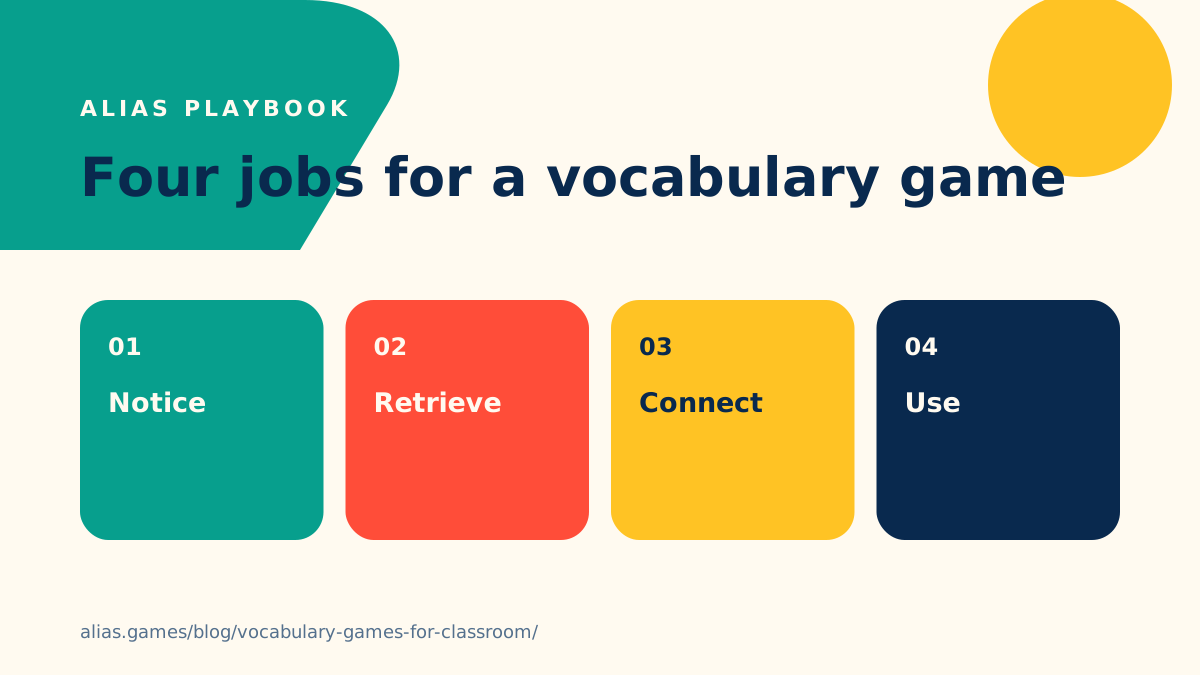
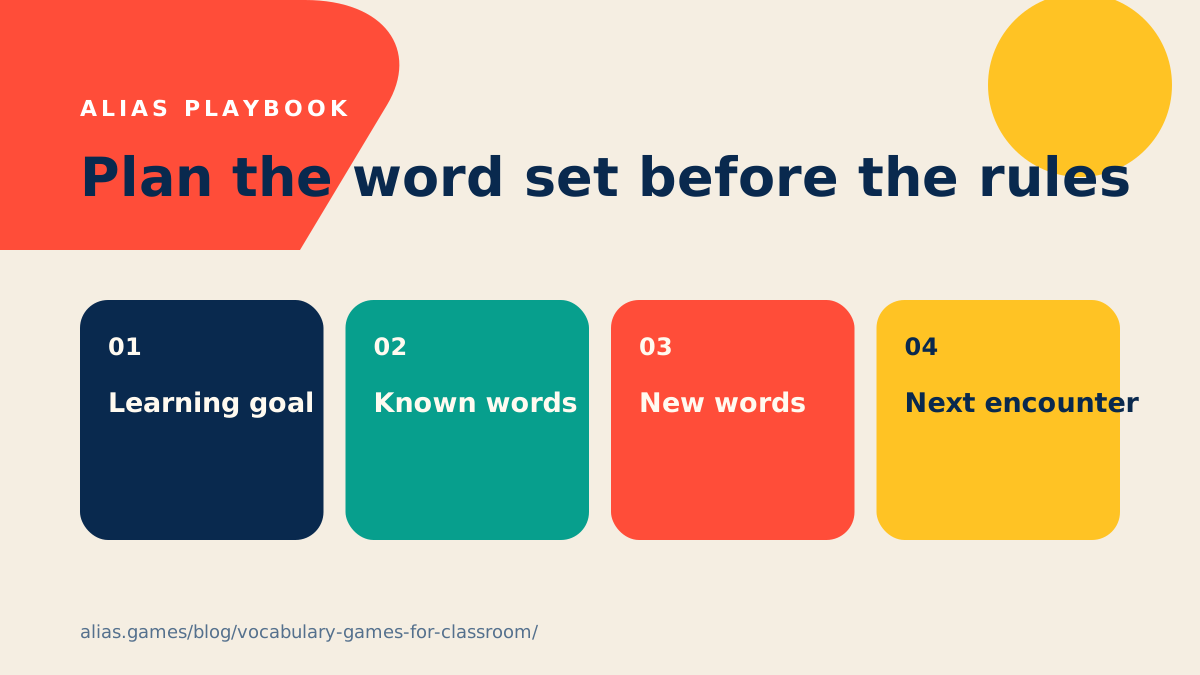
Novelty should serve repetition rather than replace it. Learners need several encounters with a word across time and contexts, so reuse the same set in different actions: notice it in a text, retrieve it in a sprint, connect it on a word map and use it in a short exchange. The game is one encounter inside that sequence, not proof that the vocabulary is permanently learned.
- Recognition.
- Recall.
- Meaning and relationships.
- Pronunciation and form.
- Use in context.
FAST RETRIEVAL
1–5: bring known words back into reach.
1. Category Sprint: groups list target words that belong to a studied category. 2. Alphabet Recall: find examples for selected letters, skipping impossible ones. 3. Picture Flash: show an image briefly, hide it and ask for the precise word plus one detail. 4. Last Letter Chain: build a chain from the final letter while staying inside a topic. 5. Vocabulary Bingo: learners hear definitions or examples and mark the matching words on varied cards.
Give silent thinking time before group response so the fastest speaker does not perform all retrieval for the class. In sprints, ask each learner to contribute or assign a recorder who must collect ideas from everyone. Bingo cards should differ, and the teacher should verify a winning line by asking learners to explain each marked match. Keep the timer generous for multilingual learners and do not deduct marks for slower access.
- Category Sprint.
- Alphabet Recall.
- Picture Flash.
- Last Letter Chain.
- Definition Bingo.
MEANING AND EXPLANATION
6–10: make learners construct a route to the concept.
6. Classroom Alias: a learner explains a target without saying it or an agreed root while teammates guess. 7. Example/Non-Example: teams sort situations that do or do not fit a word and justify the boundary. 8. Definition Match: pair learner-friendly definitions with words, then improve one definition. 9. Context Detective: infer a highlighted word from a short sentence and name the clue used. 10. Taboo Lite: explain the target while avoiding one or two overused clues, not a long punitive list.
Model a legal explanation before play and place category prompts on the board: what kind of thing is it, what does it do, where might it appear and what is an opposite? Allow a pass and rotate the speaker. For beginner classes, use pictures and sentence frames. Do not select words that have never been introduced and call failure a game; explanation is retrieval practice after meaning has been established.
- Classroom Alias.
- Example/Non-Example.
- Definition Match.
- Context Detective.
- Taboo Lite.
WORD RELATIONSHIPS
11–14: build a network instead of an isolated translation.
11. Word Map Relay: groups add category, synonym, antonym, example and common partner words around one target. 12. Collocation Pairs: match verbs, adjectives or nouns that commonly occur together, then use each pair in context. 13. Synonym Ladder: order alternatives by strength, formality or specificity. 14. Odd One Out: choose which word does not belong and defend more than one possible answer when the reasoning is coherent.
Word relationships should be verified with the course material, a reliable learner dictionary or a corpus source appropriate to the lesson. Not every synonym is interchangeable, and collocations vary by variety and context. Encourage learners to state the reason for a connection rather than collecting decorative branches. Odd One Out is especially useful because multiple answers can reveal different semantic features, but the teacher should separate a creative justification from a claim about actual usage.
- Word Map Relay.
- Collocation Pairs.
- Synonym Ladder.
- Odd One Out.
USE THE WORDS
15–18: move from knowing a label to completing a communicative task.
15. Information Gap: partners hold different details and must use target words to complete a schedule, map or description. 16. Three-Word Story: include three assigned vocabulary items in a coherent short scene. 17. Role Card Exchange: complete a practical exchange using a small target bank, then switch roles. 18. Definition Repair: one learner reads an incomplete explanation and a partner adds the missing feature or example.
Production tasks need a real reason to exchange meaning. If both partners can see the same information, they may perform the sentence without listening. Keep role cards fictional and age appropriate. Give planning time, visible sentence support and permission to consult the word bank during the first round. Repeat the task with a changed detail so learners can improve fluency without memorising a single script.
- Information Gap.
- Three-Word Story.
- Role Card Exchange.
- Definition Repair.
REVIEW AND TRANSFER
19–20: revisit vocabulary after the game ends.
19. Exit Sort: learners place target words under “can explain,” “recognise” or “need another example,” then select one for review. 20. Next-Week Challenge: return to the same words in a new format after several days, such as moving from picture matching to explanation or from explanation to a short information gap. The change of task tests access more honestly than replaying an identical round immediately.
Use the exit sort for planning, not public ranking. Learners may overestimate or underestimate confidence, so combine it with a small sample response. Record which words caused shared difficulty and teach them again with clearer context. A delayed game should include old and new items so retrieval remains effortful but possible. Do not announce that a fun round has “mastered” the list; make the next encounter visible.
- Exit Sort.
- Delayed return.
- New context.
- Teacher follow-up on shared gaps.
ADAPT BY AGE AND LEVEL
Change language support, not just the timer.
Young learners benefit from concrete nouns, actions, pictures and movement. Older learners can compare precision, register and collocation. Beginners need smaller sets, category labels, sentence frames and permission to gesture where the learning goal allows it. Advanced learners can explain abstract words, distinguish near-synonyms and adapt a definition for different audiences. Mixed-level pairs work when both roles contain meaningful difficulty.
For multilingual classes, do not ban a learner’s first language automatically; decide whether the activity targets English retrieval, concept understanding or translation. A brief translation check may prevent a false understanding, while an English-only explanation round may support paraphrase after meaning is secure. State the language rule for that round and explain why. Consistency makes the constraint feel instructional rather than disciplinary.
- Concrete support for younger learners.
- Sentence frames for beginners.
- Precision and register for advanced learners.
- A purposeful language policy.
ASSESSMENT BOUNDARY
Use games to notice learning, not to grade personality or speed.
Observe which words are retrieved, which meanings are confused and which supports help. Collect one short written response after an energetic game if you need individual evidence. Team points cannot show what every learner knows, and rapid speech is affected by language experience, anxiety and processing time. Keep game scores low stakes or separate them entirely from grades.
Plan access before the activity: display instructions, read them aloud, offer non-speaking roles during a first round and avoid public elimination. Check images and examples for cultural legibility. End with a thirty-second recap naming the vocabulary action practised and where the words will appear next. That makes the game part of a coherent lesson rather than a reward disconnected from learning.
- Observe specific word knowledge.
- Sample individuals separately.
- Do not grade speed.
- Plan multiple participation routes.
- Name the next encounter.
SOURCES & FURTHER READING
Evidence behind the guidance.
These references support the education or workplace principles used in this guide. Game-format recommendations remain practical editorial suggestions.
- EEF: Oral language interventions
Evidence summary on structured speaking, listening and interaction in learning.
- British Council: Teaching speaking
Teacher-development guidance for planning purposeful speaking practice.
- CAST: Universal Design for Learning Guidelines
Accessibility framework for offering multiple ways to participate and communicate.
COMMON QUESTIONS
Clear answers before the next round.
What are fun vocabulary games for the classroom?add
Try classroom Alias, category sprints, definition bingo, context detective, odd one out, collocation pairs, information gaps and three-word stories.
How many vocabulary words should a game use?add
Use a manageable set that learners have encountered, often mixing a focused group of target words with familiar support words. Adjust to age, level and task complexity.
Can vocabulary games be used for assessment?add
Use them formatively to notice confusion and support needs. Team points and speed should not become individual grades.
How do you adapt vocabulary games for beginners?add
Use pictures, concrete words, small sets, sentence frames, longer thinking time, modelling and a no-penalty pass.
How often should vocabulary be reviewed?add
Return to words across several lessons and change the task—from recognition to retrieval, explanation and use—rather than relying on one game.
KEEP EXPLORING
Rules and specialist guides.
READY FOR A ROUND?
Turn the advice into sixty seconds of play.
Download Alias, choose the setup that fits your room and start with one clear clue.

