ESL SPEAKING
18 ESL speaking games that give every learner a reason to talk.
Speaking time alone is not a lesson goal. Learners need a reason to exchange information, language support that makes the task possible and another attempt that lets them improve. These games are organised around fluency, clarification, description and interaction—not noise.

IN THIS ARTICLE
QUICK ANSWER
Start with the useful version.
For high-participation ESL speaking practice, use pair information gaps, picture differences, find someone who with neutral prompts, classroom Alias, question ladders or role-card exchanges. Give learners planning time and useful phrases, demonstrate the task, keep groups to two or three, and repeat with a changed partner or detail. Correct selectively after the round rather than interrupting every sentence. Measure access to the target language and interaction—not accent, volume or speed.
CREATE A REASON TO LISTEN
A speaking game needs information one learner cannot get alone.
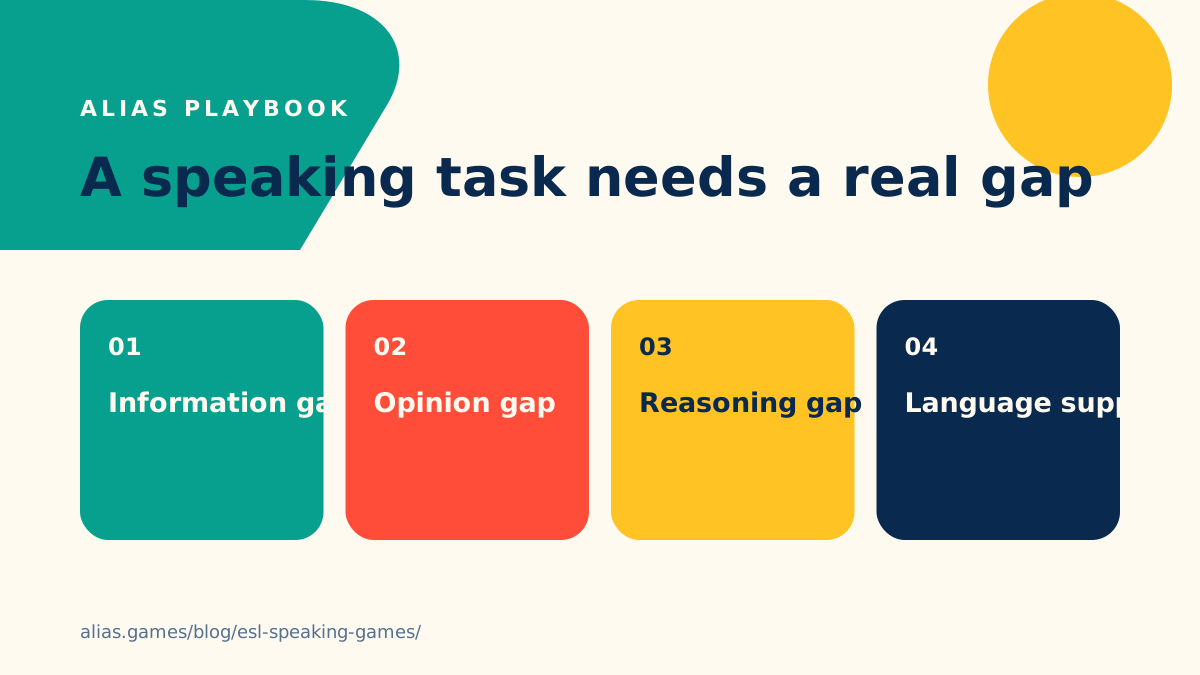
If both partners can see the same completed worksheet, speaking may be optional. A communicative gap changes that. An information gap gives each learner different facts. An opinion gap asks for a choice and reason. A reasoning gap requires the pair to combine clues or prioritise options. The task succeeds because learners understand one another well enough to complete something, not because they recite a sentence toward the teacher.
Choose one language aim inside the gap: asking follow-up questions, describing location, using past forms, comparing options or repairing misunderstanding. Display a small bank of useful phrases and one example exchange. Keep content age appropriate and culturally accessible. The game should make the target language useful without scripting every turn so tightly that learners no longer need to listen.
- Information gap.
- Opinion gap.
- Reasoning gap.
- One useful language aim.
PAIR SPEAKING
1–5: pairs maximise turns and lower the public spotlight.
1. Picture Difference: partners describe similar images and identify differences without looking at each other’s page. 2. Missing Schedule: each learner has gaps the partner can fill only by answering questions. 3. Route Exchange: one learner describes a route on a simple map while the other traces it. 4. Question Ladder: begin with a factual question and add one relevant follow-up each turn. 5. Definition Repair: one partner explains a familiar word incompletely and the other asks for the missing category, function or example.
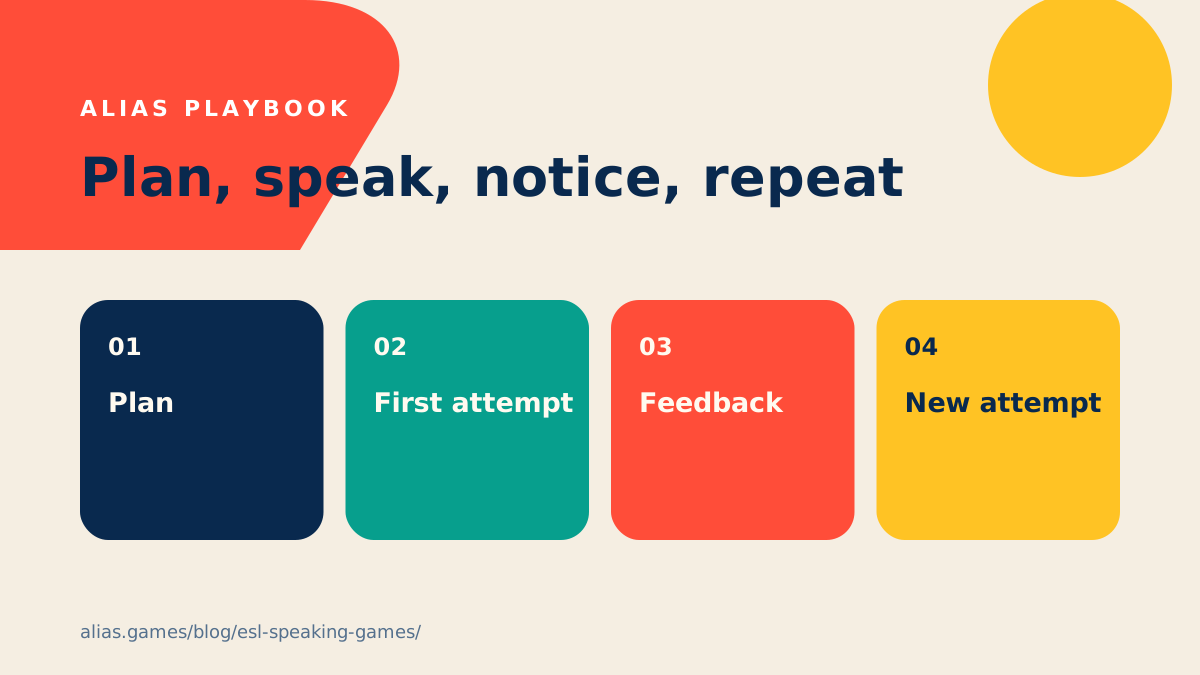
Give partners quiet planning time and assign A/B roles visibly. Model how to request repetition and clarification: “Could you say that again?”, “Do you mean…?” and “What kind of…?” Repeat the task after switching one detail or partner. The second attempt is not cheating; it gives learners a chance to use feedback and speak with less processing pressure. Circulate to collect patterns rather than interrupting every error.
- Picture Difference.
- Missing Schedule.
- Route Exchange.
- Question Ladder.
- Definition Repair.
SMALL GROUPS
6–10: three or four learners can negotiate a shared answer.
6. Classroom Alias: explain familiar target words without saying them while teammates guess. 7. Ranking Task: order fictional options for a trip, event or survival scenario and agree on reasons. 8. Mystery Category: reveal examples until the group names the shared category. 9. Story Cards: combine character, place and problem prompts into a short scene. 10. Advice Circle: groups give suggestions to a fictional character using the target structure.
Assign rotating roles such as explainer, questioner, summariser and timekeeper so one fluent learner does not complete the task for everyone. Keep groups small enough to hear each other. For Alias, choose taught vocabulary, provide category frames and disable skip penalties. Ranking tasks should avoid real money, family or migration decisions. Fictional distance lets learners practise language without having to defend private experiences.
- Classroom Alias.
- Ranking Task.
- Mystery Category.
- Story Cards.
- Advice Circle.
MOVEMENT WITH PURPOSE
11–13: circulate to exchange language, not simply collect signatures.
11. Find Someone Who: ask neutral questions to find classmates matching each prompt, with a fictional-response option. 12. Information Stations: learners visit posters to gather different clues and report a conclusion to their group. 13. Human Survey: classmates choose between visible options, then pairs ask one follow-up about the choice. Movement increases the number of partners and can reset energy.
Limit the number of interactions and model a polite close so conversations do not become rushed interrogations. Avoid prompts about family status, health, income, religion or experiences some learners cannot safely share. Provide a seated route using rotating cards or partners coming to the learner. At stations, make text readable and routes wide. The objective is meaningful question-and-answer practice, not speed around the room.
- Find Someone Who.
- Information Stations.
- Human Survey.
- Seated alternatives.
FLUENCY AND RETELLING
14–16: repeat meaning with a new listener and a smaller time frame.
14. Four-Three-Two: explain the same familiar topic to new partners in progressively shorter times. 15. Story Relay: hear a short fictional event, retell it to the next learner and compare the final version with the source. 16. Same Message, New Audience: explain one concept to a child, a visitor and a specialist, changing vocabulary and detail. These formats develop access and adaptation without demanding completely new content each turn.
Use a topic learners have already prepared and make the first attempt generous. Four-Three-Two should improve fluency, not reward unsafe speed; shorten only when the level supports it. In Story Relay, reveal the source at the end and discuss which details remained, not who “ruined” the message. Audience adaptation can use written role cards and pairs so learners have time to choose appropriate language.
- Four-Three-Two.
- Story Relay.
- Same Message, New Audience.
- Prepared content before timed repetition.
ONLINE SPEAKING
17–18: keep remote tasks small and technically simple.
17. Private Picture Description: send one image to learner A, who describes it while learner B selects the match from several options. 18. Breakout Jigsaw: each learner receives one short clue and the group combines them to solve a fictional problem. Both formats create information gaps without requiring public presentation to the whole class.
Test link access and breakout assignments, paste instructions into each room and keep groups to two or three. Cameras should be optional unless visual production is the explicit, accessible learning goal. Give one learner the role of calling the teacher for help. Rejoin the main room with a short answer and one language pattern, not a report from every group. A low-tech backup can use privately messaged text clues.
- Private Picture Description.
- Breakout Jigsaw.
- Written room instructions.
- Low-tech message fallback.
ADAPT THE SUPPORT
Change task demands for beginners, mixed levels and advanced learners.
Beginners need short turns, familiar topics, pictures, sentence frames and rehearsal with a partner. Intermediate learners can add follow-up questions, reasons and repair phrases. Advanced learners can negotiate ambiguity, adjust register and summarise another person’s position. Mixed-level groups work better when roles have different but meaningful language demands instead of assigning one learner as permanent helper.
Allow first-language planning when it serves concept formation, then specify which part of the exchange uses English. Pronunciation feedback should prioritise intelligibility in the target phrase, not imitation of one accent. Learners may pass a prompt or use a written response during a first round. Access support is not an unfair advantage; it is part of designing a task that produces the language practice you intend.
- Pictures and frames for beginners.
- Follow-up and repair for intermediate learners.
- Register and summary for advanced learners.
- Purposeful first-language use.
FEEDBACK AND REPEAT
Delay correction, select a pattern and give learners another attempt.
During the game, note examples of successful communication and two or three recurring issues connected to the lesson aim. Intervene only when the task cannot continue or misunderstanding is the target. After the round, display anonymous examples, let learners improve them and rehearse one useful phrase. Avoid reproducing a distinctive error that identifies and embarrasses a learner.
Repeat the activity with a changed partner, picture or detail so feedback can enter actual speech. Collect a brief exit response if individual evidence is needed. Do not grade accent, loudness or game points. Look for successful exchange, use of the target feature and ability to request clarification. A speaking game earns its place when more learners complete meaningful turns and leave with a clearer route for the next conversation.
- Notice before correcting.
- Choose feedback tied to the aim.
- Keep examples anonymous.
- Repeat with one changed condition.
- Assess communication, not volume.
SOURCES & FURTHER READING
Evidence behind the guidance.
These references support the education or workplace principles used in this guide. Game-format recommendations remain practical editorial suggestions.
- EEF: Oral language interventions
Evidence summary on structured speaking, listening and interaction in learning.
- British Council: Teaching speaking
Teacher-development guidance for planning purposeful speaking practice.
- CAST: Universal Design for Learning Guidelines
Accessibility framework for offering multiple ways to participate and communicate.
COMMON QUESTIONS
Clear answers before the next round.
What are good ESL speaking games?add
Picture differences, information gaps, route exchanges, classroom Alias, ranking tasks, story cards, four-three-two and breakout jigsaws all create meaningful interaction.
How do you get every ESL learner speaking?add
Use pairs or groups of three, private planning time, visible roles, sentence support, short turns and a repeat attempt with a new partner or detail.
Should teachers correct errors during speaking games?add
Correct only when communication cannot continue or immediate repair is the goal. Otherwise collect patterns, give selective feedback after the round and repeat.
What speaking games work for beginners?add
Use picture differences, missing schedules, simple route exchanges, familiar-word Alias and short role cards with pictures and sentence frames.
Can ESL speaking games be used online?add
Yes. Private picture descriptions, text-clue jigsaws and short small-group tasks work when access, instructions, timing and a fallback are prepared.
KEEP EXPLORING
Rules and specialist guides.
READY FOR A ROUND?
Turn the advice into sixty seconds of play.
Download Alias, choose the setup that fits your room and start with one clear clue.

