TEAM BUILDING
18 team-building games for work—with a reason to play.
A team-building game is only as useful as the behaviour it lets people practise and the conversation that follows. This guide separates communication, planning, trust and problem-solving activities, then gives each one a modest purpose instead of promising instant culture change.

IN THIS ARTICLE
QUICK ANSWER
Start with the useful version.
Choose a team-building game by one observable outcome: clearer explanation, better listening, shared planning, faster prioritisation or more inclusive decision-making. For communication, use Alias, drawing from description or jargon translation. For planning, try a paper build, constraint map or sequencing challenge. Keep teams small, make participation voluntary, brief the purpose, play for 10–20 minutes and debrief a specific moment. Never use game scores as performance evidence or claim that one session created trust.
OUTCOME FIRST
Name the behaviour before choosing the game.
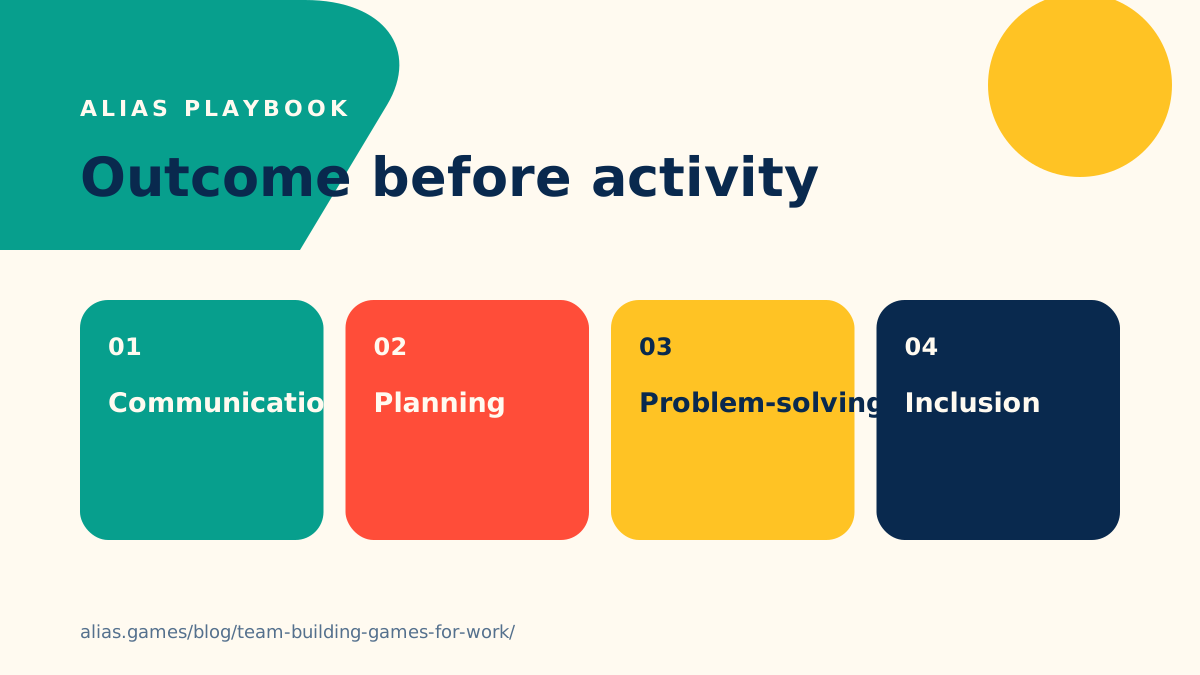
“Build the team” is too broad to guide an activity. Choose one behaviour people can observe: framing a message, asking a clarifying question, including a quieter voice, planning under a constraint or revising a decision after new information. An activity can then create a low-stakes example of that behaviour. Without this connection, the debrief becomes a search for lessons after the fact.
Keep the promise modest. A game may create a shared reference, reveal a communication pattern or give people a pleasant break. It cannot manufacture trust in a workplace where decisions, workloads or incentives remain unsafe. Tell participants what will and will not be evaluated. Scores, speed, vocabulary and confidence belong to the game only; they must not appear in performance assessment or informal rankings.
- Choose one observable behaviour.
- Explain the purpose before play.
- Separate game results from performance.
- Make no culture-change promises.
COMMUNICATION
1–5: practise framing, paraphrasing and feedback.
1. Team Alias: explain neutral target words while teammates guess, then discuss which clue changes worked. 2. Drawing From Description: one person describes a simple image that others cannot see. 3. Jargon Translator: rewrite an internal term for a new customer or colleague without using the term itself. 4. Context First: explain a fictional request after naming audience, purpose and constraint. 5. Question Budget: teams solve a scenario but may ask the host only five clarifying questions.
These games expose different parts of a message. Alias rewards rapid reframing, drawing reveals assumptions about spatial language, jargon translation tests accessibility, context first rehearses structure and a question budget makes information needs visible. Use fictional or everyday content, not live confidential problems. During the debrief, quote an observed move such as “the example unlocked the answer” rather than labelling someone a visual or poor communicator.
- Team Alias.
- Drawing From Description.
- Jargon Translator.
- Context First.
- Question Budget.
PLANNING AND COORDINATION
6–9: make the plan visible before the clock creates pressure.
6. Paper Structure: build a freestanding object from limited paper and tape after a two-minute planning pause. 7. Sequence Rescue: arrange fictional recovery steps after a service interruption and explain dependencies. 8. Constraint Map: plan a small event with a fixed budget, time window and accessibility requirement. 9. Silent First Minute: teams begin a sorting task without speaking, then pause to decide how they will coordinate.
The facilitator should distinguish quality of process from whether a tower stands. Watch who clarifies the goal, how roles emerge, whether the team revises assumptions and how information is shared. Do not add arbitrary pressure to imitate “real work”; the constraint is enough. If motor tasks create access barriers, assign planning, measurement, documentation and build roles or replace the physical structure with a digital arrangement.
- Plan before building.
- Make dependencies visible.
- Include access as a real constraint.
- Debrief coordination, not craft skill.
PROBLEM-SOLVING
10–13: create enough uncertainty to require a shared model.
10. Hidden Rule Lab: teams test examples to discover a consistent rule and record their reasoning. 11. Broken Instructions: each subgroup receives a different fragment of a fictional process and must combine them. 12. Twenty Questions Diagnosis: identify a fictional system fault through yes-or-no questions. 13. Assumption Auction: teams receive a limited number of tokens to spend on which unknown facts they want revealed.
A good problem-solving game has a fair answer path. The host should know what evidence confirms or rejects each hypothesis and provide a hint before frustration replaces learning. Hidden information should be distributed by design, not withheld to humiliate the group. In the debrief, ask when the team changed its model, which question reduced uncertainty and whether evidence or status determined the final choice.
- Hidden Rule Lab.
- Broken Instructions.
- Twenty Questions Diagnosis.
- Assumption Auction.
INCLUSIVE DECISIONS
14–16: change the structure so more voices can shape the answer.
14. Silent Options: everyone writes one possible response before discussion starts. 15. Rotating Advocate: each person explains an option they did not originally propose, using the author’s intended benefit. 16. Confidence Cards: members reveal high, medium or low confidence simultaneously before the team commits to a fictional choice. These exercises focus on process rather than asking quieter colleagues to “speak up” inside the same unequal structure.
Use psychological safety carefully. A game can demonstrate anonymous ideation or simultaneous input, but it cannot prove that employees feel safe challenging power in real decisions. Keep scenarios fictional and avoid asking participants to reveal confidence about live controversial work. The useful transfer is a meeting mechanic: write before talking, invite the option before the author, or collect confidence privately before consensus becomes visible.
- Silent Options.
- Rotating Advocate.
- Confidence Cards.
- Transfer the meeting mechanic, not a personality label.
REMOTE TEAMS
17–18: reduce audio competition and tool friction.
17. Chat Waterfall Priorities: each person writes a response and everyone sends at the same moment before discussion. 18. Private-Prompt Alias: a host messages a target to one explainer while small teams guess aloud. Chat Waterfall supports simultaneous input; Private-Prompt Alias creates a compact practice in changing language after feedback. Both work with tools already present in most calls.
Remote activities need smaller groups, visible timing and written instructions. Do not require software installation or camera use during the meeting. Account for latency by extending verbal rounds and controlling speaker order. Test private messaging and breakout rooms beforehand. If the platform fails, switch to a simple category prompt or shared document rather than spending the session debugging a game.
- Use existing tools.
- Keep groups small.
- Extend time for latency.
- Prepare a one-link or verbal fallback.
DEBRIEF THE EVIDENCE
Ask about a moment, a choice and one possible transfer.
Begin with description: what happened when the first approach stopped working? Which piece of information changed the plan? How did the team know it had reached agreement? Then move to interpretation: what made that communication useful or that decision inclusive? Finally, ask for one modest workplace transfer, such as writing options before discussion or naming the audience before detail.
Avoid generic questions such as “What did this teach us about teamwork?” because they invite clichés and overclaiming. Do not force every participant to speak in the full group; pairs can discuss first and share themes. Record agreed process ideas, not observations about named individuals. A ten-minute debrief grounded in visible events is more credible than a motivational speech that treats the game as a diagnostic instrument.
- Describe what happened.
- Identify the useful mechanism.
- Choose one modest transfer.
- Record process changes, not people rankings.
RUN THE SESSION
Brief, practise, play, debrief—and stop on time.
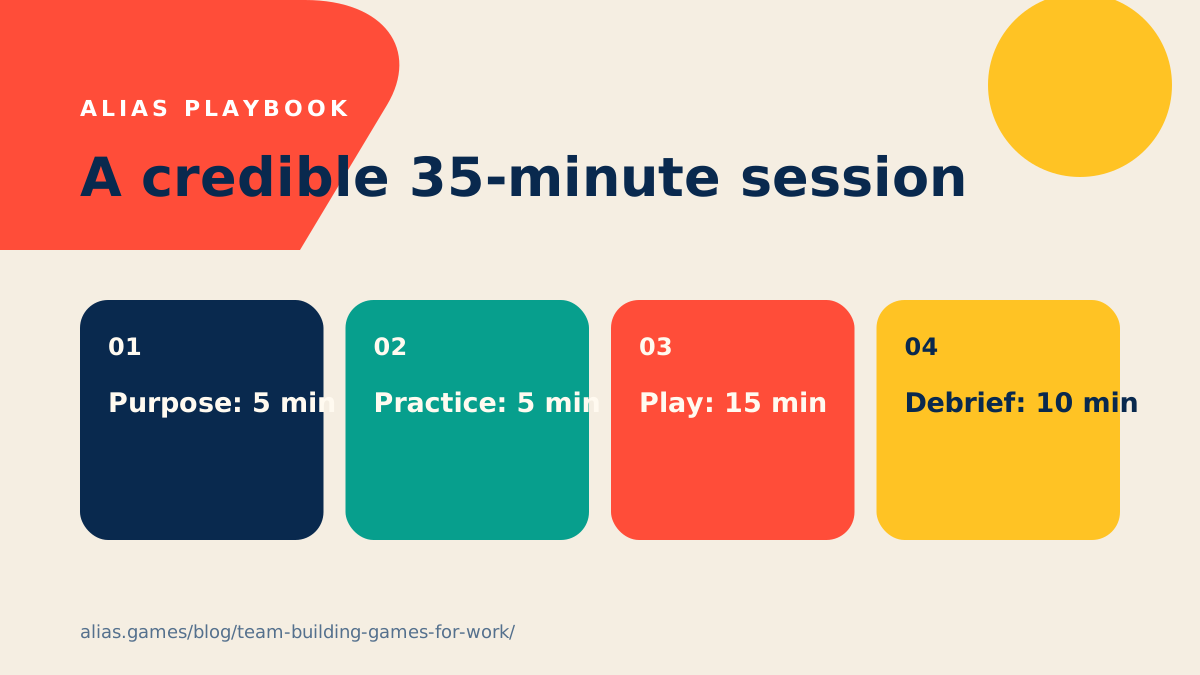
A 35-minute session can use five minutes for purpose and rules, five for a no-score practice, fifteen for two or three rounds and ten for reflection. For longer workshops, use two contrasting activities separated by real work, not a sequence of games. Create teams of three to five, choose neutral content, offer alternative roles and name the pass option explicitly.
Afterward, ask whether the purpose was clear, participation felt possible and one process idea is worth trying. If the answer is no, improve the design or retire the activity. Follow up only by referencing an agreed behaviour in a relevant meeting. Do not repeatedly invoke the game or claim impact that was never observed. Responsible team building respects the difference between a useful shared exercise and the long-term conditions that make collaboration work.
- Five-minute briefing.
- No-score practice.
- Fifteen minutes of play.
- Evidence-based debrief.
- One relevant follow-up.
SOURCES & FURTHER READING
Evidence behind the guidance.
These references support the education or workplace principles used in this guide. Game-format recommendations remain practical editorial suggestions.
- Google re:Work: Understanding team effectiveness
Research-based guidance on psychological safety and effective team conditions.
- CIPD: High-performing teams
Evidence review on team design, communication and performance.
COMMON QUESTIONS
Clear answers before the next round.
What are good team-building games for work?add
Choose by outcome: Alias or drawing from description for communication, paper structure for planning, hidden rule for problem-solving and silent options for inclusive decisions.
How long should a team-building game take?add
A focused session can take 30–40 minutes, including purpose, practice, 15 minutes of play and a ten-minute debrief.
How do you debrief a team-building activity?add
Ask what happened in a specific moment, which behaviour helped, and one small process change that could transfer to work. Avoid personality conclusions.
Can team-building games measure employee performance?add
No. Game results depend on familiarity, language, culture and format. Never use points, speed or confidence as performance evidence.
What team-building games work remotely?add
Chat waterfalls, private-prompt word games, shared sorting and fictional constraint mapping work when instructions, turns and fallbacks are clear.
KEEP EXPLORING
Rules and specialist guides.
READY FOR A ROUND?
Turn the advice into sixty seconds of play.
Download Alias, choose the setup that fits your room and start with one clear clue.

