WORK ICEBREAKERS
25 icebreaker games for work that do not feel forced.
A useful icebreaker lowers the cost of speaking once; it does not demand instant vulnerability or pretend to transform a team. These activities are organised by meeting purpose, time and communication mode so a facilitator can create a small, credible bridge into the work ahead.

IN THIS ARTICLE
QUICK ANSWER
Start with the useful version.
For a five-minute work icebreaker, ask for one-word weather, run a low-stakes this-or-that vote, or let pairs find one neutral thing in common. For ten to fifteen minutes, use a short Alias round, collaborative sorting, a picture prompt or a small-group category challenge. State why the activity fits the meeting, allow passing, avoid private disclosures and end on time. An icebreaker succeeds when the next contribution becomes easier—not when the facilitator collects the most surprising personal facts.
START WITH PURPOSE
Choose the smallest activity that helps the meeting begin.
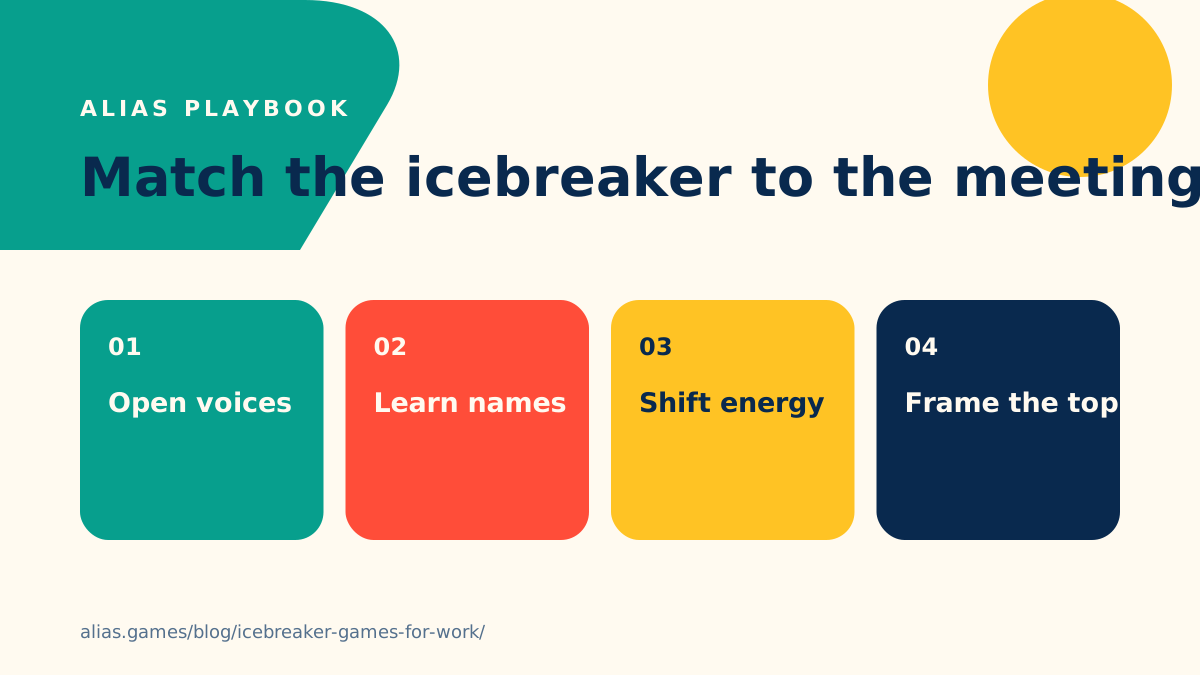
An icebreaker can introduce names, make it easier to speak once, shift energy after a break or connect people to the meeting topic. Those are different jobs. A new-team session may need paired introductions, while a weekly status meeting may need only a one-word check-in. Choosing the purpose first prevents a facilitator from filling time with a fashionable activity that does not serve the agenda.
Tell participants why the activity is happening and how long it will take. “We will use three minutes so every voice enters the call before planning” is credible. “This will make us one team” is not. Keep the promise proportional. If the group already speaks freely, skip the icebreaker. Respecting time and readiness builds more trust than completing a ritual because it appeared on the template.
- Name one practical purpose.
- Set a visible duration.
- Explain the connection to the meeting.
- Skip it when the room is already ready.
TWO TO FIVE MINUTES
1–6: quick icebreakers open the room without taking over.
1. One-Word Weather: describe current working energy as a weather word. 2. This or That: vote between two neutral options such as early start or late focus. 3. Desk Object: show or name one ordinary tool you use often, with camera optional. 4. Headline: write a six-word headline for the week ahead. 5. Emoji Check-In: choose one approved symbol in chat and add context only if desired. 6. Meeting Prediction: name one useful outcome you hope the session reaches.
Do not ask every answer to become a story. The purpose is a first contribution, so thank the group and move into the agenda. Offer a pass or text option. Weather and emoji prompts should not become a covert wellbeing assessment; people control how much meaning they attach. A meeting prediction is especially useful because it creates agenda information, but the facilitator should capture only themes, not judge whether an individual chose the “right” outcome.
- One-Word Weather.
- This or That.
- Desk Object.
- Six-Word Headline.
- Emoji Check-In.
- Meeting Prediction.
NEW NAMES
7–10: help a new group remember people without memory-test embarrassment.
7. Name and Context: each person gives their name, role in this project and one question they can help answer. 8. Pair Introduction: partners exchange only work-relevant information and introduce one another in thirty seconds. 9. Name Map: place names beside the part of a process or customer journey each person touches. 10. Shared Initial: pairs create a harmless phrase using the first letters of their names.
Avoid games where forgetting a name publicly removes a person or triggers a penalty. Names come from many languages and deserve accurate pronunciation; invite people to say them at normal speed and repeat only with permission. Do not require nicknames or explanations of origin. A name activity is valuable when it connects a person to useful context and gives the group another chance to hear the name, not when it turns identity into trivia.
- Pronounce, do not perform.
- Use project context.
- Keep introductions under thirty seconds.
- Never penalise imperfect recall.
SIX TO FIFTEEN MINUTES
11–16: small-group icebreakers create safer speaking space.
11. Three Commonalities: groups find neutral things they share beyond the obvious workplace. 12. Category Sprint: list examples from a harmless category in sixty seconds. 13. Mini Alias: teams explain everyday words for one practice round with no score. 14. Picture Prompt: choose one abstract image that matches the project stage and explain the choice briefly. 15. Silent Sort: arrange fictional priorities or process cards before discussing the result. 16. Question Ladder: pairs answer a practical question, then combine with another pair to compare themes.
Use groups of three or four, display the prompt in writing and tell everyone what will be shared with the full room. If only themes will return, say so. A breakout room should never surprise participants with a demand to nominate the most personal story. Mini Alias works when categories are neutral and the facilitator frames it as communication play, not a talent test. Keep scoring off during the icebreaker so language speed does not become a rank.
- Three Commonalities.
- Category Sprint.
- Mini Alias.
- Picture Prompt.
- Silent Sort.
- Question Ladder.
CONNECT TO THE AGENDA
17–20: use the icebreaker to rehearse the kind of thinking you need.
17. Assumption Flip: name one common assumption about a fictional case and write its opposite. 18. Customer Sentence: complete “A customer arrives here because…” with one observable need. 19. Risk Postcard: write a brief headline from a future where the project failed, then identify the earliest warning. 20. Definition Swap: pairs explain one project term in everyday language without using internal jargon.
Topic-linked prompts should remain small. They are not a disguised workshop and should not collect decisions that require proper analysis. Use the responses as signals for the agenda, not as final evidence. Definition Swap is a useful transition into communication work because it exposes ambiguous jargon without placing one person on trial. Choose a term everyone has legitimate reason to use and let pairs offer multiple definitions before the facilitator clarifies the agreed meaning.
- Rehearse one meeting behaviour.
- Use fictional cases where possible.
- Capture themes, not decisions.
- Clarify terms without blaming speakers.
REMOTE AND HYBRID
21–23: design for latency, chat and unequal visibility.
21. Chat Waterfall: everyone types a short answer but waits to send until the host counts down. 22. Camera-Optional Scavenger Prompt: find a nearby colour, texture or tool and describe it without displaying a private space. 23. Private-Message Word Clue: send an everyday target to one player and let a small team guess aloud. These formats prevent the fastest speaker from defining the whole opening.
In hybrid rooms, remote participants should enter first on alternating prompts instead of always following the physical table. Repeat spoken answers near the room microphone and keep instructions visible in chat. Do not require cameras, virtual backgrounds or personal workspace tours. Test private messages and breakout assignments before the call. If the platform creates more friction than connection, use a simple chat waterfall and move on.
- Chat Waterfall.
- Camera-Optional Prompt.
- Private-Message Word Clue.
- Alternate who speaks first.
LARGER MEETINGS
24–25: simultaneous choices scale better than sequential stories.
24. Four-Corner Poll: four answers appear on screen or around the room and everyone chooses one before a brief pair discussion. 25. Table Headline: each small table writes a six-word headline for the meeting’s desired outcome and submits one response. Both formats let dozens of people contribute without hearing thirty separate introductions.
Large-group icebreakers need a strict finish. Announce one or two example responses, give private thinking time, collect choices simultaneously and ask only a few groups for context. Provide a seated or digital equivalent to physical corners. Never call on a person solely because their choice is unusual. The facilitator can acknowledge the distribution and use it to frame the meeting without turning minority answers into a public defence.
- Simultaneous response.
- Private thinking first.
- Sample only a few explanations.
- Do not interrogate unusual choices.
THE FACILITATOR’S CONTRACT
Protect choice, time and dignity from the first sentence.
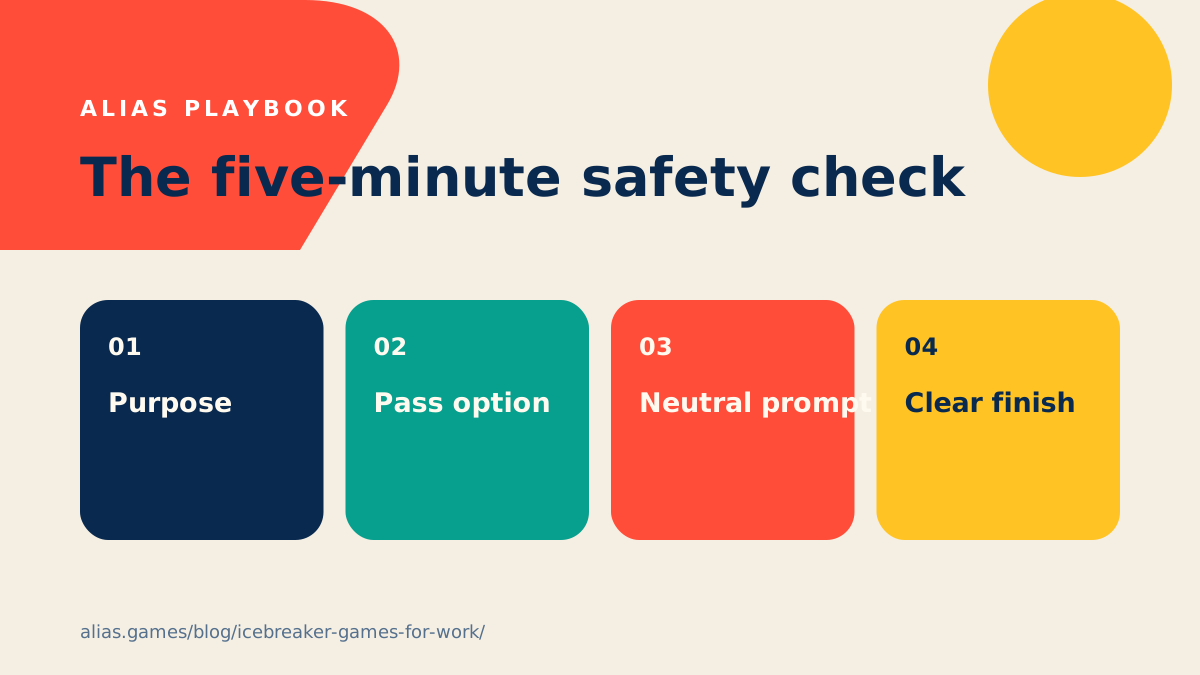
Use neutral prompts, provide a no-explanation pass and offer more than one response mode. Avoid family status, health, money, politics, religion, immigration, trauma and requests for embarrassing stories. Even apparently cheerful questions such as dream holidays can expose unequal resources. Fictional choices, working preferences and sensory observations usually achieve the same conversational goal with less risk.
Close the activity explicitly: summarise one useful pattern, thank participants and move to the agenda. Do not diagnose personalities from answers or preserve a playful response in performance documentation. If the group dislikes the activity, accept the feedback. An icebreaker is a facilitation tool, not a test of team spirit. Its success is visible in a smoother next contribution and a room that still trusts the meeting owner.
- Neutral prompt.
- Pass without explanation.
- Multiple response modes.
- No personality conclusions.
- Explicit transition to work.
SOURCES & FURTHER READING
Evidence behind the guidance.
These references support the education or workplace principles used in this guide. Game-format recommendations remain practical editorial suggestions.
- Google re:Work: Understanding team effectiveness
Research-based guidance on psychological safety and effective team conditions.
- CIPD: High-performing teams
Evidence review on team design, communication and performance.
COMMON QUESTIONS
Clear answers before the next round.
What is a quick icebreaker for a work meeting?add
Use one-word weather, a neutral this-or-that vote, a six-word headline or one desired meeting outcome. Keep it under five minutes and allow passing.
What icebreakers work for new teams?add
Name and context, pair introductions, a process name map and three neutral commonalities help people learn useful information without testing memory or demanding personal stories.
How do you make work icebreakers less awkward?add
Explain the purpose and duration, use neutral prompts, allow a pass, offer spoken or written responses and avoid surprise sharing.
What is a good virtual icebreaker?add
A chat waterfall, camera-optional object description, picture prompt or private-message word clue can work when turns and timing are explicit.
What should work icebreakers avoid?add
Avoid mandatory vulnerability, intimate disclosures, drinking, personality diagnosis, public elimination and prompts that expose money, health, family status or trauma.
KEEP EXPLORING
Rules and specialist guides.
READY FOR A ROUND?
Turn the advice into sixty seconds of play.
Download Alias, choose the setup that fits your room and start with one clear clue.

