EDUCATION
Use Alias as a classroom vocabulary and speaking game.
Alias becomes useful learning when the words, clue rules and reflection match a clear objective. This teacher-ready plan turns fast guessing into retrieval, paraphrasing, listening and evidence of understanding.

IN THIS ARTICLE
QUICK ANSWER
Start with the useful version.
For a 20-minute classroom Alias activity, choose 15 to 30 lesson words, make teams of three to five, model one legal and one illegal clue, run an unscored practice rotation, then play two or three 45- to 60-second rounds. Require the target language when that supports the objective, provide sentence starters for learners, rotate every explainer and finish with an exit ticket in which students write improved clues for difficult words.
START WITH LEARNING
Decide what students should practise before choosing words.
Alias can support recognition, spoken production, paraphrasing, concept review, listening or communication strategy. Those are related but different objectives. A science class may ask students to explain processes accurately. An ESL class may prioritise fluent circumlocution when a word is missing. A literature class may use characters, settings and themes. Write the objective in observable language before opening a category.
The scoring rule should follow that objective. If participation matters, reward complete rotations rather than only speed. If target-language production matters, require clues in that language and permit a neutral skip. If conceptual accuracy matters, allow the teacher to pause briefly after a round to correct a misconception. The game is a method, not the goal.
- Recognition.
- Spoken production.
- Paraphrasing.
- Concept review.
- Listening and repair strategies.
CURATE THE SET
Fifteen to thirty connected words are enough.
A narrow reviewed list produces better learning than a random deck of one hundred. Choose words from the current unit, add several familiar anchors and remove items that depend on knowledge not yet taught. Keep parts of speech varied so students explain objects, actions, qualities and ideas. For beginner learners, favour concrete high-frequency terms with visible contexts.
Review the list for accidental clues. Words with the same root should not appear close together, and a definition printed elsewhere in the room may make one prompt automatic. If students create the list, collect more suggestions than needed and edit privately. Student ownership is valuable, but the teacher remains responsible for appropriateness and balance.
- 15–30 words.
- One topic or learning goal.
- A few mastered anchors.
- Mixed word types.
- No same-root neighbours.
DESIGN FOR EVERY VOICE
Small teams and required rotation prevent hidden spectators.
Teams of three to five keep waiting time short and make it easier to hear individual participation. Add every student’s name to a rotation before anyone explains twice. In a large class, run several games simultaneously or use one model round followed by table groups. Assign roles such as explainer, guessers, timekeeper and recorder when only one device is available per group.
Build teams thoughtfully. Do not place one multilingual learner alone with several highly fluent speakers and call the result practice. Mix confidence levels, provide a no-penalty pass and allow a student to observe the first round before explaining. Participation should be structured without becoming forced public exposure.
- Three to five students per team.
- Full rotation before repeats.
- Clear timekeeper and recorder roles.
- A safe pass or observe option.
SCAFFOLD THE CLUE
Sentence starters keep thinking in the target language.
Provide frames such as “It is a kind of…,” “You use it when…,” “It is the opposite of…,” “You might see it in…” and “It causes…”. These prompts support the structure of a clue without giving away the content. Display them throughout the round, then gradually remove them as learners become more independent.
Decide whether gestures, translation, spelling and first-language support are allowed. A beginner practice round may permit a short bilingual rescue, while an assessed speaking round may not. State the policy as a learning choice rather than a moral rule. Students should understand what skill the restriction is designed to practise.
- It is a kind of…
- You use it when…
- It is the opposite of…
- You might see it in…
- It causes…
A 20-MINUTE PLAN
Model, practise, play and reflect.
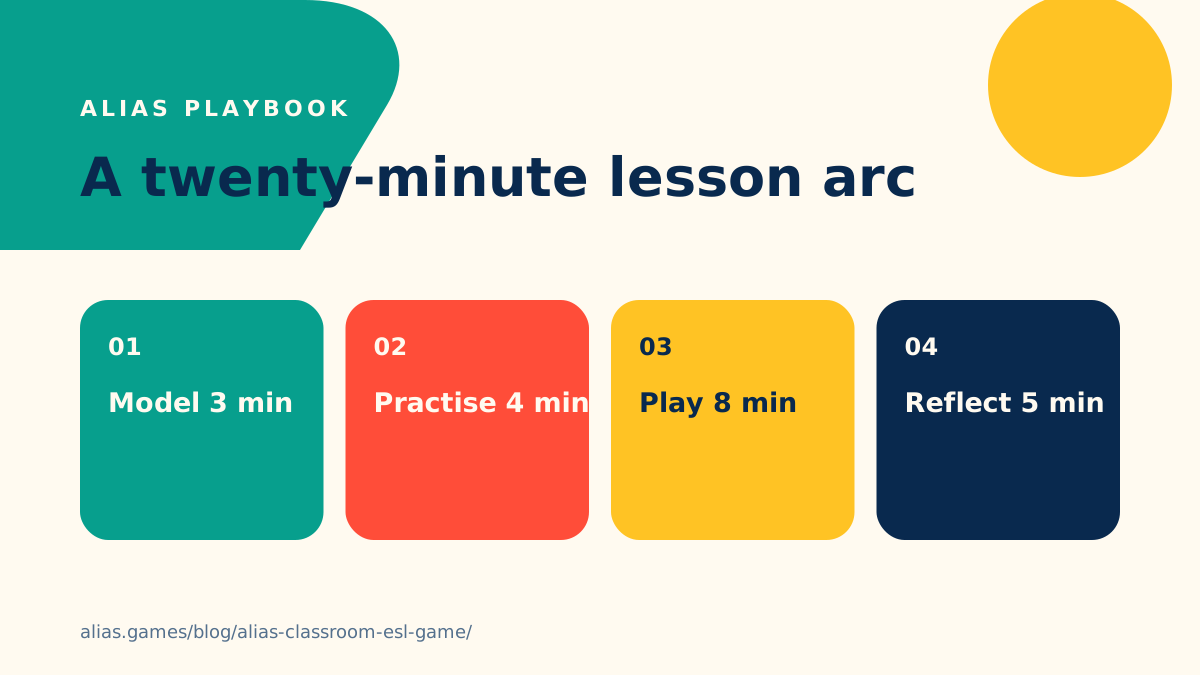
Use three minutes to demonstrate a legal clue and a clue that says the root. Spend four minutes on an unscored rotation so every group handles the controls and sentence frames. Run two or three short scored rounds for eight minutes. Keep the target modest; the purpose is repeated retrieval, not a long tournament.
Reserve five minutes for reflection. Ask students to identify one difficult word, one useful clue pattern and one misunderstanding. An exit ticket can require three legal clues or one improved explanation for a skipped prompt. This final step converts the excitement of play into evidence the teacher can review.
- 3 minutes: model.
- 4 minutes: unscored practice.
- 8 minutes: short rounds.
- 5 minutes: reflection and exit ticket.
LISTEN FOR UNDERSTANDING
A clue can reveal more than a correct guess.
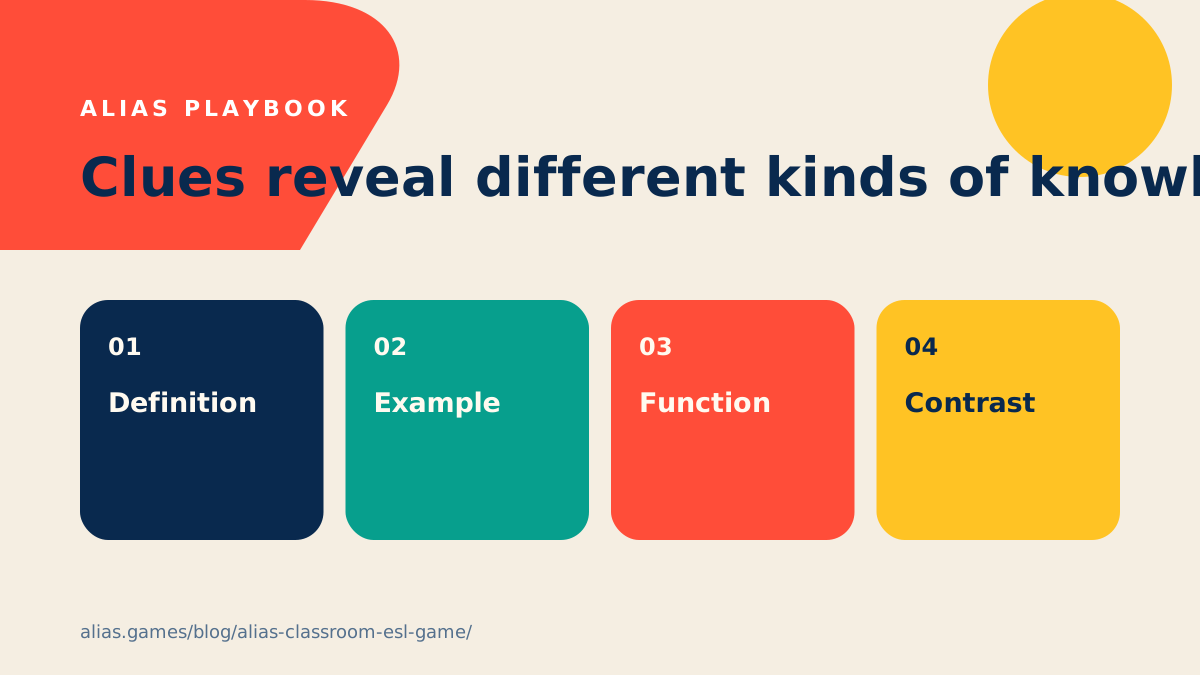
Students may demonstrate understanding through a function, example, cause, context or contrast even when they cannot produce a formal definition. Listen for accurate relationships. A learner who explains evaporation as “water changing into gas when it gets warm” shows meaningful knowledge. Record recurring misconceptions for later teaching rather than stopping every turn and breaking fluency.
Do not grade the team score as if it were individual mastery. Speed, confidence, cultural knowledge and teammates all affect the total. Assess a revised clue, a short written definition, use of the word in context or a self-reflection on strategy. These products are more attributable to the learner and easier to interpret.
- Definitions.
- Functions and causes.
- Examples and contexts.
- Contrasts and relationships.
- Revised clues after play.
ACCESS BEFORE COMPETITION
Adjust pace, modality and content without lowering respect.
Use 60- to 90-second rounds for learners who need processing time. Provide printed category cues, large text and a quieter table when hearing overlapping guesses is difficult. Permit an alternative role or a prepared clue for students with high speaking anxiety. These adjustments preserve the communication goal while reducing unrelated barriers.
Avoid treating accents as mistakes unless pronunciation prevents understanding and pronunciation is the stated objective. Do not allow classmates to imitate speech. Use culturally broad word lists and explain references that are necessary for the lesson. A classroom game should expand participation, not turn existing differences into entertainment.
- Longer processing time.
- Visible sentence frames.
- Alternative roles.
- Culturally reviewed vocabulary.
- Respectful pronunciation feedback.
ADAPT WITH PURPOSE
Change one rule to practise one additional skill.
For a definition round, forbid examples and require category plus distinguishing features. For a context round, the explainer must place the word in a situation without saying it. For collocation practice, allow a one-word clue that commonly appears near the target. For review, ask the guessing team to use the answer in a sentence before the point is confirmed.
Keep variations short and explain what they practise. A creative twist is not automatically educational. If the new restriction makes students silent or rewards guessing tricks unrelated to the objective, remove it. The strongest classroom version feels like a game while producing language the teacher genuinely wanted to hear.
- Definition round.
- Context-only clues.
- Collocation clues.
- Use the answer in a sentence.
REMOTE OR HYBRID
Keep words private and participation visible.
For an online class, send the target word privately to the explainer or use breakout rooms with one student timekeeper. Do not share a screen that exposes the answer to guessers. Keep groups small, extend the timer for audio delay and establish whether guesses belong in speech or chat. Mixing both channels can advantage fast typists and make scoring unclear.
In a hybrid room, avoid giving remote students a permanent observer role. Rotate explanation between locations and appoint a co-host who can see raised hands or chat messages. Test captions, audio and private messaging before class. If the technology consumes the lesson, switch to teacher-read definitions or a simple category race and preserve the same vocabulary objective.
- Private word delivery.
- Small breakout groups.
- One guessing channel.
- Rotating remote roles.
- A low-tech fallback.
IMPROVE THE NEXT ROUND
Use the record of play to revise instruction.
After class, sort skipped and disputed words into three groups: vocabulary not yet known, concepts understood but difficult to explain, and prompts made unfair by the list or rules. Each group suggests a different response. Unknown vocabulary needs teaching; weak explanations need modelling; unfair prompts need replacement.
Compare this evidence with exit tickets rather than with the scoreboard. If students can write accurate clues after play, retrieval pressure may have been the main barrier. If misconceptions remain, revisit the concept with a new representation. The game is most valuable when its mistakes inform the next lesson instead of disappearing with the final score.
- Unknown vocabulary.
- Known but hard to explain.
- Misconception.
- Unfair prompt.
- Specific next teaching move.
SOURCES & FURTHER READING
Evidence behind the guidance.
These references support the education or workplace principles used in this guide. Game-format recommendations remain practical editorial suggestions.
- EEF: Oral language interventions
Evidence summary on structured speaking, listening and interaction in learning.
- CAST: Universal Design for Learning Guidelines
Accessibility framework for offering multiple ways to participate and communicate.
COMMON QUESTIONS
Clear answers before the next round.
Is Alias good for ESL students?add
Yes. It practises retrieval, paraphrasing, listening and speaking when vocabulary, timing and language rules match the learners’ level.
How many classroom words should I use?add
Fifteen to thirty connected prompts are enough for a focused short lesson. Add familiar anchor words and remove same-root neighbours.
Should an Alias classroom score be graded?add
No. Team scores reflect speed, confidence and group dynamics. Assess a revised clue, contextual sentence or reflection instead.
How large should classroom teams be?add
Three to five students keeps turns frequent. Use parallel table groups in a large class and require a full explainer rotation.
KEEP EXPLORING
Rules and specialist guides.
READY FOR A ROUND?
Turn the advice into sixty seconds of play.
Download Alias, choose the setup that fits your room and start with one clear clue.

