WORDS & CATEGORIES
Better Alias game words make better rounds.
A useful Alias list is not a pile of random nouns. It balances familiarity, explainability, category variety and difficulty so players spend their time making clues instead of questioning the deck.

IN THIS ARTICLE
QUICK ANSWER
Start with the useful version.
Build an Alias word list from concepts the group recognises but cannot guess from one automatic association. Mix objects, actions, people, places, feelings and abstract ideas. Easy words should be concrete and familiar; medium words should allow several clue routes; hard words may be abstract or culturally specific but still explainable. Use the generator on this page to draw a random prompt, or select a focused category for children, classrooms or themed parties.
PLAYABILITY FIRST
A good word is known, explainable and not automatic.
The perfect Alias prompt sits between obvious and obscure. Players should recognise the concept, but the first clue should not reveal it instantly. “Spoon” is accessible but may be too direct for an experienced group. “Cutlery” offers more routes—table, fork, knife, drawer—while remaining familiar. “Syzygy” may be difficult, but if nobody knows it, the challenge becomes vocabulary recognition rather than explanation.
Test a word by asking three questions. Would most of this audience understand the answer? Can an explainer reach it through at least two legal routes? Will the guesses create an interesting conversation? Keep a few effortless words because fast wins build rhythm. Use harder prompts as contrast, not as proof that the deck is sophisticated.
- Recognisable to the intended audience.
- At least two legal clue routes.
- Not solved by one automatic phrase.
- Appropriate for the room’s age and context.
MIX THE LANGUAGE
Use more than objects and famous names.
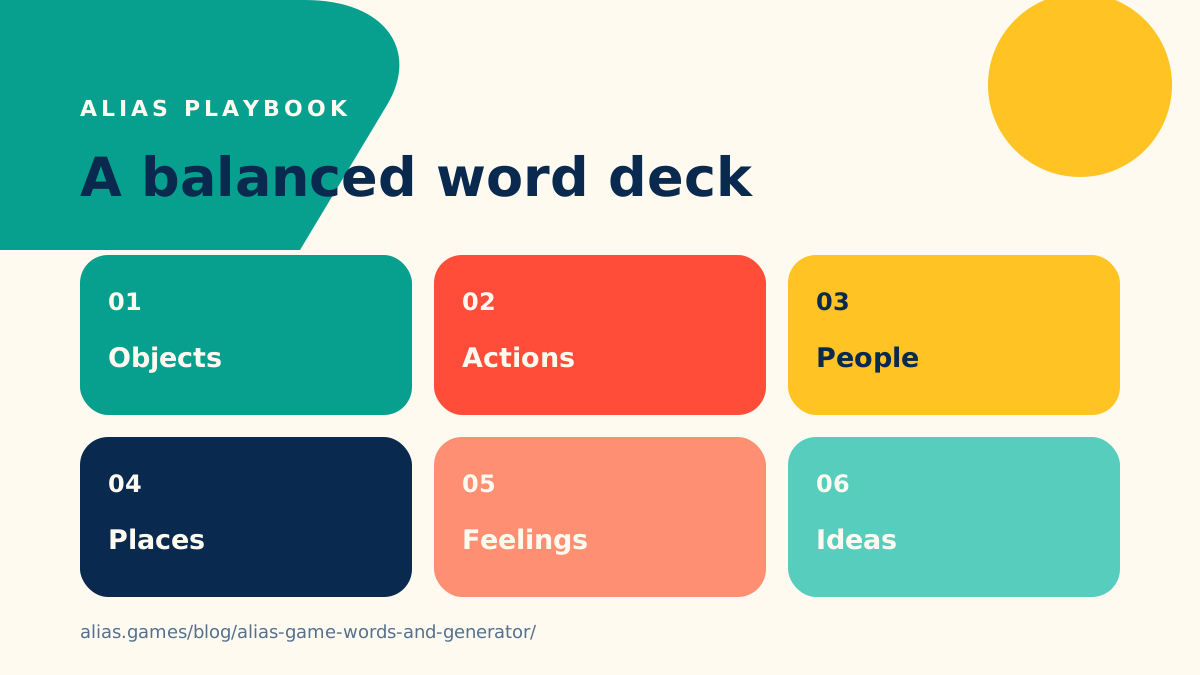
Balanced lists include concrete nouns, actions, roles, places, feelings, events and abstract ideas. Objects are easy to picture. Verbs create lively situations. Feelings invite contrast and examples. Abstract concepts demand relationships and consequences. Moving between these types prevents one clue habit from dominating every round.
Category packs can still be focused. A travel pack might combine passport, detour, hostel, jet lag, landmark and homesickness rather than listing only destinations. A movie pack can include cinema roles, storytelling terms and viewing experiences alongside titles or actors. Variety inside the theme makes the pack replayable and gives different kinds of thinkers a way into the game.
- Objects and tools.
- Actions and processes.
- People and roles.
- Places and events.
- Feelings and relationships.
- Ideas and abstract concepts.
EASY, MEDIUM, HARD
Difficulty depends on shared context, not dictionary length.
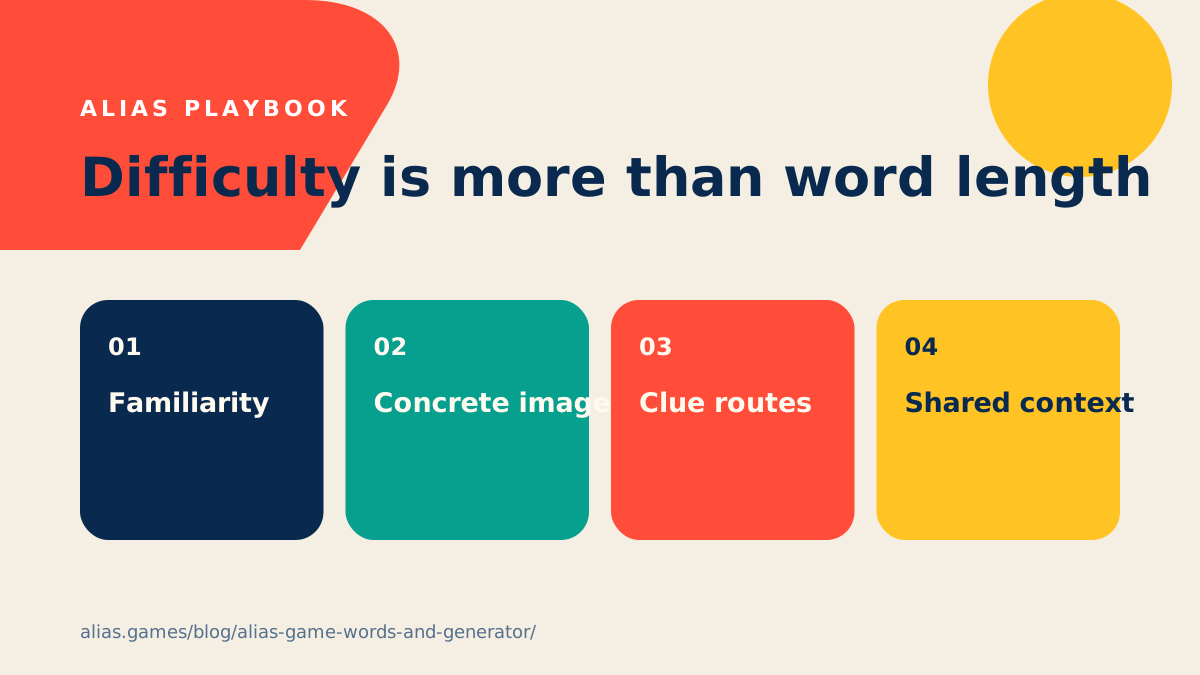
A long concrete word can be easy when everyone knows the object, while a short abstract word can be hard because it has no visible shape. Familiarity, cultural context, number of associations and similarity to other concepts all affect the clue. “Microscope” is long but highly visual. “Bias” is short but may require an example, contrast and careful wording.
Build levels for a specific audience. Children need common experiences and concrete actions. Adult friends may enjoy work life, travel, media and relationships. Language learners need words near their current level plus enough familiar anchors to practise paraphrasing. Review hard lists for accidental specialist jargon; challenge should come from explanation, not exclusion.
- Easy: concrete and frequently encountered.
- Medium: familiar with several possible clue paths.
- Hard: abstract, nuanced or context-dependent.
- Unfair: unknown to most of the intended group.
ALIAS WORD GENERATOR
Draw a word for your next round.
Choose a level, reveal one word and start explaining. Every prompt below is an original general-language term selected for playability.
RANDOM WITHOUT CHAOS
A generator still needs editorial choices.
Random selection prevents players from predicting the next prompt, but randomness cannot rescue a poor source list. A generator should draw from reviewed pools, preserve the chosen difficulty and avoid immediate repeats. The small tool on this page uses three curated English levels so a host can test a clue, warm up a class or start an improvised round without exposing an entire deck.
For a full match, the Alias app provides the smoother flow because it combines prompts, timing, team order and scoring. Use the web generator when you need one quick word, want to practise explanations or are designing a custom session. Keep the screen visible only to the explainer and tap again after the answer is guessed.
- Choose a reviewed level.
- Avoid immediate repeats.
- Keep the word private.
- Use the app for complete match management.
BUILD A STARTER SET
Create rounds with a deliberate difficulty curve.
An easy opening set could include umbrella, bicycle, sandwich, garden, mirror, airport, whisper and rainbow. A medium set might use deadline, souvenir, applause, compass, tradition, forecast, password and first impression. A hard set could include contradiction, nostalgia, diplomacy, metaphor, accountability and ambiguity. These are examples, not an official card transcription.
Arrange a custom deck so each short block contains different word types. Avoid putting six movie titles or five emotions together unless the category promises that focus. For a mixed room, place one accessible prompt after every demanding one. The rhythm of solvable and stretching words keeps teams optimistic while preserving enough surprise for memorable clues.
- Easy: umbrella, bicycle, sandwich, whisper.
- Medium: deadline, souvenir, applause, forecast.
- Hard: nostalgia, metaphor, accountability, ambiguity.
- Mix word types inside each level.
WORDS FOR CHILDREN
Choose concepts children can experience and describe.
Children’s lists work best with animals, food, home objects, school items, simple jobs, weather, movement and familiar places. A child may know “recycling” from school but struggle with “sustainability” without adult scaffolding. Use pictures for early readers, permit an adult to read the card privately and give children extra time to build a clue.
Avoid categories that reward adult media knowledge. Let children help choose or contribute words, then review the list for spelling and fairness before play. Mixed-age teams should receive the same accessible pack in the first round. Adults can make a common word challenging through clever explanations; children cannot create knowledge they have never encountered.
- Animals and nature.
- Home and school.
- Food and everyday actions.
- Weather, transport and familiar jobs.
WORDS FOR LEARNING
Make the list serve a lesson objective.
A classroom Alias list should come from the material students are expected to retrieve: key terms, processes, characters, places or functional language. Keep one topic per short round and include a few previously mastered words. Students can explain in the target language, use a sentence frame or identify the category before giving details.
After play, collect difficult prompts and ask students to write an improved legal clue. That reflection separates unknown vocabulary from weak explanation strategies. Do not grade the match score, which also reflects speed, team dynamics and prior exposure. Instead, assess the quality of a revised clue or the learner’s ability to use the word in context.
- Tie every word to the lesson goal.
- Mix new and mastered vocabulary.
- Use sentence starters when helpful.
- Reflect on skipped words after play.
EDIT BEFORE YOU PLAY
Review custom words for safety, fairness and duplication.
Remove exact duplicates, close variants and pairs where one answer reveals another. If “photograph” and “photographer” appear in the same short set, the first clue may give away the second. Check spelling, regional vocabulary and whether a proper name has one commonly accepted form. Flag mature or sensitive topics rather than surprising the room with them.
Finally, play-test a sample. Ask two people from the intended audience to explain ten words without showing them the full list. Note which prompts create several useful guesses and which produce silence. Replace the latter unless silence is the desired advanced challenge. A deck improves through observation, not through simply adding more words.
- Remove duplicates and same-root neighbours.
- Check spelling and regional terms.
- Label sensitive categories.
- Play-test with the intended audience.
KEEP A HOST BANK
Save successful prompts with the reason they worked.
After a match, record which words generated several good clue routes, useful wrong guesses and quick recoveries. Tag each one by level, category, age range and any regional vocabulary. A small reviewed bank becomes more valuable than a huge unsorted file because the host can assemble a fair set for a specific room in minutes.
Also note prompts that failed and why: unknown concept, accidental root, cultural mismatch, duplicate association or sensitive context. Do not simply move every failed word into the hard level. Difficulty and unfairness are different. Replace unfair prompts, then review the bank after each event so the generator and custom lists reflect real play rather than assumptions.
- Tag level and category.
- Record the intended audience.
- Separate hard from unfair.
- Revise after observed play.
COMMON QUESTIONS
Clear answers before the next round.
What are good words for an Alias game?add
Choose familiar, explainable concepts with more than one clue route. Mix objects, actions, people, places, feelings and ideas.
How do I make an Alias word list harder?add
Increase abstraction, nuance and cultural context gradually. Do not rely on unknown specialist terms, because obscurity tests recognition rather than explanation.
Is the word generator free to use?add
Yes. The generator on this page draws from original general-language prompt lists. Use the Alias app when you want complete categories, timing and scoring.
Can teachers make custom Alias lists?add
Yes. Select curriculum terms, add familiar review words, choose clue-language rules and use skipped prompts for a short reflection after the game.
KEEP EXPLORING
Rules and specialist guides.
READY FOR A ROUND?
Turn the advice into sixty seconds of play.
Download Alias, choose the setup that fits your room and start with one clear clue.

