DIY PLAY
Make printable Alias game cards that are actually fun.
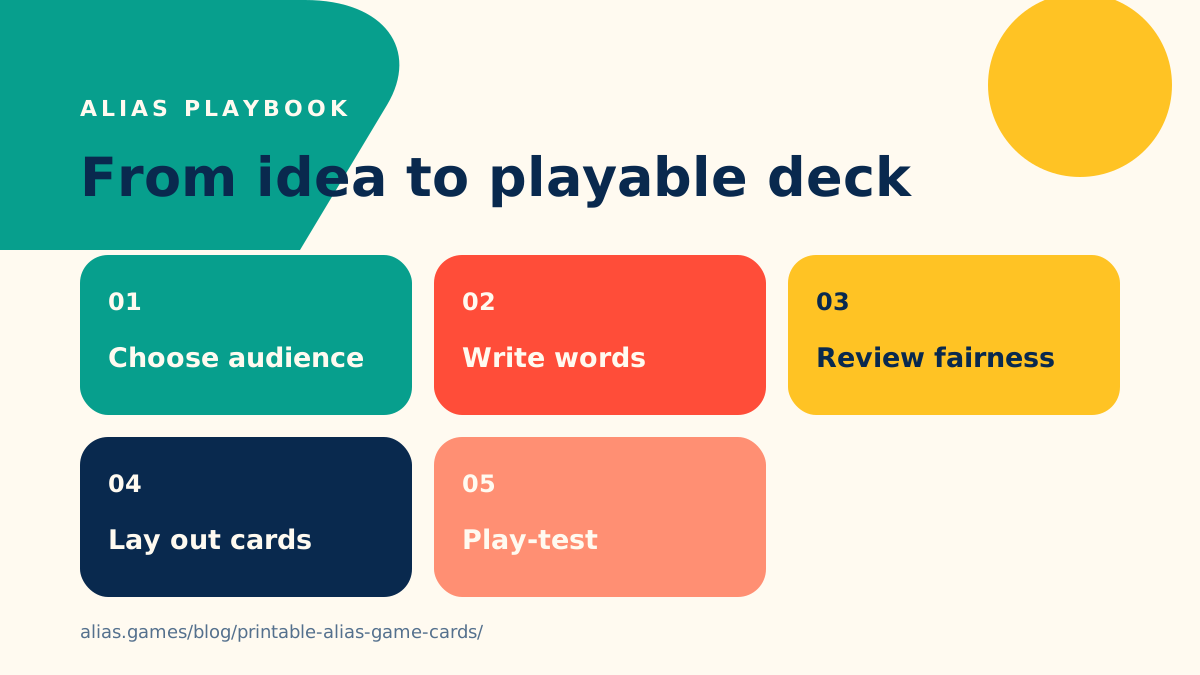
A homemade card deck can rescue a last-minute game night, support a lesson or turn a family theme into a round. The important work is not cutting paper; it is choosing original prompts that are legible, balanced and appropriate for the players.

IN THIS ARTICLE
QUICK ANSWER
Start with the useful version.
To make printable Alias cards, create an original list rather than copying a published deck, group words by audience and difficulty, place one to four readable prompts on each card, add a clear category or level marker and print on sturdy paper. Test ten cards before producing the full set. For a quick round, cut single-word slips and use a phone timer; for repeated use, choose larger cards, rounded corners and colour coding that remains understandable without colour alone.
START ORIGINAL
Create your own prompts instead of scanning a commercial deck.
Searches for an Alias cards PDF often lead to scans of published card sets. Reproducing those cards can copy protected editorial selection, artwork and layout, and it also produces a poor web experience filled with uncertain sources. A safer and more useful approach is to write an original list for the people you plan to host. Everyday language offers thousands of playable concepts without copying another deck.
Original cards can be better matched to a birthday, class topic, workplace or mixed-age family. Write broad category headings, brainstorm more words than you need and then edit. Remove anything the intended group is unlikely to recognise, anything that depends on private knowledge and any same-root neighbours that would reveal one another. The result should feel curated, not merely generated.
- Do not scan or reproduce a published card deck.
- Use original general-language prompts.
- Match words to the actual audience.
- Record the date and version of your custom set.
DEFINE THE DECK
Audience, occasion and round length determine the format.
A classroom revision set needs different cards from an adult party. Write a one-sentence brief: “Thirty medium English travel words for twelve intermediate learners,” or “Eighty mixed family words for ages eight and up.” This constraint guides vocabulary, card count, visual design and testing. Without it, a deck often becomes a random mixture that pleases nobody.
Estimate how many prompts the session needs. A team may explain several words in one minute, and repeated matches require more variety. Small one-off sessions can use single-word slips. A reusable family deck benefits from several prompts per card or a larger collection. Always print a small test batch before committing paper and cutting time to the whole set.
- Who will play?
- What language level?
- What theme or context?
- How many rounds?
- Will the cards be reused?
WRITE MORE, KEEP LESS
Editorial selection turns a word dump into a game.
Brainstorm in categories: objects, actions, people, places, events, feelings and ideas. For a food set, include ingredients, tools, cooking actions, dining situations and sensory qualities rather than only dish names. For a school set, combine key concepts with familiar supporting vocabulary. Write at least twice the number of prompts you plan to print so weak choices can be removed without shrinking the deck.
Read every word as an explainer. Can you give a legal category clue? Can you switch to an example or purpose if the team is stuck? Does the word have an obvious root hidden inside another common term? Remove prompts that invite only one brittle route. A strong deck creates multiple possible explanations and a useful series of guesses.
- Brainstorm by word type.
- Draft twice the final quantity.
- Test two legal clue routes.
- Remove obscure or brittle prompts.
LABEL HONESTLY
Separate difficulty without embarrassing players.
Use neutral labels such as Easy, Medium and Challenge, or one to three dots. Difficulty should describe the prompt, not the player. Concrete everyday words usually belong in the first level. Less frequent, abstract or culturally specific concepts move upward. Keep several easy cards in every session because rapid successes build pace and confidence.
Colour can support the levels, but it should not be the only signal. Add a shape, number or printed label so players with colour-vision differences and monochrome printers receive the same information. If teams draw randomly, mix levels only when the scoring system treats them fairly. Otherwise let the host choose a level for the whole round.
- Use neutral level names.
- Combine colour with text or symbols.
- Keep accessible prompts in every session.
- Choose one level per round for fair comparison.
DESIGN FOR HANDS
Readable cards beat decorative cards.
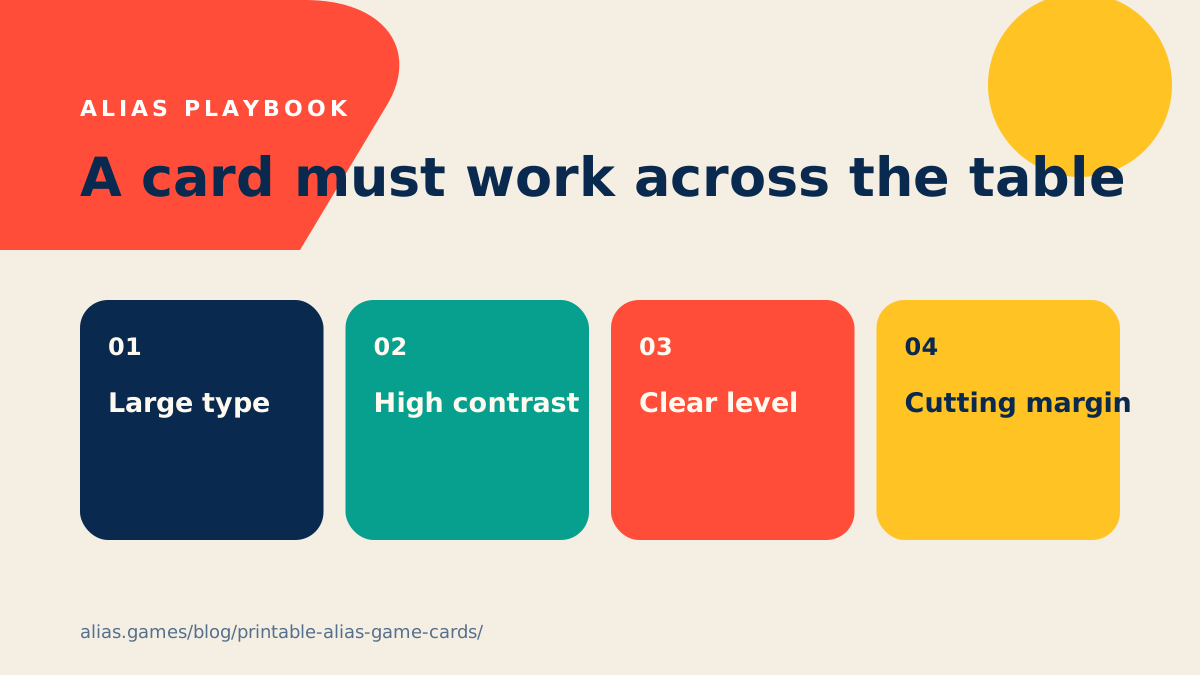
Use large type, strong contrast and generous margins. A card held at arm’s length should remain readable to the explainer without being visible across the room. Avoid thin script fonts, patterned backgrounds and tiny category labels. One prompt per slip is easiest for children and custom classroom use; several numbered prompts per card reduce paper for experienced groups.
Add cutting guides outside the live content area and leave enough space for imperfect trimming. Rounded corners feel pleasant but are optional. If cards will be shuffled repeatedly, use heavier paper or place them in reusable sleeves. Print a single page, cut it and conduct an actual handoff before finalising the grid. Screen-perfect layouts can become awkward physical objects.
- Large, plain type.
- Strong contrast.
- Safe cutting margin.
- Level visible without relying only on colour.
PRINT WITH LESS WASTE
Test one page before producing the deck.
Export the layout as a print-ready PDF with fonts embedded, then print at actual size rather than “fit to page” unless the design was created for scaling. Check that front and back alignment is unnecessary; single-sided cards are faster and more reliable. A simple blank reverse also prevents one card from being identified during a shuffle.
Use recycled or responsibly sourced paper when available, and avoid laminating a one-night set. For reusable classroom cards, sleeves offer protection while allowing the paper insert to be replaced. Store category sets in labelled envelopes or bands. A version number on the instruction page helps the host keep revised cards separate from earlier drafts.
- Export with embedded fonts.
- Print one page at actual size.
- Prefer single-sided cards.
- Sleeve reusable sets instead of laminating every draft.
ADD A ONE-PAGE GUIDE
The deck needs rules that can be understood in sixty seconds.
Include a short instruction sheet: make teams, choose the first explainer, start a 60-second timer, explain without saying the answer or its root, score correct words and rotate. State how skips, gestures, rhymes, translations and disputed answers work. If the cards use levels or numbers, explain exactly how the host selects them.
Keep edition-specific board mechanics out unless you have designed a compatible board. A DIY deck works perfectly with a phone timer and a simple score sheet. Do not imply that an original homemade set reproduces a publisher’s official product. Clear labelling helps players understand what they have and keeps the focus on your custom occasion.
- Team setup.
- Timer length.
- Forbidden clue forms.
- Skip and scoring policy.
- How levels are selected.
PLAY-TEST
Ten cards will reveal most design problems.
Ask two or three people from the intended audience to play one short round without seeing the full list. Watch for small type, confusing levels, words that nobody recognises and prompts that are solved by an accidental root. Record the cards that produce silence, repeated disputes or only one possible clue. Replace them rather than defending the original idea.
Run a second test after revision and measure pace. If nearly every word is instant, move some prompts upward. If most are skipped, reduce difficulty or broaden the category. Keep the successful list and note why it worked. A reusable custom deck becomes valuable through this editorial cycle, not through the number of pages in the PDF.
- Test ten cards.
- Observe, do not coach.
- Replace disputed and unknown prompts.
- Reprint only after the second test.
WHEN PAPER IS NOT NEEDED
Use the app when preparation becomes the main activity.
Custom cards are worthwhile for a specific lesson, event or creative family project. They are less useful when the host simply needs a balanced general game tonight. If writing, layout, printing and cutting take longer than the planned match, the Alias app removes that work and keeps categories, timer and score together.
Paper and digital play can also coexist. Use custom cards for one themed round, then switch to the app for a broad match. The custom set gives the occasion a personal moment, while the app supplies depth and repeatability. Choose the medium that helps people begin talking sooner.
- Paper for a specific theme.
- App for instant general play.
- Combine both for an event.
- Do not let preparation replace the gathering.
COMMON QUESTIONS
Clear answers before the next round.
Can I download official Alias cards as a PDF?add
Use the publisher’s authorised materials where offered. This guide recommends creating an original prompt deck rather than copying or scanning commercial cards.
How many words should I put on one card?add
One word is easiest for children and custom lessons. Multiple numbered words reduce paper for experienced groups, provided the type remains large and the selection method is clear.
What paper works for printable word-game cards?add
Test ordinary paper first. Use heavier stock or reusable sleeves only after the wording and layout have passed a play-test.
What should a DIY Alias instruction page include?add
Team setup, timer, legal and illegal clues, skip policy, scoring, level selection and a quick example.
KEEP EXPLORING
Rules and specialist guides.
READY FOR A ROUND?
Turn the advice into sixty seconds of play.
Download Alias, choose the setup that fits your room and start with one clear clue.

