GAME NIGHT
The best party word games for the room you have.
A useful party-game list should tell you what the room will actually do. These fifteen formats are organised by energy, group size, equipment and pressure so a host can choose quickly instead of reading twenty interchangeable recommendations.
IN THIS ARTICLE
QUICK ANSWER
Start with the useful version.
For fast team play, choose Alias, Taboo-style forbidden words, Catch Phrase-style passing or timed charades. For low-equipment groups, try word association, categories, twenty questions, fortunately/unfortunately or a one-sentence story chain. For quieter strategic play, choose Codenames-style connections, Just One-style duplicate clues or a cooperative mystery word. Match the game to group size and comfort: speaking, acting, personal disclosure and waiting time matter more than popularity.
CHOOSE THE ROOM
The best game is the one that removes the least comfort.
A list cannot choose for you without knowing the group. Count active players, notice whether they know one another and decide whether the room wants noise, performance, strategy or conversation. Ask how much individual spotlight people will accept. A brilliant acting game can fail with a reserved work group, while a slow deduction game can flatten a birthday crowd that wants movement.
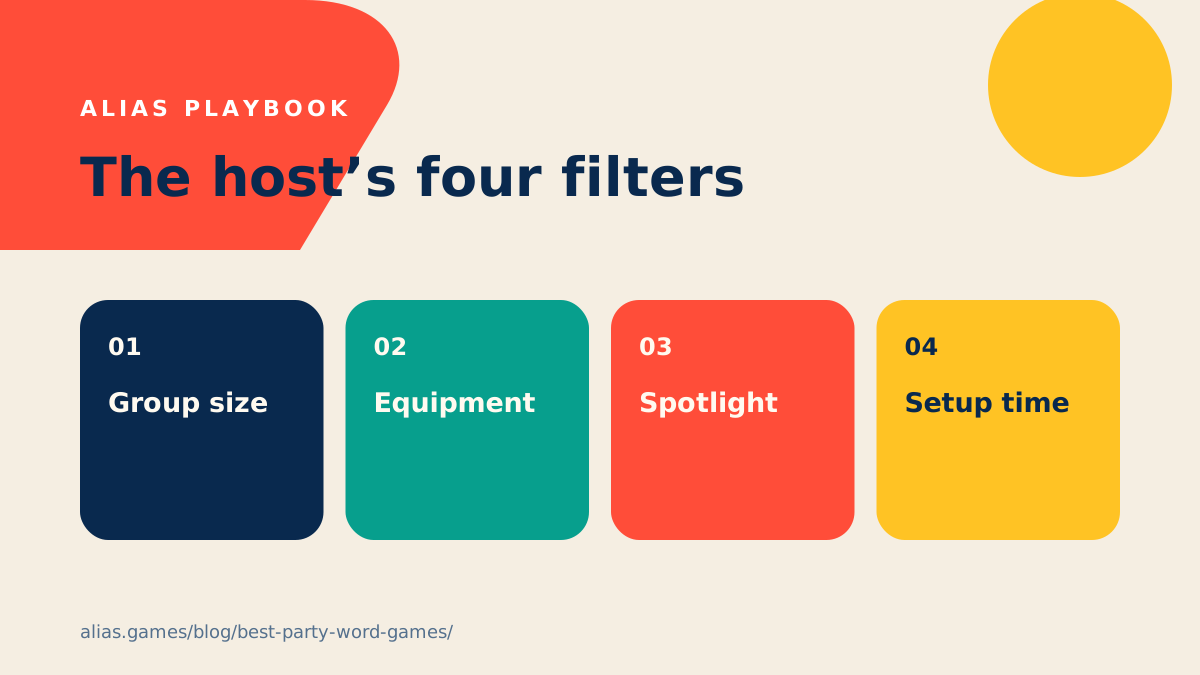
Use four filters: group size, equipment, setup time and social pressure. Large groups need simultaneous participation or small teams. Last-minute gatherings need no-equipment or one-phone formats. New acquaintances benefit from structured clues rather than personal revelations. Families need broad references and flexible timing. Apply those filters before comparing themes or artwork.
- How many active players?
- Do they know one another?
- Talk, act or deliberate?
- How much waiting and spotlight is acceptable?
FAST TEAM GAMES
1–4: explain, restrict, pass or act.
1. Alias: one player explains target words without saying them while teammates guess under a timer. It is quick to teach, works on one phone and rewards reframing. 2. Forbidden Words: prepare a target plus several obvious clues that cannot be spoken. The extra restriction suits confident word-game players. 3. Pass the Prompt: explain one word, then hand the device or card to the next player immediately after a correct guess.
4. Timed Charades: use the same prompt structure but remove speech. These four games create high energy because answers arrive in rapid sequence. Use teams of three to five, rotate the active role and choose familiar categories first. Acting produces more spectacle; verbal explanation creates more language. A host can move between them across short rounds without changing the basic scoring.
- Alias.
- Forbidden Words.
- Pass the Prompt.
- Timed Charades.
NO EQUIPMENT
5–8: words are the entire game kit.
5. Word Association: move around the circle, connecting each answer to the previous word without repeats. 6. Category Countdown: choose a category and name unique examples until time or ideas run out. 7. Twenty Questions: one person chooses a person, place or object and the group asks yes-or-no questions. 8. Fortunately/Unfortunately: build a story by alternating positive and negative events.
These formats begin immediately and work as backups when a phone dies or a planned game feels too complex. Keep turns short and define how repeats are handled. Word Association and Categories raise energy; Twenty Questions is more analytical; Fortunately/Unfortunately encourages improvisation. None requires personal disclosure, which makes them useful for mixed or newly formed groups.
- Word Association.
- Category Countdown.
- Twenty Questions.
- Fortunately/Unfortunately.
STRATEGIC WORD PLAY
9–11: slow the room and make every clue count.
9. Code Connections: place visible words on a table and ask clue-givers to connect several with one association while avoiding a danger word. 10. Duplicate Clues: everyone writes one clue for the same hidden word, matching clues are removed and the guesser sees only unique help. 11. Cooperative Mystery Word: players take turns adding one legal hint until the group identifies the concept within a fixed number of clues.
These games create conversation between guesses rather than a continuous shout. They suit smaller tables, late-evening play and groups that enjoy language puzzles. Prepare clear word cards or use an established game with tested balance. Because one clue can affect several possibilities, allow more thinking time and reduce background noise.
- Code Connections.
- Duplicate Clues.
- Cooperative Mystery Word.
CREATIVE LANGUAGE
12–15: build stories, definitions and shared answers.
12. One-Sentence Story Chain: each person adds a sentence without undoing earlier events. 13. Fake Definition: one player presents an unusual word and everyone invents a plausible meaning before the real one is revealed. 14. Same Answer: pairs privately answer a category prompt and score when their responses match. 15. Alphabet Conversation: each new sentence begins with the next letter of the alphabet while maintaining one scene.
Creative formats are less about speed and more about surprise. Fake Definition needs a prepared source of unusual words and clear separation between invention and fact. Same Answer works well for friends but should use harmless categories with no pressure to disclose. Story Chain and Alphabet Conversation need a host willing to keep the pace and accept imperfect contributions.
- One-Sentence Story Chain.
- Fake Definition.
- Same Answer.
- Alphabet Conversation.
PARTY GAMES FOR ADULTS
Mature play should mean sharper ideas, not forced embarrassment.
Adults often enjoy harder concepts, cultural references and faster timers, but an adult label does not justify making guests reveal private experiences. Choose themes such as travel, work life, film, food, music, design or current culture. If the group wants mature prompts, obtain agreement and keep a neutral pack available without requiring anyone to explain why they prefer it.
Competition should remain legible. Announce the target score, explain penalties and name the person who resolves disputes. Avoid drinking requirements, humiliation and jokes about language ability. The strongest adult party game assumes players are intelligent enough to enjoy clever constraints without needing discomfort as the main source of energy.
- Sharper concepts.
- Faster rounds.
- Clear consent for mature themes.
- No forced disclosure or drinking.
LARGE GROUPS
More teams create more play; bigger teams create more waiting.
For more than twelve players, divide the room into several teams or parallel tables. Choose formats with short active turns or simultaneous answers. Alias, Categories, Timed Charades and Same Answer scale well when the host controls rotation. Story formats can work in one circle only if contributions stay to a single sentence and nobody waits twenty minutes for a second turn.
Prepare the next player before the current timer ends. Use visible team order and a reachable finish. If devices are limited, combine one phone game with no-equipment stations and rotate groups every ten minutes. A festival of small games often serves a crowd better than an enormous bracket centred on one screen.
- Small teams.
- Short rounds.
- Parallel tables or stations.
- Visible order.
- One shared final moment.
OFFLINE GAME NIGHT
Plan for a weak signal without making the phone the enemy.
Offline does not have to mean device-free. One downloaded app can supply words, timer and scoring while everyone looks at the active player rather than their own screens. Before travelling, open the game, confirm categories are available, charge the device and silence notifications. Keep Word Association, Categories or Charades as a zero-device backup.
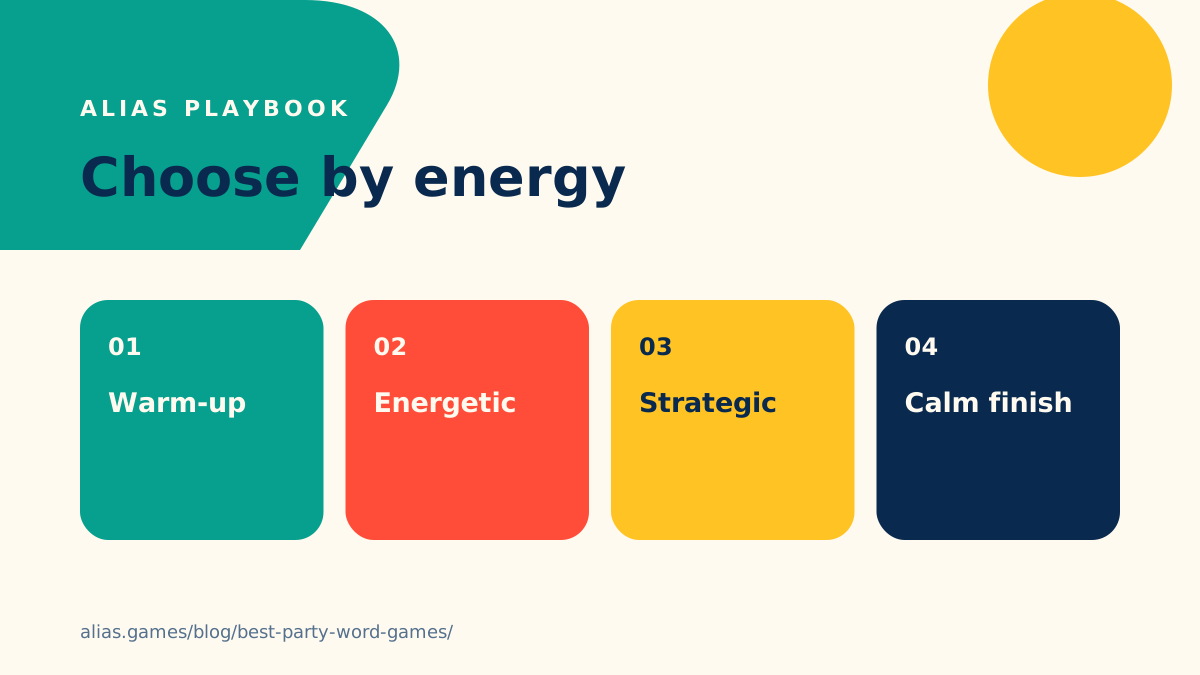
Build the night with an arc: a simple warm-up while people arrive, an energetic team game in the middle and a calmer strategic or story game at the end. Choose two or three formats, not fifteen. Completing a short Alias match and one contrasting game creates a stronger memory than rushing through a recommendation list.
- Prepare content before travel.
- One shared device, not one per person.
- Keep a verbal backup.
- Warm up, peak, then settle.
A TEN-MINUTE HOST PLAN
Prepare choices, not a complicated programme.
Before guests arrive, select one opening game, one energetic centrepiece and one optional calm finish. Test any app, gather a few blank cards only if a paper format needs them and decide where active players will sit. Put the rules for the first game into one sentence and prepare one demonstration prompt.
During the night, watch participation rather than the schedule. If conversation is already lively, skip the warm-up. If the central game lands well, finish it before offering another. If a format creates long waits, change team size immediately. A small prepared menu gives the host confidence while leaving the group enough freedom to shape its own evening.
- One opening option.
- One energetic centrepiece.
- One calm backup.
- One demonstration.
- Permission to change the plan.
COMMON QUESTIONS
Clear answers before the next round.
What is the easiest party word game to teach?add
Alias, charades, word association and categories can each be demonstrated in one example. Choose the one matching the group’s comfort with speaking or acting.
What word games need no equipment?add
Word Association, Category Countdown, Twenty Questions, Fortunately/Unfortunately and Story Chain need only an agreed rule and a starting player.
Which party word games work for large groups?add
Use Alias with several small teams, timed charades, categories or simultaneous-answer formats. Reduce waiting before adding complex rules.
Can a phone party game work offline?add
Yes, when the app and needed content are available before the event. Confirm offline behaviour, charge the device and keep one no-device backup.
What is a good game-night order?add
Start with a low-pressure warm-up, place the loudest team game in the middle and finish with a calmer strategic or story format.
KEEP EXPLORING
Rules and specialist guides.
READY FOR A ROUND?
Turn the advice into sixty seconds of play.
Download Alias, choose the setup that fits your room and start with one clear clue.

