ADULT PARTIES
21 party games for adults that respect the whole room.
Adult party games can be clever, energetic and genuinely funny without relying on embarrassment. This host-focused guide sorts practical formats by the experience they create, explains who each one suits and shows how to keep consent, pacing and participation visible.

IN THIS ARTICLE
QUICK ANSWER
Start with the useful version.
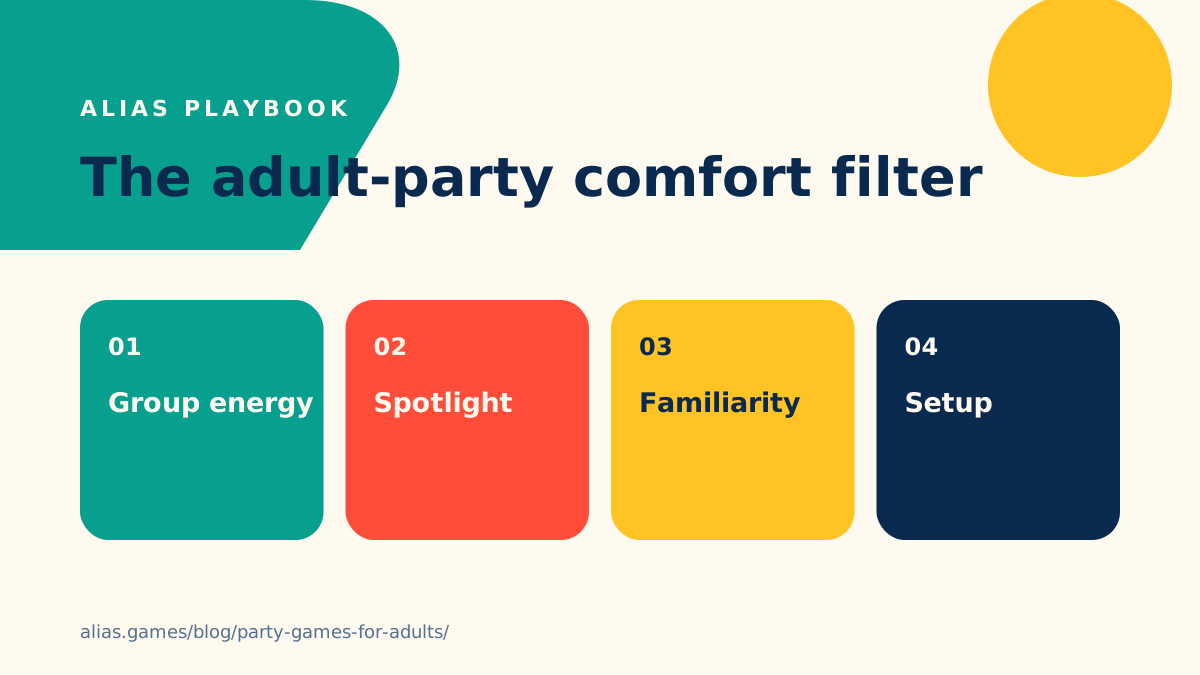
Strong adult party games have a short explanation, visible ending and comfortable level of attention. For fast team energy, use Alias, charades or a forbidden-word challenge. For a dinner table, try same answer, reverse trivia or a hidden-rule puzzle. For a large group, divide into small teams or stations. Avoid mandatory drinking, intimate disclosures and elimination that leaves guests watching; mature play comes from sharper choices and better conversation, not forced discomfort.
SET THE RIGHT TONE
Adult should mean interesting—not invasive.
A useful adult label can signal richer vocabulary, cultural references, strategy and faster decisions. It should not automatically mean sexual prompts, drinking penalties or public confession. Guests bring different histories, relationships, languages and comfort levels into the same room. A host creates trust by describing the game accurately and making an alternative available without asking anyone to justify their choice.
Choose activities that generate humour from constraints, misunderstandings and shared invention. Explaining an ordinary word under pressure can be funnier than answering an intimate question because everyone understands the rule and nobody has to become the content. If the group requests mature themes, confirm the boundary before play and keep a neutral category available. Consent is an ongoing setting, not a one-time vote taken before the first round.
- Describe the experience before starting.
- Make personal disclosure optional.
- Keep a neutral prompt set available.
- Let players pass without penalty.
FAST TEAM ENERGY
1–5: use short turns and a clear shared target.
1. Alias: explain target words to teammates without saying the answer or its root. 2. Forbidden Clues: add a short list of obvious words the explainer cannot use. 3. Speed Charades: act as many familiar prompts as possible in one minute. 4. Sound Effects Only: communicate an object, place or action without words or gestures. 5. Backward Scene: teams receive the ending of a harmless situation and improvise the thirty seconds that led to it.
These games suit a room that already wants noise. Keep teams between three and five so each person explains regularly. Begin with broad references—food, travel, objects, films known by the group—before introducing specialised categories. Rotate the active player every round and announce whether skips cost points. One practice card makes the restrictions clearer than a long rules speech. Stop a disputed clue quickly and continue; party momentum is more valuable than perfect adjudication.
- Alias.
- Forbidden Clues.
- Speed Charades.
- Sound Effects Only.
- Backward Scene.
STAY SEATED
6–10: table games create conversation without turning dinner into a quiz.
6. Same Answer: pairs try to match responses to neutral categories. 7. Reverse Trivia: teams see an answer and invent a plausible question. 8. Hidden Rule: players test examples until they discover the host’s pattern. 9. Five-Word Review: describe a fictional product, imaginary film or shared snack in exactly five words. 10. One-Minute Expert: speak confidently for sixty seconds about an absurd but fictional topic chosen by the group.
A dinner-table game should tolerate interruptions and uneven arrival times. Avoid materials that compete with food or require every surface. Let people join between rounds and keep the score informal. One-Minute Expert works best in pairs or teams so nobody is forced into a solo performance. Same Answer should use preferences that are easy to share, such as a weekend breakfast or a superpower, rather than topics that reveal finances, health or relationships.
- Use compact materials.
- Allow drop-in participation.
- Prefer fictional expertise.
- Keep prompts socially safe.
MIX THE ROOM
11–13: mingling games should give people a task, not a networking script.
11. Find the Connection: small groups discover three non-sensitive things they share, excluding visible traits and workplace roles. 12. Prompt Stations: place simple questions or mini challenges around the room and let guests visit in any order. 13. Partner Paraphrase: pairs hear a playful description and work together to identify the hidden object before switching partners. These formats create a reason to speak without asking guests to perform instant intimacy.
Set a short duration and a clear way to opt out. Do not require everyone to meet everyone; that turns a party into an assignment. For Find the Connection, ban answers such as “we are all at this party” but allow people to invent a team identity if sharing feels uncomfortable. Prompt stations can include a quiet observation task, a drawing option and a verbal clue so different communication styles have a route into the activity.
- Offer multiple prompt types.
- Limit each interaction.
- Never require private facts.
- Make completion optional.
NO EQUIPMENT
14–17: keep these verbal games ready when the plan disappears.
14. Category Countdown: name unique items in a category before a short timer ends. 15. Questions Only: improvise a scene where every line must be a question. 16. Fortunately/Unfortunately: build a story by alternating positive and negative turns. 17. Twenty Questions: identify a chosen person, place or object with yes-or-no questions. None requires cards, an account or a special space.
Verbal games still need boundaries. Choose public knowledge rather than people in the room for Twenty Questions. Allow category skips and define whether repeated answers end a turn or simply do not count. Questions Only becomes friendlier when played as a cooperative attempt to reach ten exchanges instead of immediate elimination. A simple shared goal keeps weaker improvisers involved and prevents one confident pair from occupying the entire evening.
- Category Countdown.
- Questions Only.
- Fortunately/Unfortunately.
- Twenty Questions.
LARGE HOUSE PARTY
18–21: create smaller arenas inside the crowd.
18. Mini-Tournament Alias: several small teams play equal timed rounds and only the final is announced to the room. 19. Prompt Relay: stations offer a drawing, explanation, sorting or sound challenge. 20. Human Spectrum: guests place themselves along an imaginary scale for low-stakes choices such as sunrise versus late night, then talk to nearby people. 21. Team Mosaic: each small group creates one part of a shared fictional poster or story that is revealed at the end.
Large-party design is about waiting time. One circle of twenty creates more spectators than players. Use parallel tables, stations or simultaneous choices. Give each area a visible instruction and an easy reset. Avoid public elimination; losing a thirty-second task should not remove someone from the next twenty minutes. If the room is too loud for spoken clues, switch to drawing, sorting or smaller spaces rather than asking everyone to shout harder.
- Small teams or stations.
- Simultaneous participation.
- No long elimination.
- One shared reveal at the end.
ALCOHOL IS NOT A RULE
Make drinking independent from scoring and participation.
A party may include alcohol, but the game should never require it. Tie points to the task, not to consumption. Keep water and alcohol-free drinks equally visible, and never ask a person to explain why they are not drinking. A rule that treats abstaining as a penalty changes a voluntary social activity into pressure and can make the host responsible for unsafe behaviour.
As the evening progresses, shorten explanations rather than adding complicated restrictions. Stop timed or physical games if attention and coordination decline. Designate a sober host for any activity involving movement, outdoor space or travel. The safest party-game plan still works exactly the same when every participant chooses a non-alcoholic drink. That is a useful test of whether the entertainment is actually coming from the game.
- No drinking penalties.
- Equal alcohol-free options.
- Simpler rules later in the evening.
- Stop physical play when coordination drops.
HOST IN TEN MINUTES
Prepare a compact sequence and a graceful exit.
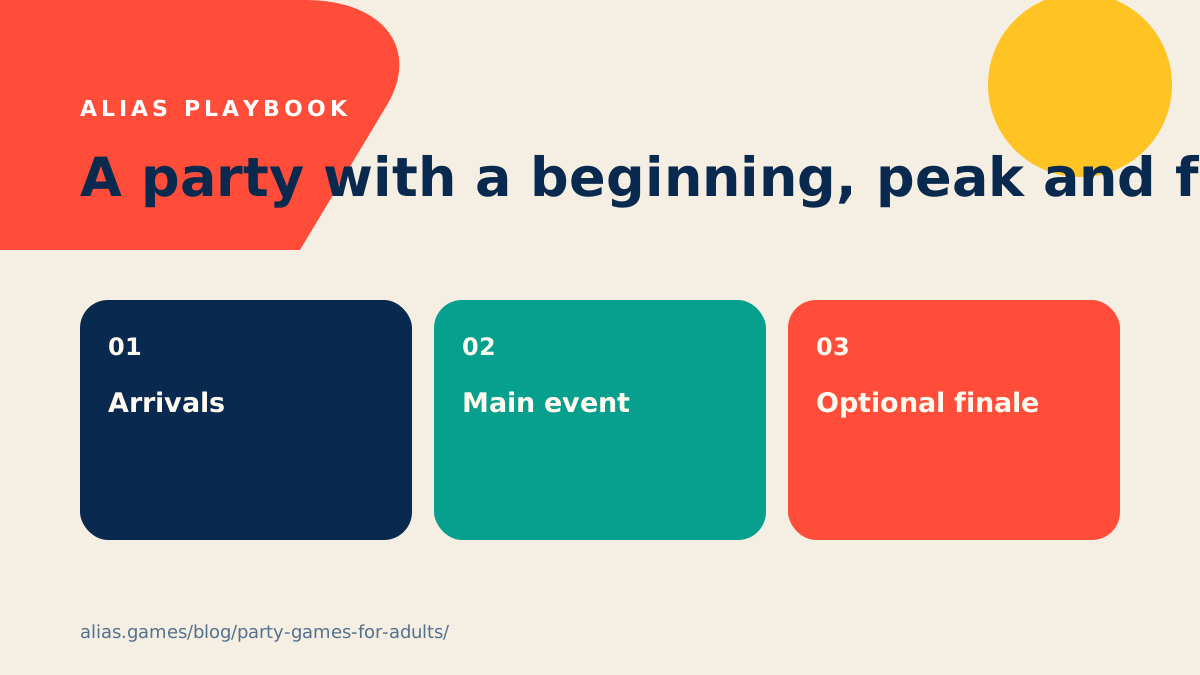
Pick one flexible arrival game, one team centrepiece and one quiet backup. Test the timer or app, clear the immediate play area and prepare categories that the whole guest list can recognise. Explain the first activity in a sentence, demonstrate one turn and name the finish: a target score, number of rounds or ten-minute limit. A visible ending makes trying a new format feel safe.
During play, notice who has not had an active role. Rotate explainers, break large teams apart and offer timekeeper or prompt-host roles. If the game lands, offer a rematch before introducing another rule set. If it does not, close the round without blaming the players. The host’s most useful skill is not enthusiasm at any cost; it is making a change before discomfort or boredom becomes the centre of attention.
- Arrival game.
- Main team game.
- Quiet backup.
- One-sentence explanation.
- Visible finish and easy exit.
COMMON QUESTIONS
Clear answers before the next round.
What are easy party games for adults?add
Alias, charades, category countdown, twenty questions, same answer and questions only all teach quickly and can be adjusted for the group’s preferred level of attention.
What adult party games need no equipment?add
Try category countdown, questions only, fortunately/unfortunately, twenty questions or a cooperative story chain. Set a turn order and endpoint before play.
How do you make adult party games less awkward?add
Use fictional or object-based prompts, explain the level of spotlight, allow no-penalty passing and avoid mandatory drinking or personal disclosure.
What works for a large adult party?add
Use parallel small teams, stations, simultaneous choice games or short relays. Avoid one long circle and elimination that creates spectators.
How many party games should a host prepare?add
Three is enough: a flexible arrival activity, one main game and a contrasting backup. A rematch is often better than teaching a fourth set of rules.
KEEP EXPLORING
Rules and specialist guides.
READY FOR A ROUND?
Turn the advice into sixty seconds of play.
Download Alias, choose the setup that fits your room and start with one clear clue.

