FRIENDS
25 fun games to play with friends—without overplanning.
The right game gives a group something to do together without making the night feel managed. Use this practical list to choose a fast word game, a quiet deduction challenge, an active contest or a no-equipment backup that fits the friends in front of you.

IN THIS ARTICLE
QUICK ANSWER
Start with the useful version.
For a spontaneous night with friends, start with a game that takes under two minutes to explain. Alias, charades, categories and twenty questions work with almost no preparation. Add a deck game or a cooperative drawing challenge when the group wants more structure. Choose by group size, available space and appetite for spotlight: the most enjoyable game is not the most complicated one, but the one that lets everyone participate quickly and comfortably.
CHOOSE IN TWO MINUTES
Match the game to the room before reading a long list.
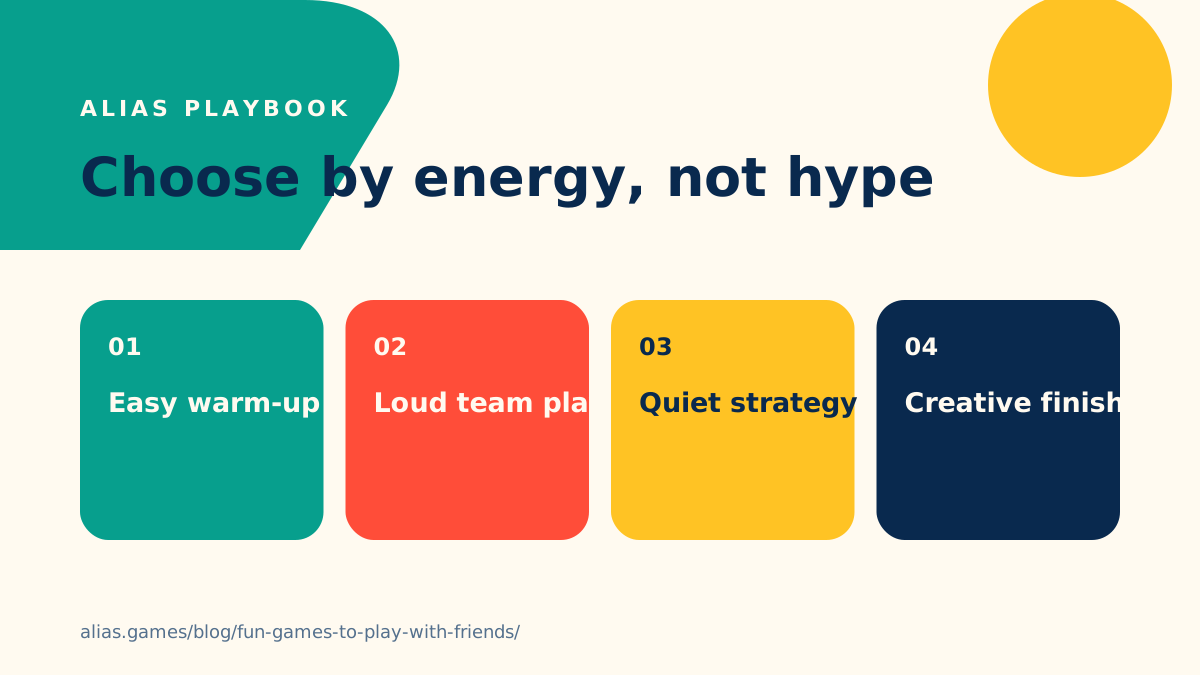
Begin with four practical questions. How many people are actively playing? Do they want to speak, move, draw or think quietly? How much equipment is already available? Finally, how comfortable is the group with individual attention? A five-person living room can enjoy a focused deduction game, while twelve friends need teams, parallel play or very short turns to prevent long stretches of waiting.
Treat energy as a setting that can change during the evening. Friends arriving at different times need a flexible warm-up. A settled group may want a competitive centrepiece. Later, conversation often suits a calmer cooperative or story game. Do not force a detailed schedule; prepare two contrasting options and one no-equipment backup. That small amount of structure makes choosing easy without making the gathering feel like an event programme.
- Count active players, not invited guests.
- Choose speaking, acting, drawing or strategy.
- Limit setup when people are still arriving.
- Keep one low-pressure alternative ready.
START RIGHT NOW
1–5: instant games for friends with almost no setup.
1. Alias: split into teams and explain as many target words as possible before the timer ends without saying the word itself. 2. Charades: act a film, object, action or person without speaking. 3. Category Relay: choose a category and move around the circle naming unique examples. 4. Twenty Questions: one player thinks of a person, place or object while the group asks yes-or-no questions. 5. One-Word Story: each person adds exactly one word to build a sentence and eventually a strange shared plot.
These formats are useful because one demonstration teaches the rule. Alias creates rapid conversation, charades adds physical comedy, categories rewards quick recall, twenty questions slows the room into deduction and a one-word story removes scoring entirely. Use familiar prompts in the first round. If a game depends on references that only two friends share, switch the category rather than letting the rest of the group watch an inside joke.
- Alias for fast team clues.
- Charades for movement.
- Categories for a verbal warm-up.
- Twenty Questions for deduction.
- One-Word Story for cooperation.
AROUND THE TABLE
6–10: give a seated group a little more structure.
6. Cooperative Drawing: one person describes a simple image while teammates draw without seeing the original. 7. Same Answer: pairs respond privately to a harmless category and score when their answers match. 8. Reverse Trivia: provide the answer first and let teams invent the most plausible question. 9. Ranking Debate: order five fictional options such as dream weekend destinations and defend the team’s sequence. 10. Hidden Rule: one host accepts or rejects examples according to a secret pattern that everyone else must discover.
Table games work best when every player has a visible route into the conversation. Give each person paper or rotate the speaker instead of allowing the loudest voice to own the task. Keep ranking prompts low stakes: favourite snacks invite debate, while money, relationships or personal history may create pressure. Hidden-rule games need an attainable pattern and a generous first hint. The purpose is a satisfying discovery, not proving that the host can outsmart the room.
- Give everyone a tool or a turn.
- Use harmless prompts.
- Explain how a round ends.
- Prefer discovery over gotcha rules.
MAKE SOMETHING TOGETHER
11–15: creative games turn imperfect ideas into the entertainment.
11. Caption This: show an ordinary photo and let each person write a caption before anonymous voting. 12. Bad Product Pitch: combine two random objects and sell the resulting invention in thirty seconds. 13. Fortunately/Unfortunately: alternate good and bad events in one developing story. 14. Soundtrack Scene: choose a situation and argue which song belongs in it without playing the track. 15. Exquisite Sketch: fold paper so each player sees only a small part of the previous drawing, then reveal the full creature or character.
Creative play benefits from a short constraint. A time limit prevents overthinking, anonymous sharing protects hesitant writers and teams reduce the pressure of presenting alone. Make the prompt fictional or object-focused so nobody has to disclose a private experience to participate. Do not judge artistic skill. A rough sketch or awkward pitch is often fun because the group understands the constraint, not because someone becomes the target of the joke.
- Use a clear creative constraint.
- Make sharing optional or anonymous.
- Laugh at the result, not the player.
- Keep presentations under one minute.
GET OFF THE SOFA
16–19: active options for friends who want movement.
16. Indoor Scavenger Dash: teams receive a list of safe household objects and photograph them without entering private rooms. 17. Human Timeline: arrange yourselves by birthday month, travel distance or another visible criterion without speaking. 18. Paper Plane Target: build one plane per person and score accuracy rather than distance. 19. Silent Line-Up: organise the group by height, first-name alphabet or shoe colour using gestures only.
Check space, neighbours and accessibility before choosing an active game. Replace running with walking, make reaching optional and ensure every challenge has a seated role such as clue reader, timer or scorekeeper. Remove fragile objects and set boundaries before the timer begins. Movement should refresh the evening, not turn a small apartment into an obstacle course. A five-minute active round is usually enough before returning to a game where the whole group can talk.
- Clear the play area.
- Offer a seated role.
- Use walking rather than running indoors.
- Keep physical rounds short.
NOTHING TO PREPARE
20–22: no-equipment games are the most reliable backup.
20. Two Truths and a Fictional Detail: each player shares three light statements, with permission to invent all three if they prefer privacy. 21. Alphabet Categories: name an item in the chosen category beginning with the next letter. 22. Questions Only: pairs conduct a scene using questions; a statement ends the turn. These games travel well and begin without a box, deck or charged device.
No-equipment does not mean no facilitation. Announce the turn order, define repeats and keep personal prompts optional. If someone does not want to tell stories about themselves, use fictional characters, places or objects. Questions Only is easier when the host supplies a setting such as a bakery or space station. Alphabet Categories can skip difficult letters. Flexible rules preserve rhythm and make the activity accessible instead of treating every edge case as failure.
- State the turn order.
- Allow fictional answers.
- Skip impossible letters.
- Optimise for flow, not elimination.
FRIENDS IN DIFFERENT PLACES
23–25: use simple formats online or while travelling.
23. Camera Roll Hunt: on a call, name a neutral category such as a red object or a recent landscape, then let players choose what they are comfortable sharing. 24. Private Prompt Alias: send the target word directly to one explainer while everyone guesses aloud. 25. Audio Mystery: one player creates a safe household sound off camera and the group identifies its source. On a train or road trip, replace visual prompts with verbal categories, twenty questions or a cooperative story.
Remote games need tighter speaking order because normal conversational overlap becomes audio noise. Use teams of three to five, a visible timer and one host who handles prompts. Never require screen sharing of personal photos or messages. During travel, the driver must remain outside any task that competes for attention; passengers can play verbal games quietly. Download any app content before leaving reliable service and keep one fully verbal option ready.
- Use private prompt delivery.
- Keep remote groups small.
- Share only chosen photos.
- Never distract a driver.
A NIGHT THAT FLOWS
Build a short menu and let your friends choose the direction.
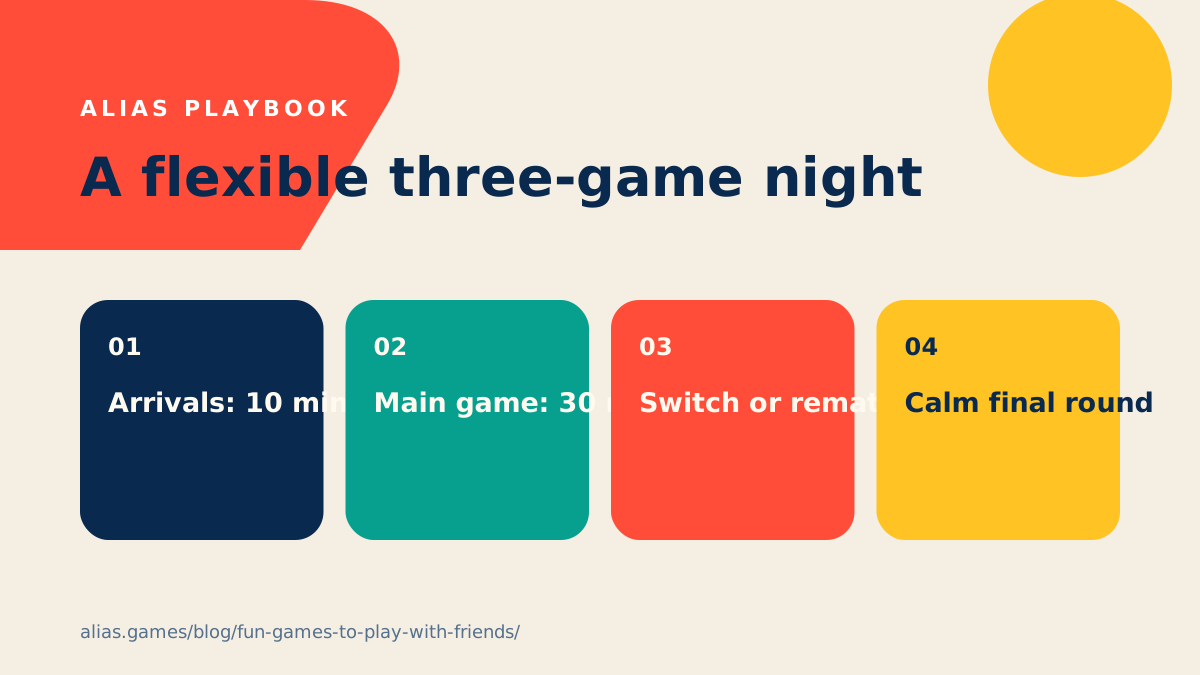
A dependable sequence begins with one ten-minute warm-up, continues with a 20- to 40-minute main game and ends with either a rematch or a calm creative round. Put Alias, charades or categories near the start because they teach quickly. Use a structured table game after everyone has arrived. Save story and drawing formats for later, when the group has shared references from the evening.
Watch participation more closely than points. If two people dominate, reduce team size or rotate the active role. If the energy drops, finish the round rather than extending the target score. If conversation becomes better than the game, let the game end. A successful night with friends is not measured by how many activities were completed. It is measured by whether the structure helped people pay attention to one another and made the next round feel inviting.
- Warm up for ten minutes.
- Choose one main game.
- Offer a rematch before a new rule set.
- Stop while the group still wants more.
COMMON QUESTIONS
Clear answers before the next round.
What games can friends play at home?add
Alias, charades, categories, twenty questions, cooperative drawing, hidden-rule puzzles and short story games all work in a living room with little setup.
What games can you play with friends without anything?add
Try categories, twenty questions, questions only, alphabet categories, fortunately/unfortunately or a one-word story. Agree on turn order and a simple ending before starting.
What is a good game for four friends?add
Four people can play two-versus-two Alias, cooperative drawing, same answer, a compact deduction game or a shared story challenge with fast role rotation.
How do you choose a game when friends want different things?add
Offer two contrasting options described by experience—such as loud team clues or calm deduction—and let the group choose. Keep a low-pressure alternative available.
What games work with friends online?add
Private-prompt word games, twenty questions, camera roll hunts and audio mysteries work on calls when the host manages turns and nobody must share personal material.
KEEP EXPLORING
Rules and specialist guides.
READY FOR A ROUND?
Turn the advice into sixty seconds of play.
Download Alias, choose the setup that fits your room and start with one clear clue.

