FAMILY
Make Alias work for the whole family.
A family match succeeds when every age has a meaningful role. Adjust the word pack, timer, team structure and penalties so children can create clues, adults still feel challenged and nobody spends the evening watching.

IN THIS ARTICLE
QUICK ANSWER
Start with the useful version.
For a family Alias game, use familiar categories, 60- to 90-second rounds, mixed-age teams and no skip penalty during the first match. Rotate the explainer so children create their own clues rather than only guessing. Two players can alternate equal rounds or chase a shared score; three players can rotate one explainer and two guessers, then compare totals after a complete cycle. End after every participant has explained at least once and while the room still wants another game.
DESIGN FOR BELONGING
The score is secondary to giving everyone a real turn.
Family groups combine different reading levels, reaction speeds, cultural references and attitudes toward competition. A standard adult party setup may leave a younger child guessing words they cannot read or a grandparent waiting through references they do not know. Begin by choosing the most inclusive category, then let experienced players create difficulty through better clues rather than rarer vocabulary.
State that everyone will explain before anyone repeats. Adults may privately read a card for a child, but they should not invent the clue on the child’s behalf. Offer a practice turn and permission to skip without embarrassment. The game becomes a family activity when each person contributes to the shared conversation, not when one generation demonstrates mastery to another.
- Choose shared vocabulary.
- Rotate every explainer.
- Help with reading, not with creating the clue.
- Let players pass without public pressure.
ALIAS FOR KIDS
Concrete words let imagination do the difficult work.
Good children’s categories include animals, food, school, home, transport, weather, body movements and familiar jobs. Concrete words provide visible features and everyday situations. “Penguin” can be described through colour, habitat, movement and bird category. An abstract word such as “responsibility” may require experiences and vocabulary a younger player has not yet developed.
Use pictures or an adult reader for children who are still decoding text. Extend the timer to 90 seconds, remove skip penalties and count a close grammatical form when the concept is clearly understood. Praise the route the child found, not only speed. A surprising literal clue is often the best moment of the round and should not be corrected into adult language.
- Concrete categories.
- Optional picture support.
- Longer timer.
- No skip penalty while learning.
MIXED-AGE TEAMS
Combine generations instead of staging adults versus children.
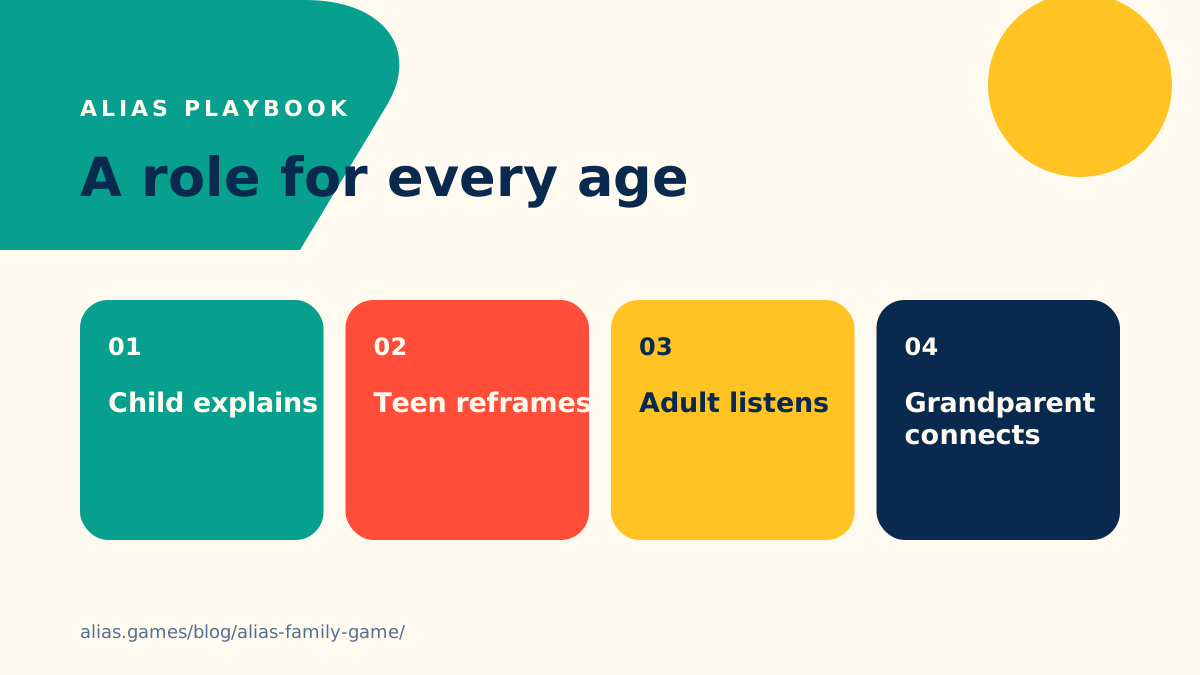
Adults versus children may look simple but often creates unequal vocabulary and confidence. Mixed-age teams distribute reading support, cultural references and guessing speed. Pair each child with at least one patient adult or older sibling, and rotate roles so an adult does not become the permanent explainer. Team names chosen together can create identity without emphasising age.
If one generation dominates, change the rule rather than asking them to hold back vaguely. Require a complete explainer rotation, use alternating child and adult rounds, or create a bonus for a clue solved by the youngest player. Keep bonuses small enough that the normal game still matters. Explicit structure feels fairer than constant informal correction.
- Mix ages across teams.
- Alternate explainer ages.
- Keep bonuses simple and visible.
- Never make speed a measure of intelligence.
TWO PLAYERS
Alternate equal rounds or play against a shared target.
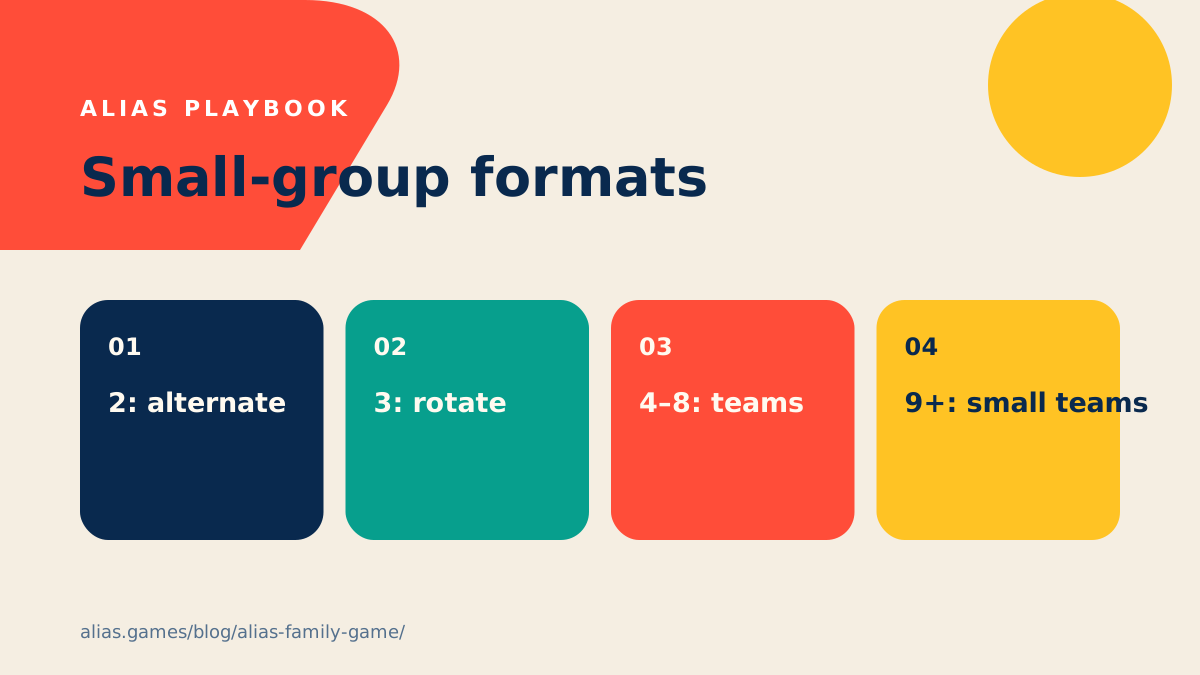
In a two-player duel, Player A explains for a fixed number of rounds while Player B guesses, then the roles reverse for the same number and duration. Compare the totals after both halves. Because the guesser affects every point, treat the result as a playful communication score rather than a pure individual ranking. Use the same difficulty for both sides.
A cooperative version is often better for a parent and child or couple. Set a shared target such as twenty correct words across six turns. Alternate explaining after every timer and try to improve the combined total next time. Keep skipped words neutral. Cooperation shifts attention from winning the other person’s mistakes to finding better ways to understand one another.
- Duel: equal rounds and difficulty.
- Co-op: one shared target.
- Alternate every turn.
- Compare complete cycles, not individual cards.
THREE PLAYERS
Rotate roles so the temporary pair never becomes permanent.
With three players, one person explains while the other two guess. After the round, rotate the explainer. Complete three turns before comparing anything, because every player needs the same opportunity to explain. You can treat all correct words as a shared score or record the explainer’s round total for a light individual challenge.
For a more team-like variation, one person guesses while the other two alternate giving clues one sentence at a time. Rotate the guesser after each round. This format highlights how two clue-givers approach the same concept, but establish that they cannot speak over each other. Use a visible turn cue or simply alternate sentences.
- One explainer, two guessers.
- Complete three-turn cycles.
- Shared score for cooperation.
- Two-clue-giver variation for experienced trios.
CALM THE PRESSURE
Timer and penalties should support the youngest participant.
A 60-second round works for families familiar with the game. Use 75 or 90 seconds when children are learning the controls, when several languages are present or when reading takes longer. A longer timer does not make the match less legitimate; it creates enough time for a complete explanation. Shorten it later if the group asks for more intensity.
Turn off skip penalties in the first match. Children should learn that passing an unknown word is a useful strategy, not a public failure. Keep a modest target score and announce the final rotation. A family game night benefits from a predictable ending, especially when younger players have bedtimes or limited attention.
- 60 seconds for familiar players.
- 75–90 seconds for learning or multilingual play.
- Neutral skips first.
- Reachable score and announced finish.
TEACH CLUES GENTLY
Model one new route instead of correcting every sentence.
Children often begin by telling a story around the word or accidentally using part of it. Stop only when the answer has truly been given away. After the turn, model a legal version: category plus purpose, place plus action, or opposite plus example. Too many interruptions destroy confidence and the game’s rhythm.
Adults should also follow the clue rules. Family games feel unfair when grown-ups use spelling, translations or private references while children are corrected strictly. Agree on the boundaries and apply them consistently. If a rule proves too difficult for the youngest player, change it for everyone between rounds rather than creating a hidden exception.
- Model after the turn.
- Use category, purpose and situation.
- Apply boundaries to adults too.
- Change rules openly between rounds.
FIT THE EVENING
Place Alias in the energetic middle of game night.
Begin with a quiet arrival activity, play Alias while the room has energy and finish with something calmer. Plan one complete match rather than an indefinite session. Keep snacks away from the phone handoff path, silence unrelated notifications and let the winning team choose a harmless next privilege such as the final music track.
End while the group still has positive energy. Ask which category people want next time and note any words that felt unfair. A family tradition grows when the event is easy to repeat, not when the host builds an elaborate tournament every week. One charged phone, clear teams and twenty joyful minutes can be enough.
- Start easy.
- Play Alias at peak energy.
- Finish with a calmer activity.
- Ask for one idea for next time.
ADAPT THE FORMAT
Make communication accessible without singling anyone out.
Place players where they can hear and see one another, reduce background music during timed rounds and keep the phone text large enough for the active player. A family member with limited mobility can explain verbally while a silent-acting variation is replaced with sound or description. A player who processes speech slowly may prefer a smaller guessing team and a 90-second timer.
Offer adjustments to the whole group rather than announcing who needs them. Ask, “Would we like less background noise or longer rounds?” and use the answer as a shared rule. Accessibility is not a bonus layer added after the game; it is part of choosing the conditions under which every person can contribute a clue or a guess.
- Reduce background noise.
- Use readable text.
- Offer longer rounds.
- Provide equivalent roles.
- Make adjustments group-wide.
COMMON QUESTIONS
Clear answers before the next round.
What age can children play Alias?add
Children who can understand the target concepts can participate with reading support, concrete categories, longer timing and flexible scoring. Match the words to the child rather than relying only on an age label.
Can two people play Alias?add
Yes. Alternate equal rounds for a duel or combine points toward a shared target for cooperative play.
How do three people play Alias fairly?add
Rotate one explainer and two guessers through complete three-turn cycles before comparing totals.
Should kids lose points for skipping?add
Begin with neutral skips. Add a penalty only when everyone understands the vocabulary and wants more strategy.
KEEP EXPLORING
Rules and specialist guides.
READY FOR A ROUND?
Turn the advice into sixty seconds of play.
Download Alias, choose the setup that fits your room and start with one clear clue.

