WORK
Run Alias as a team-building game with a real purpose.
A workplace game earns its place when it is brief, voluntary, psychologically safe and connected to useful behaviour. Alias can demonstrate rephrasing, listening and communication repair without asking colleagues to disclose personal stories.

IN THIS ARTICLE
QUICK ANSWER
Start with the useful version.
For a 30-minute Alias team-building session, make cross-functional teams of four to six, explain the communication purpose, run one unscored practice rotation, then play 45-second rounds for about fifteen minutes. Use neutral workplace-safe categories, rotate every explainer, allow passing without penalty and finish with a five-minute debrief: which clue worked, what changed when the first explanation failed, and what did effective guessers do?
KNOW WHY IT IS HERE
Connect the activity to communication, not vague team magic.
Alias is useful when a group needs energy, cross-functional interaction or practice adapting a message to an audience. It does not create trust automatically, repair conflict or reveal personality types. Its value is smaller and more credible: people can observe how a message changes when the first explanation does not land and how good listeners help a speaker refine it.
Introduce the purpose in one sentence: “We are using a short word game to notice how we give context, test understanding and rephrase.” State the time boundary and right to opt out. Adults engage more willingly when they know why an activity belongs on the agenda, how long it will last and what will happen with any observation.
- Name one communication objective.
- Set a firm time box.
- Make participation invitational.
- Do not promise personality insight.
THIRTY MINUTES
Brief, practise, play and debrief.
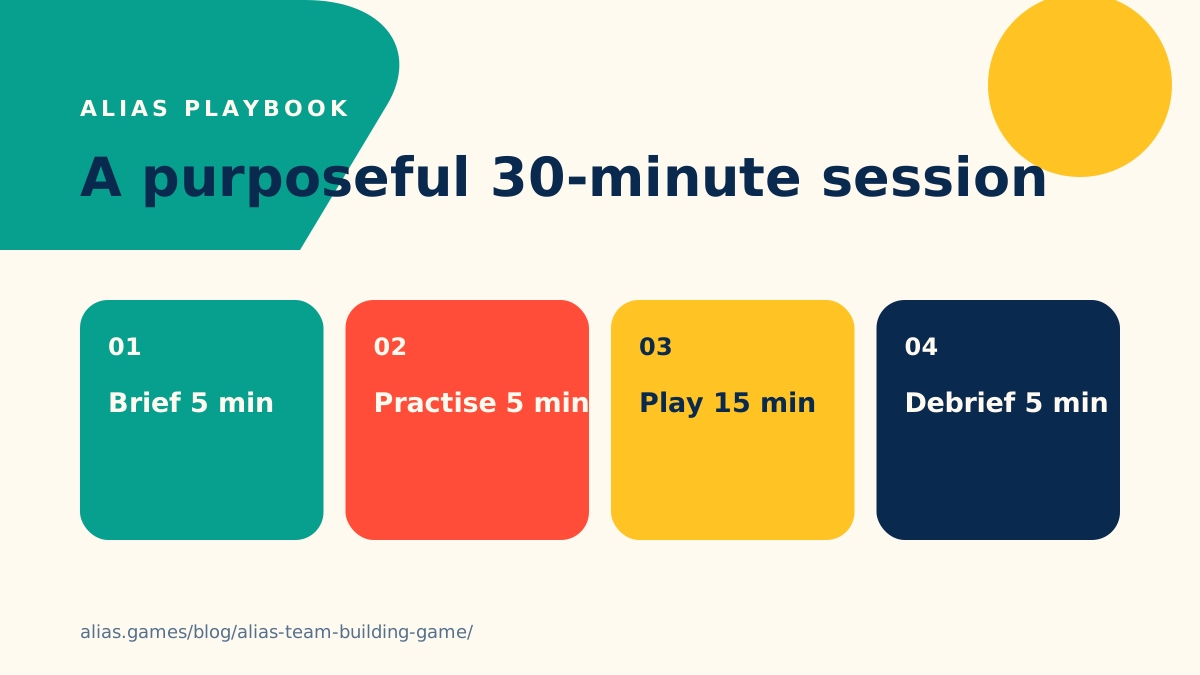
Use five minutes to explain the purpose, teams and clue boundaries. Run a five-minute unscored rotation so every participant can handle the phone and observe the format. Play scored 45-second rounds for fifteen minutes. Reserve the final five minutes for three concrete debrief questions. This arc protects learning time without allowing the game to consume the session.
If the group is larger than twenty, run parallel tables with one facilitator or timekeeper per area. Bring everyone back for the debrief rather than forcing a single long tournament. A shared final reflection creates more organisational value than watching one winning team complete extra rounds.
- 5 minutes: purpose and teams.
- 5 minutes: unscored rotation.
- 15 minutes: scored rounds.
- 5 minutes: communication debrief.
MIX WITHOUT ISOLATING
Cross-functional teams need thoughtful composition.
Teams of four to six keep turns frequent while exposing people to different communication habits. Mix roles or departments when the goal is cross-functional contact, but avoid placing one new employee in a group of close colleagues who share private references. Balance language confidence and make sure no manager automatically becomes the host, referee and first explainer.
Use a count-off or prepared assignment and explain that the mix serves the activity. Rotate every explainer before anyone repeats. For large groups, create more teams rather than larger teams. Waiting is the enemy of a useful workplace game because disengaged participants quickly return to email or side conversations.
- Four to six per team.
- Mix functions with care.
- Do not isolate new colleagues.
- Create more teams as the room grows.
LOW PRESSURE BY DESIGN
Neutral words and easy passing protect psychological safety.
Choose broad categories such as everyday objects, travel, food, general culture or workplace-neutral concepts. Avoid prompts about salaries, performance, relationships, health, politics, religion or private company incidents unless the session has a specific facilitated reason and consent. Do not use insider trivia that rewards tenure and exposes newcomers.
Allow a participant to pass a word or take a timekeeper role without explanation. Keep the first rotation unscored and disable skip penalties. A person’s speed in an unfamiliar party game is not evidence of communication competence. The facilitator should interrupt jokes about accents, age or presumed intelligence and redirect attention to the clue itself.
- Neutral categories.
- No personal disclosure.
- No-penalty pass.
- Alternative roles.
- Humour about clues, never people.
SCALE THE ROOM
Parallel play beats one giant circle.
For twelve or more participants, divide the room into several matches. Each table needs one device, a visible rotation and the same timer. Use a common category and target duration rather than forcing identical random words. After three or four rounds, compare experiences instead of scores if the tables had different conditions.
If only one device is available, make four small teams, shorten turns and prepare the next explainer before the current round ends. Use a projected timer only if the target word remains private. Never mirror the game screen to the whole room. A low-tech backup of original prompt slips can keep parallel tables moving.
- Parallel tables when possible.
- Same duration and category.
- Private target words.
- Compare learning, not unequal scores.
WATCH THE PROCESS
Notice reframing, listening and recovery.
During play, look for explainers who name the category, add context, watch guesses and change route. Notice guessers who build on earlier information rather than generating unrelated noise. Also observe where shared jargon helps one subgroup and excludes another. Record specific moments without attaching fixed labels to individuals.
Make quick rulings and protect the pace. Do not coach a player publicly unless they ask for help. If one voice dominates guessing, invite teams to leave a beat after each clue or rotate a spokesperson for one round. Facilitation should increase access without turning the game into a performance review.
- Category framing.
- Useful context.
- Response to feedback.
- Quality of rephrasing.
- Listening patterns.
BRING IT BACK TO WORK
Ask three questions grounded in moments people saw.
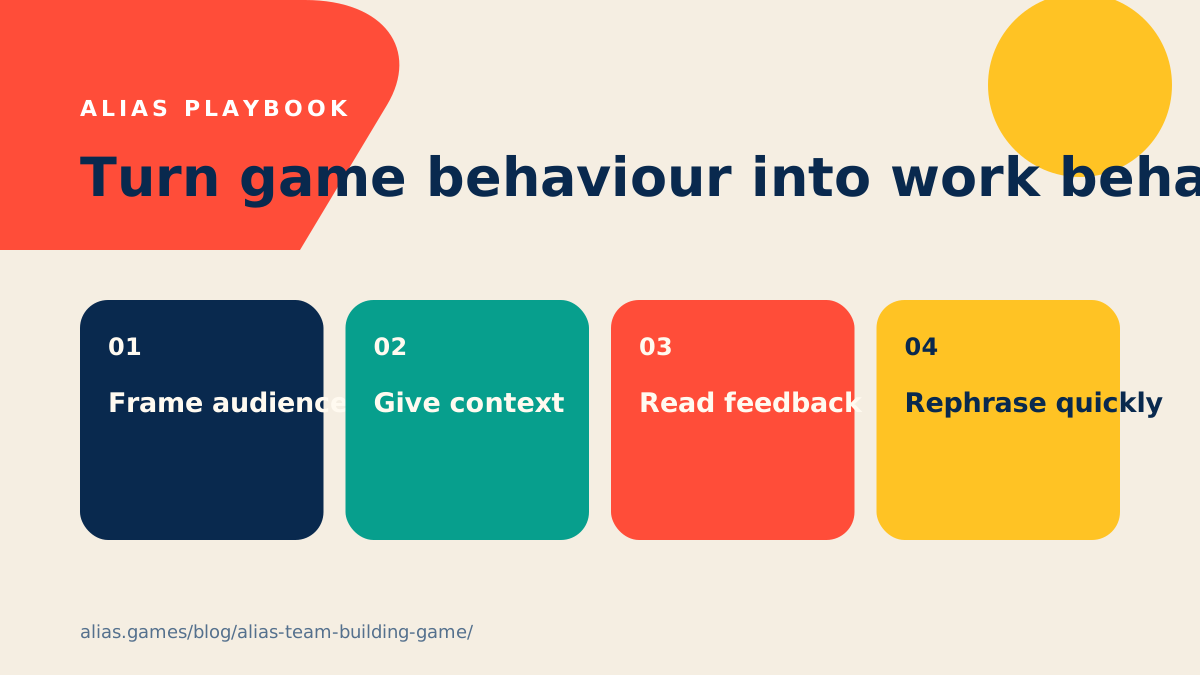
Ask: Which clue became clear immediately, and why? What did an explainer change when the first approach failed? What did effective guessers do besides shout possible answers? Invite examples from the room. Then ask where a similar communication move could help in work: framing the audience, giving context before detail, testing understanding or switching from definition to example.
Keep the debrief to five minutes and avoid personality conclusions. “You are a visual communicator” is less useful than “The concrete example helped us understand the abstract word.” Close by inviting one behaviour for the next meeting, such as stating the category of a problem before proposing a solution. A small observable action gives the game a legitimate connection to work.
- What worked immediately?
- How did the message change?
- What did listeners contribute?
- Where could one behaviour transfer?
REMOTE TEAMS
Use private prompts and shorter speaking queues.
On a call, send the target word privately to the explainer or use one host who controls prompts and score. Keep teams small enough that guesses do not become an audio collision. A 60- to 90-second timer accounts for latency. Use chat only for administration; written guesses change the skill and may expose spelling clues.
Remote participants should not be required to install an unfamiliar tool during the meeting. Test the setup, permissions and screen-sharing behaviour beforehand. If technology becomes the main topic, replace the game with a simple verbal category exercise. The communication objective matters more than preserving a specific format.
- Private prompt delivery.
- Small guessing groups.
- Longer timer for latency.
- No surprise installation.
EVALUATE RESPONSIBLY
Measure the session, not the people.
A useful post-session check asks whether participants understood the purpose, had a fair opportunity to contribute and can name one communication behaviour worth repeating. It does not rank employees by points, speaking speed or apparent confidence. Game performance is shaped by language, cultural references, familiarity with the format and teammates, so it should never enter performance evaluation.
Collect one anonymous pulse question or a brief facilitator note. Record practical changes for the next session: smaller teams, broader categories, quieter space or clearer opt-out. If the group reports that the activity felt forced, take that seriously rather than defending the design. Professional facilitation includes deciding not to repeat a game that does not fit the culture.
- Purpose understood.
- Opportunity to participate.
- One transferable behaviour.
- No individual ranking.
- One concrete design improvement.
AFTER THE GAME
Reference one observed behaviour in the next real meeting.
The game becomes more than a warm-up when the facilitator follows through lightly. At the next project discussion, invite speakers to name the audience and context before details, or ask someone to reframe a stalled explanation with an example. Do not turn every conversation into a reminder of the activity; one relevant callback is enough.
A team habit should stand on its own without the game. If people begin checking understanding, varying examples or leaving room for guesses, the session contributed something useful. If not, treat Alias as a pleasant shared break rather than inventing an impact claim. Honest modest outcomes build more trust than exaggerated team-building promises.
- One relevant callback.
- Observable communication behaviour.
- No forced metaphor.
- Claim only the outcome you saw.
SOURCES & FURTHER READING
Evidence behind the guidance.
These references support the education or workplace principles used in this guide. Game-format recommendations remain practical editorial suggestions.
- Google re:Work: Understanding team effectiveness
Research-based guidance on psychological safety and effective team conditions.
- CIPD: High-performing teams
Evidence review on team design, communication and performance.
COMMON QUESTIONS
Clear answers before the next round.
Is Alias a good team-building game?add
Yes, when it has a clear communication purpose, neutral categories, small teams, voluntary participation and a short evidence-based debrief.
How long should a workplace Alias session be?add
Thirty minutes is enough: five minutes each for briefing, practice and debrief, plus fifteen minutes of play.
How do you run Alias for a large company group?add
Use parallel tables of four to six people, equal timing and categories, private words and a shared debrief rather than one giant match.
What should the team-building debrief cover?add
Discuss successful framing, rephrasing and listening behaviours observed in the game, then name one concrete workplace application.
KEEP EXPLORING
Rules and specialist guides.
READY FOR A ROUND?
Turn the advice into sixty seconds of play.
Download Alias, choose the setup that fits your room and start with one clear clue.

