PARTIES
Turn Alias into the party game everyone joins.
A successful party round begins before the first word appears. This guide shows how to read the room, create balanced teams, teach the rules in sixty seconds and keep the energy high without leaving quieter players behind.

IN THIS ARTICLE
QUICK ANSWER
Start with the useful version.
For a strong Alias party game, divide guests into teams of three to five, use familiar categories for the opening round, rotate the explainer every turn and set a reachable target score. Teach only four rules: explain without saying the word or its root, guess until time ends, mark correct and skipped words, then pass the phone. Add harder categories or special clue styles only after everyone understands the basic rhythm.
BEFORE THE TEAMS
Design the game for the people who actually arrived.
Party games fail when the host protects a plan instead of reading the room. Count the guests who genuinely want to play, notice whether people know one another and estimate how much explanation the group will tolerate. A close group may enjoy competitive rules immediately. New acquaintances usually need one low-pressure practice rotation before anyone cares about the score.
Alias is flexible enough for both situations. The host can soften the first round with common words and no skip penalty, then raise the difficulty as confidence grows. Avoid categories based on one fandom, profession or generation unless everyone shares that context. A party feels inclusive when every person has enough information to make a clue and enough space to offer a guess.
- Count active players, not everyone in the building.
- Start with shared knowledge.
- Use a practice rotation for new groups.
- Let guests watch before joining if they prefer.
FAIR, FAST TEAMS
Three to five people per team keeps voices moving.
Very large teams create long waits and reward the loudest guessers. Groups of three to five give the explainer several minds to work with while keeping each person close to the action. For seven to twelve guests, use three teams instead of two oversized sides. For a crowd, create four or more teams and run shorter rounds or parallel matches if enough devices are available.
Mix friends who arrived together rather than letting a familiar cluster dominate its own team. Balance language ability and age where practical, but do not turn team selection into a public ranking. A quick count-off, coloured token or host assignment works. Once teams exist, choose an order and keep it visible so the next group is ready when the timer ends.
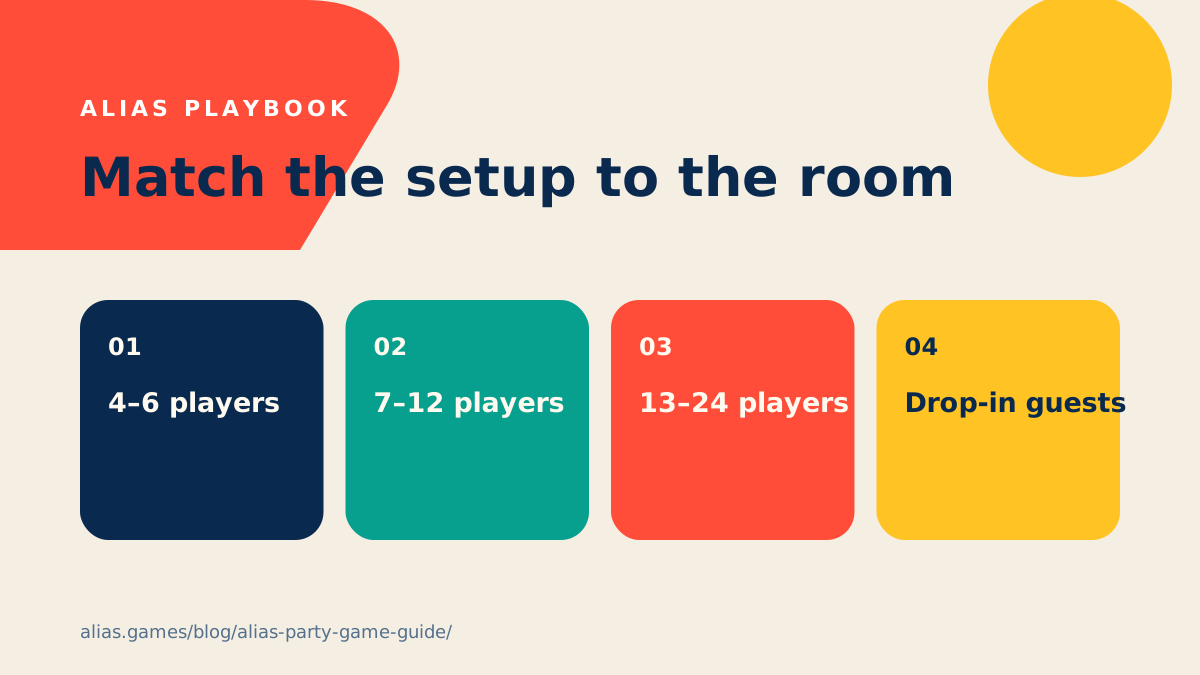
- 4–6 players: two teams.
- 7–12 players: three teams.
- 13–24 players: four or more teams.
- Rotate the explainer before anyone repeats.
RULES IN ONE MINUTE
Show one clue instead of delivering a speech.
Tell the room: one person explains the word, teammates guess, the answer and its root are forbidden, and every correct word earns a point. Then demonstrate. Use a familiar target such as “umbrella” and give a legal clue. Follow it with an obviously illegal example. This contrast answers more questions than reading every exception from a rulebook.
Decide the edge cases out loud: whether gestures, rhymes, translations, first letters and skipping are allowed. Choose one host or referee for close calls. During play, that person should make a quick ruling and move on. Consistency matters more than litigating the perfect interpretation while twelve guests wait for the party to resume.
- Explain.
- Guess.
- Score.
- Pass the phone.
BUILD THE ENERGY
Warm up, peak, then finish on purpose.
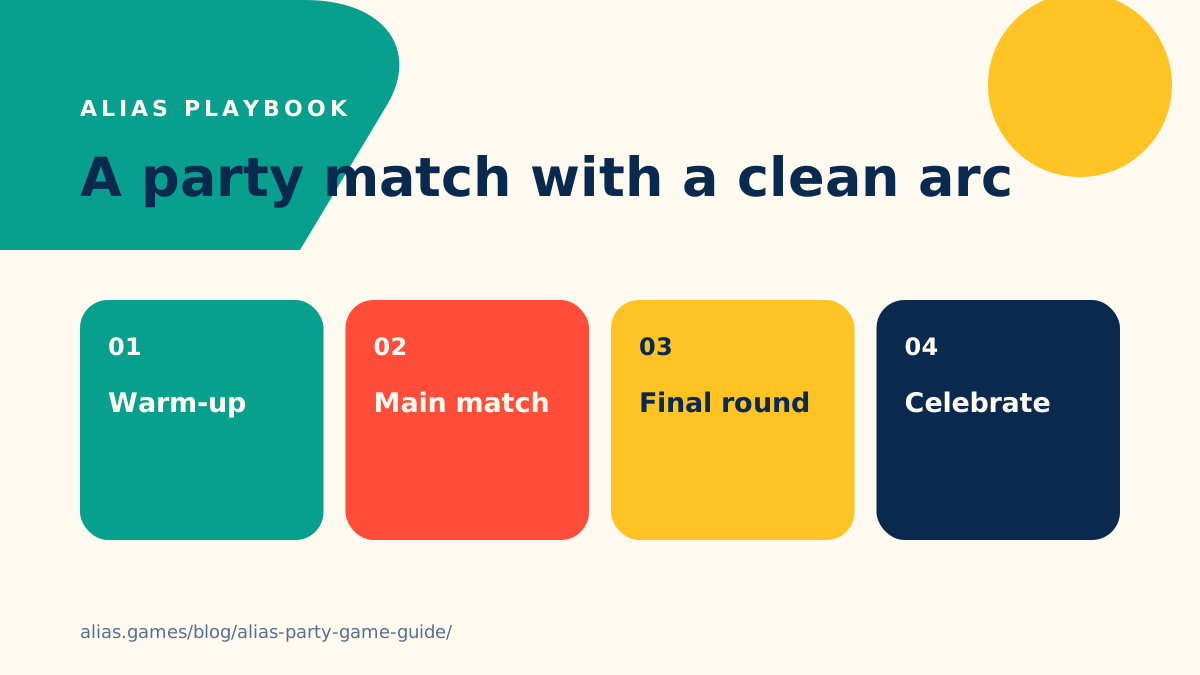
Begin with a short unscored rotation so everyone touches the phone and learns the controls. Move into a main match with a modest target score, typically long enough for each person to explain at least once. Announce the final round clearly. A visible ending creates excitement and prevents a good game from slowly dissolving as people leave for snacks or conversations.
If the group wants more, begin a new mini-match with one changed condition: a harder pack, a 45-second timer or an agreed special clue style. Do not add five house rules at once. One change creates a fresh challenge while preserving the shared understanding that made the first match flow.
- Practice: one unscored rotation.
- Main match: normal clues and reachable target.
- Final: announce the last complete cycle.
- Encore: change one condition only.
WORDS SET THE TONE
Adult-friendly does not have to mean awkward.
An adult party category can be challenging, culturally current or mischievous without forcing personal disclosure. Movies, travel, food, music, work life, famous people and everyday situations create plenty of room for funny clues. If the group chooses mature content, make that choice explicit and provide a neutral alternative. Surprise is fun; making one guest uncomfortable is not.
Use mixed categories when the room has broad shared references. Use a focused pack when the gathering has a clear theme. If one team repeatedly meets unfamiliar words, adjust rather than treating recognition as a test of intelligence. The best category produces useful clues, rapid guesses and stories the group will repeat later.
- Broad mix for a varied room.
- Music or movies for shared fandom.
- Food and travel for accessible clues.
- Neutral alternative whenever mature content is offered.
MAKE SPACE FOR EVERY VOICE
Good hosting is more than turning up the volume.
Fast guessing can become a contest between two loud people while the rest of the team watches. Ask teams to rotate explainers and remind guessers to leave small gaps after each clue. A host can invite a quiet player into the next turn without putting them on the spot: “Would you like to explain, guess or sit this one out?” Choice lowers pressure and usually increases participation.
Different accents, first languages and processing speeds are part of the game, not problems to correct. Use a longer timer for a multilingual room and celebrate a clever rephrase rather than only the final point. Avoid imitating someone’s speech for a laugh. Alias becomes a better party game when the joke comes from the clue, not from the person giving it.
- Rotate explainers.
- Leave room between guesses.
- Offer roles instead of assigning exposure.
- Adjust time for multilingual groups.
WHEN THE ROOM GROWS
Reduce waiting before increasing spectacle.
For more than twelve active players, long turns and two giant teams create spectators. Use several smaller teams, 30- to 45-second rounds and a lower winning target. Put the next explainer near the phone before the current timer ends. If two devices are available, run parallel heats and bring the winners into a short final rather than forcing the entire room through one sequence.
A visible team order helps drop-in guests join cleanly. Add a new player at the start of a complete rotation and place them on the smallest team. If people drift out, combine teams between matches rather than mid-round. The host’s priority is not preserving a bracket; it is keeping the ratio of playing to waiting healthy.
- More teams, not bigger teams.
- Shorter rounds.
- Lower target score.
- Parallel heats when devices allow.
AFTER THE BASICS
One variation can make the second match feel new.
Try a silent round where gestures replace speech, a one-word-clue round, a category relay or a cooperative target where the whole room tries to reach a shared total. Keep the original restrictions clear. A one-word clue still cannot contain the answer, and a silent round needs a clear policy on pointing at objects in the room.
Use variations as a short encore, not as a substitute for the accessible core game. Guests who arrived late should be able to understand the current rule in one sentence. If the twist produces confusion rather than laughter, return to standard Alias. A confident host changes course quickly and never makes the room earn the right to have fun.
- Silent explanation.
- One-word clues.
- Shared-room score target.
- Category relay.
THE FIVE-MINUTE CHECK
Remove practical friction before guests notice it.
Charge the game phone, open the app, download any needed content and silence unrelated notifications. Choose the first category and timer before calling the room together. Place drinks away from the handoff path and make sure the screen can be seen only by the explainer. These details protect both privacy and pace.
Finally, decide how the match will end. A clear score target, final rotation and small celebration give the experience shape. The prize can be nothing more than choosing the next playlist or taking a group photo. End while people still want another round. That is a stronger party memory than stretching a good game until the energy disappears.
- Phone charged and notifications silenced.
- Category and timer selected.
- Safe handoff route.
- Target score and final rotation announced.
COMMON QUESTIONS
Clear answers before the next round.
How many people are best for an Alias party game?add
Four to eight is effortless, but larger parties work with more small teams, shorter rounds and a visible playing order.
What are the basic Party Alias rules?add
One player explains target words without saying the answer or its root, teammates guess before time ends, correct answers score, and the role rotates. Physical Party Alias editions may add special spaces, so check that edition’s rule sheet.
Is Alias suitable for an adult party?add
Yes. Choose categories the whole group accepts, provide a neutral option and keep humour directed at the clues rather than individual players.
How do you include quieter guests?add
Rotate explainers, offer a choice of roles, leave space between guesses and begin with an unscored practice round.
KEEP EXPLORING
Rules and specialist guides.
READY FOR A ROUND?
Turn the advice into sixty seconds of play.
Download Alias, choose the setup that fits your room and start with one clear clue.

