ROAD TRIPS
20 road trip games for adults—no signal required.
The best car game fills a stretch of road without competing with driving. These passenger-friendly ideas require little or no equipment, work offline and include clear rules for volume, privacy and when the driver stays completely outside the round.

IN THIS ARTICLE
QUICK ANSWER
Start with the useful version.
Easy adult road trip games include twenty questions, categories, word association, alphabet themes, fortunately/unfortunately, two-sentence mysteries and passenger-only Alias. Choose verbal games that need no screen, keep volume moderate and exclude the driver from timed, visual, scoring or phone-handling tasks. Download any app content before departure, let one passenger act as host and switch to quiet conversation when traffic, navigation or fatigue demands the driver’s full attention.
THE NON-NEGOTIABLE RULE
No game is more important than the driver’s attention.
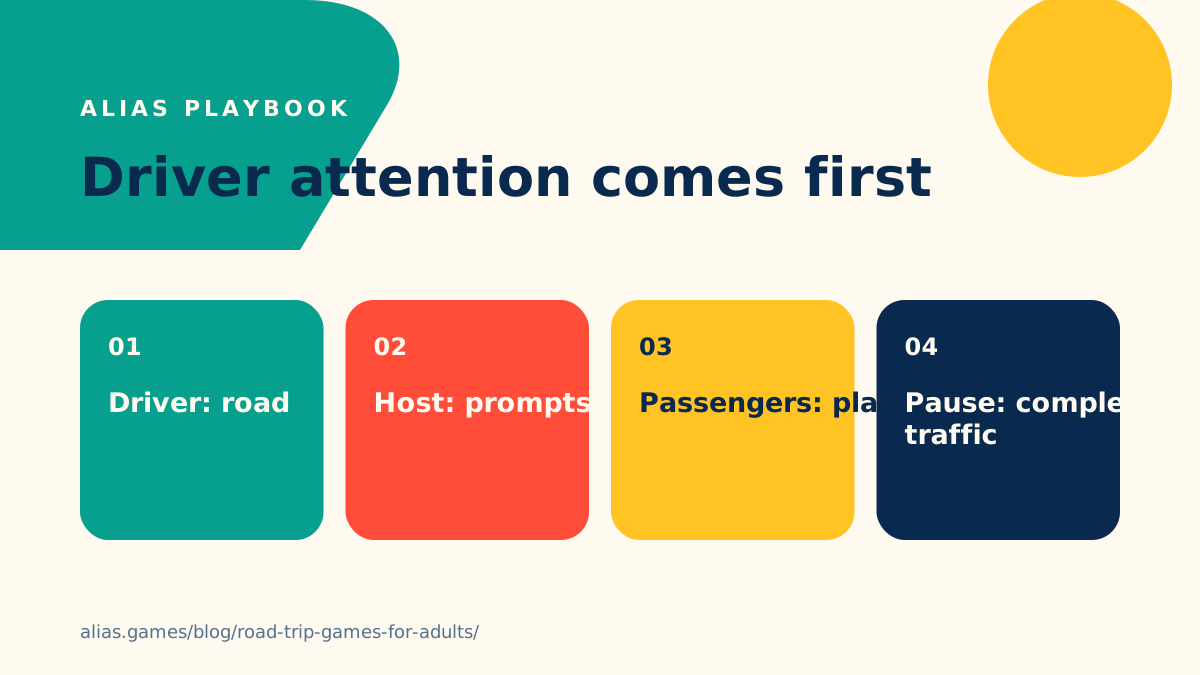
The driver does not read prompts, hold a phone, keep score, search for objects, look at passengers or meet a timer. Even a verbal game can become distracting when it demands rapid responses or creates loud argument. One passenger should host and pause play during navigation, dense traffic, bad weather, unfamiliar roads, fatigue or any moment the driver requests silence. A pause needs no explanation.
Choose calm listening-only participation for the driver, or exclude the driver entirely. Do not use roadside scavenger tasks that encourage unsafe speed changes, sudden lane decisions or looking away from the road. Seat belts remain fastened and no object is passed through the front seats. If the group wants a visually demanding or competitive format, save it for a rest stop.
- Driver never handles prompts or score.
- Passenger hosts the game.
- Pause immediately on request.
- No visual searches for the driver.
- Save physical games for stops.
FIVE-MINUTE GAMES
1–5: fill a short stretch without starting a campaign.
1. Category Ten: name ten unique examples from a chosen category together. 2. Word Association: connect each response to the previous word without repeats. 3. Two-Clue Object: give a category and function while passengers guess. 4. Alphabet Theme: find one word for selected letters inside a topic, skipping difficult letters. 5. Would You Rather—Fictional Edition: choose between two imaginary travel, food or superpower situations and give one optional reason.
Keep turns untimed if the driver is listening. Use topics that do not provoke intense debate and let any passenger pass. Alphabet themes work better when the group can skip Q, X or other difficult letters instead of treating them as a test. A five-minute game should have a natural close: ten items, one alphabet segment or three prompts. Ending cleanly makes it easy to restart later.
- Category Ten.
- Word Association.
- Two-Clue Object.
- Alphabet Theme.
- Fictional Would You Rather.
DEDUCTION
6–9: ask better questions while the landscape changes.
6. Twenty Questions: one passenger chooses a person, place or object and answers yes or no. 7. Two-Sentence Mystery: the host reads a fictional odd situation and passengers ask questions to reconstruct it. 8. Mystery Category: reveal examples until someone identifies what they share. 9. Hidden Rule: passengers propose words or phrases and the host accepts those matching a prepared pattern.
The host should prepare a fair answer and offer a hint before frustration builds. Use public or fictional subjects, not people in the car. In mysteries, avoid violence, trauma or distressing themes unless every passenger explicitly wants them. The driver may listen but should not be expected to track clues. Pause the puzzle when driving conditions become complex and recap later rather than demanding divided attention.
- Twenty Questions.
- Two-Sentence Mystery.
- Mystery Category.
- Hidden Rule.
WORD GAMES
10–13: let passengers explain, connect and retrieve.
10. Passenger Alias: one passenger holds the phone or prompt cards out of the driver’s sight and teammates explain or guess; use untimed or long rounds. 11. Forbidden Word: explain a target while avoiding two obvious clues. 12. Last-Letter Chain: each word begins with the previous word’s final letter. 13. Synonym Steps: start with a broad word and take turns finding more precise alternatives.
Download word packs and test offline access before leaving. Silence notifications and keep the device with a rear-seat host. Avoid timers, competitive shouting and scoring if the driver is participating even as a listener. For multilingual travellers, choose shared categories, allow translations according to an agreed rule and accept regional variants. The goal is conversation during a long route, not proving vocabulary under stress.
- Passenger Alias.
- Forbidden Word.
- Last-Letter Chain.
- Synonym Steps.
STORY AND IMAGINATION
14–17: build a shared world one manageable turn at a time.
14. Fortunately/Unfortunately: alternate positive and negative events in a fictional trip. 15. Three-Object Story: the host names three ordinary objects that a short story must include. 16. Postcard From the Future: describe the destination as if visiting it ten years later, using invented details. 17. One-Sentence Relay: each passenger adds one sentence without cancelling earlier events.
Set a tone before the story begins—comic, mysterious, peaceful or absurd—and keep each turn short. Fictional prompts reduce pressure to disclose real experiences. The host should redirect jokes that target a passenger’s identity, accent or travel mistake. If the driver enjoys listening, avoid asking for a turn. A finished story can end at the next stop or after a fixed number of rounds, preventing it from becoming an endless obligation.
- Fortunately/Unfortunately.
- Three-Object Story.
- Postcard From the Future.
- One-Sentence Relay.
MUSIC WITHOUT SCREEN TAPPING
18–20: prepare audio before the car moves.
18. Decade Guess: a passenger host plays a safely queued song and the group names the decade, with the driver outside scoring. 19. Soundtrack Scene: describe a fictional scene and choose which already-known song would fit, without searching while moving. 20. Hum the Tune: passengers hum a familiar melody for others to identify. Use downloaded playlists controlled by a passenger or voice system configured before departure.
Keep volume low enough for navigation and road sounds. Do not ask the driver to skip tracks, identify tiny audio details or operate controls. Respect that music can carry strong memories; allow easy passes. Copyrighted lyrics should not be displayed or reproduced as part of a homemade quiz. The game can focus on title, artist, decade, instrumentation or mood without copying substantial lyric text.
- Decade Guess.
- Soundtrack Scene.
- Hum the Tune.
- Passenger controls playback.
PREPARE THE OFFLINE KIT
One downloaded app, one prompt list and one quiet backup are enough.
Before departure, download any needed game content and audio, charge devices and pack a cable or power bank. Put a short list of categories and mystery prompts in the passenger host’s notes. Do not rely on a route having signal. If using paper cards, keep them in a pouch that will not move into the footwell and never pass them to the driver.
Agree on the game boundary before the engine starts: passenger host, moderate volume, driver opt-out and immediate pause. Include a quiet option such as an audiobook, music or no activity. Continuous entertainment can become tiring on a long trip. Silence is not a failed game night; it is part of managing attention and comfort over several hours.
- Download before leaving.
- Charge and secure devices.
- Prepare passenger-only prompts.
- Include a quiet option.
PLAN THE JOURNEY, NOT A MARATHON
Use short game windows between rest, food and ordinary conversation.
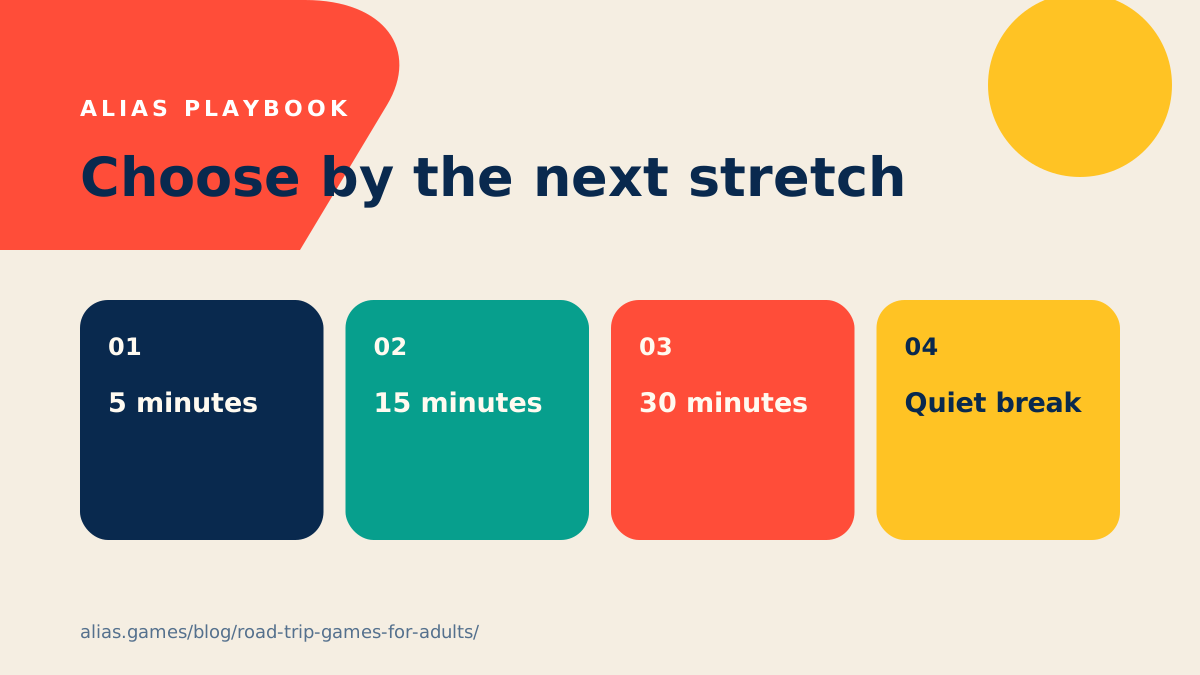
Choose a five-minute warm-up after the route settles, a 15- to 30-minute main game on an easy stretch and a story or music option later. Stop before anyone becomes irritable or hoarse. Rotate the passenger host and let the next person choose between two formats. At rest stops, switch to movement, stretching and visually focused games outside the vehicle.
Watch for motion sickness and sensory overload. Reading, screens and rapid head movement can make some passengers uncomfortable, so verbal games and listening options should remain available. Keep personal questions optional and avoid topics likely to cause conflict in a confined space. A road trip game succeeds when it makes part of the journey feel shared while leaving safety, rest and the destination more important than the score.
- Short game windows.
- Rotate the passenger host.
- Move at rest stops.
- Offer screen-free and quiet choices.
- End before fatigue.
COMMON QUESTIONS
Clear answers before the next round.
What games can adults play on a road trip?add
Try twenty questions, categories, word association, mystery categories, passenger Alias, fortunately/unfortunately, story relays and preloaded music guessing.
What road trip games need no equipment?add
Categories, word association, twenty questions, hidden rule, alphabet themes, fortunately/unfortunately and one-sentence stories need only a host and a clear endpoint.
Can the driver join road trip games?add
The driver should never handle prompts, screens, timing or score. Even verbal participation must stop whenever it competes with road attention, and the driver can request silence immediately.
How do you play Alias in the car safely?add
A passenger holds the device out of the driver’s view, controls prompts and score, uses relaxed timing and pauses during complex driving. The driver is not an active player.
How do you prepare games for an offline road trip?add
Download content and audio, charge devices, store passenger prompts, test offline access and keep verbal games plus a quiet option available.
KEEP EXPLORING
Rules and specialist guides.
READY FOR A ROUND?
Turn the advice into sixty seconds of play.
Download Alias, choose the setup that fits your room and start with one clear clue.

