FAMILY NIGHT
25 family game night ideas everyone can actually join.
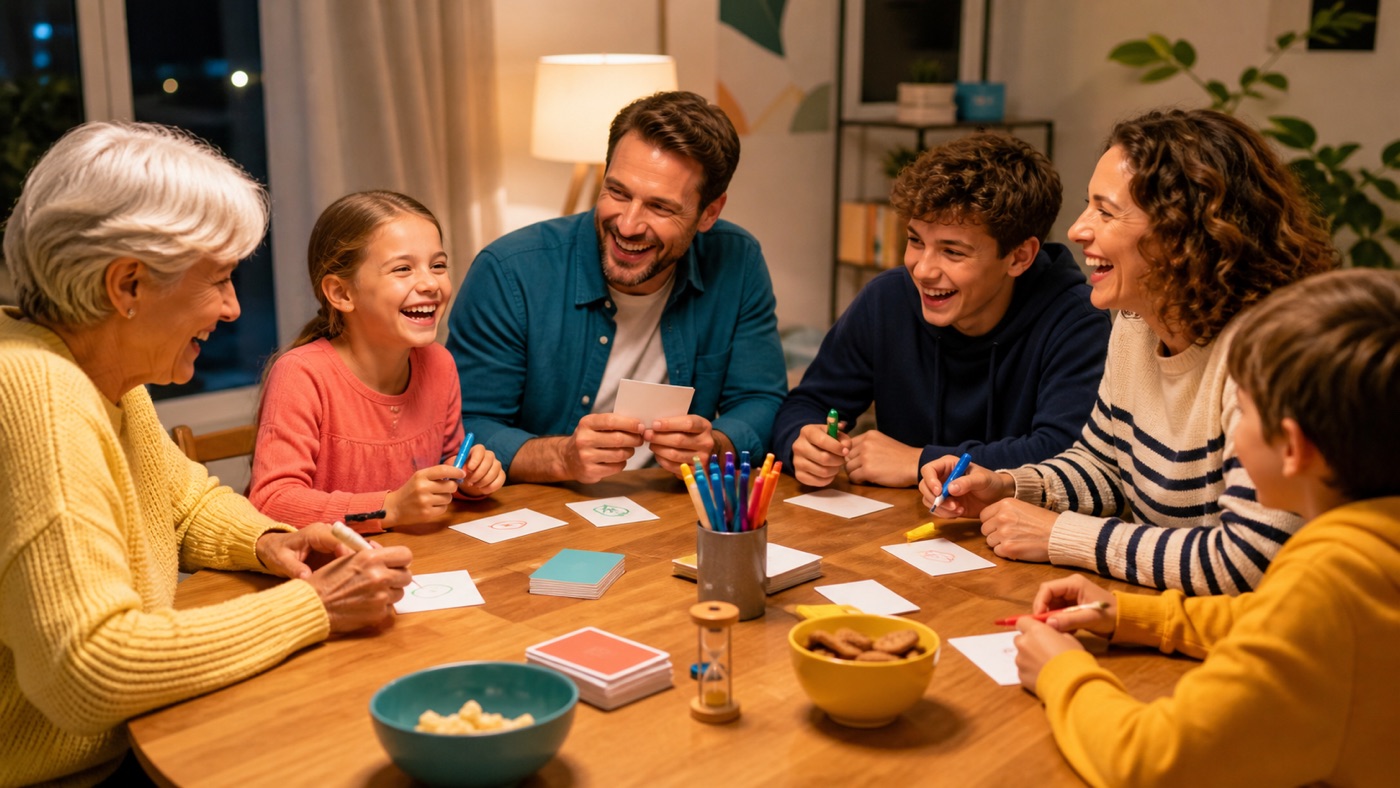
A family game night works when children, teenagers and adults have meaningful choices inside the same evening. This guide helps families balance reading level, attention, competition and turn length, then offers a flexible menu instead of one supposedly universal game.
IN THIS ARTICLE
QUICK ANSWER
Start with the useful version.
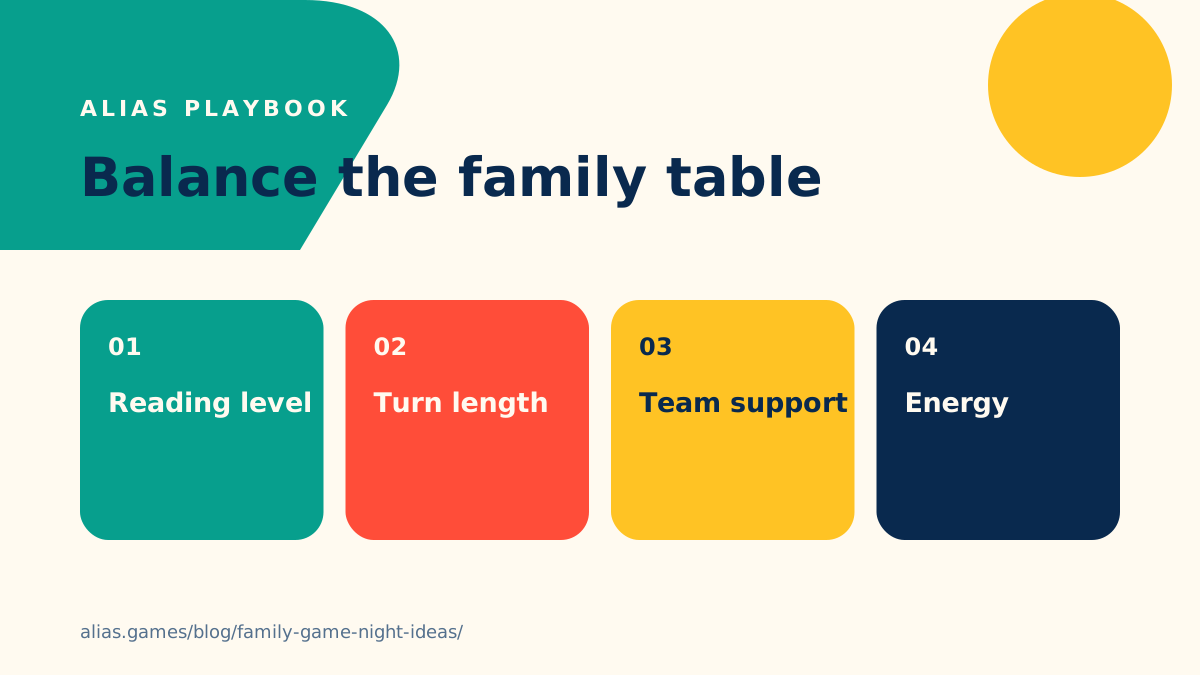
For a mixed-age family game night, choose one ten-minute warm-up, one main game with short turns and one cooperative backup. Alias with familiar categories, charades, picture telephone, category relay and a household scavenger hunt adapt easily across ages. Pair readers with non-readers, allow drawing or acting alternatives, rotate helpers and use a fixed number of rounds rather than a long elimination. End while the youngest players still have enough energy for one final choice.
EASY WARM-UPS
1–5: begin with games that welcome late arrivals and short attention.
1. Category Circle: name one item in a familiar category without repeats. 2. Copy the Rhythm: one person taps a short pattern and adds one beat each turn. 3. Mystery Object: describe a household object hidden in a bag without naming it. 4. Family This-or-That: choose between harmless options and give one optional reason. 5. One-Word Story: build a sentence with one word from each person.
Warm-ups should last five to ten minutes and require no score. Use categories children can enter, such as animals, foods, places or actions. Skip difficult letters or repetitions without removing a player. Mystery Object can use touch only when everyone is comfortable and the items are safe. This-or-that prompts should avoid ranking family members or exposing money. The purpose is a quick shared rhythm, not a test.
- Category Circle.
- Copy the Rhythm.
- Mystery Object.
- Family This-or-That.
- One-Word Story.
WORD AND GUESSING GAMES
6–10: give every age a route to the answer.
6. Family Alias: explain familiar target words to mixed-age teams without saying the answer. 7. Picture Charades: younger players choose illustrated prompts and act them. 8. Twenty Questions: identify an animal, object, place or fictional character. 9. Sound Effects: communicate a safe object or action using sound only. 10. Three Clues: give a category, function and example while the family guesses.
Create age bands or let players choose easy, medium and challenge prompts without attaching them publicly to ability. A child can partner with an adult explainer and make the final guess. Set a longer timer for mixed teams and turn off skip penalties. Agree whether gestures, first letters and translations are allowed. Praise a useful clue or attentive guess rather than treating the winning score as the only success.
- Family Alias.
- Picture Charades.
- Twenty Questions.
- Sound Effects.
- Three Clues.
DRAW AND CREATE
11–15: shared invention reduces the advantage of stored trivia.
11. Picture Telephone: draw a phrase, pass it, write what the next drawing shows and reveal the chain. 12. Folded Creature: each person draws one hidden section of an imaginary animal. 13. Story Cards: combine a character, place and problem into a short tale. 14. Cardboard Invention: build a fictional useful object from clean recycling. 15. Caption Gallery: write or dictate captions for an ordinary photo, then read them anonymously.
Set a time limit and make art skill irrelevant. Adults should resist improving a child’s drawing unless asked; the unusual result is part of the game. Provide large markers, simple shapes, dictation or a building role for different access needs. Keep photos and prompts fictional or neutral. Anonymous captions should never target a family member’s appearance, mistake or private story. Laugh at the transformation created by the rule.
- Picture Telephone.
- Folded Creature.
- Story Cards.
- Cardboard Invention.
- Caption Gallery.
MOVE SAFELY
16–19: active games reset energy without turning the house into a racecourse.
16. Colour Hunt: find a safe object of a named colour and bring or point to it. 17. Animal Movement Relay: cross a clear space using an agreed movement, with walking alternatives. 18. Balloon Keep-Up: keep one balloon away from the floor while counting team touches. 19. Silent Line-Up: arrange by birthday month, height or first-name alphabet using gestures.
Remove fragile objects, mark boundaries and choose walking over running indoors. Participation can include calling colours, counting, timing or directing from a seat. Do not use food, medication or private belongings in a hunt. Keep the active section under ten minutes and stop before tiredness creates conflict. If neighbours or space make movement difficult, replace it with tabletop sorting or a rhythm game.
- Clear the area.
- Offer seated roles.
- No private-object searches.
- Short active rounds.
WIN TOGETHER
20–22: cooperative goals help the family practise recovery.
20. Build the Bridge: use paper and tape to span a small gap while every person has one material role. 21. Beat Your Total: play equal Alias rounds and try to improve the family’s combined score instead of defeating another team. 22. Puzzle Stations: complete several short sorting, matching or construction tasks before a shared timer ends, with permission to leave an unsolved station.
A cooperative label does not guarantee cooperation. Give everyone information or resources the team genuinely needs, and prevent one experienced player from taking over. Ask helpers to wait for a request before giving an answer. If the challenge fails, reset one condition or celebrate the best attempt rather than assigning blame. The most useful family habit is learning how to try again without turning one error into a role.
- Build the Bridge.
- Beat Your Total.
- Puzzle Stations.
- Help only after an invitation.
CALM FINAL ROUND
23–25: lower the energy before the evening ends.
23. Memory Tray: study a small set of household objects, cover them and recall together. 24. Fortunately/Unfortunately: alternate positive and negative events in a gentle shared story. 25. Draw the Description: one person describes a simple picture while everyone draws, then compare the different interpretations without ranking them.
A calm finish should be short enough that tired players can succeed. Reduce the memory set for younger children, let families collaborate and avoid removing points for spelling. Story turns can be one sentence, and anyone may say “pass.” In drawing, focus on how language produced different images rather than choosing a best artist. Close with a choice: one rematch next time or one game everyone wants to keep.
- Memory Tray.
- Fortunately/Unfortunately.
- Draw the Description.
- Finish with one future choice.
THE FAMILY AGREEMENT
Separate fair boundaries from adult control.
Before the first game, agree on the finish, how turns rotate and what happens after a dispute. Use one host ruling and continue, then review the rule between rounds. Adults should follow the same standards they ask of children: no mocking, no changing a rule only when losing and no coaching over another person’s turn. A child may leave one game without losing access to the rest of the evening.
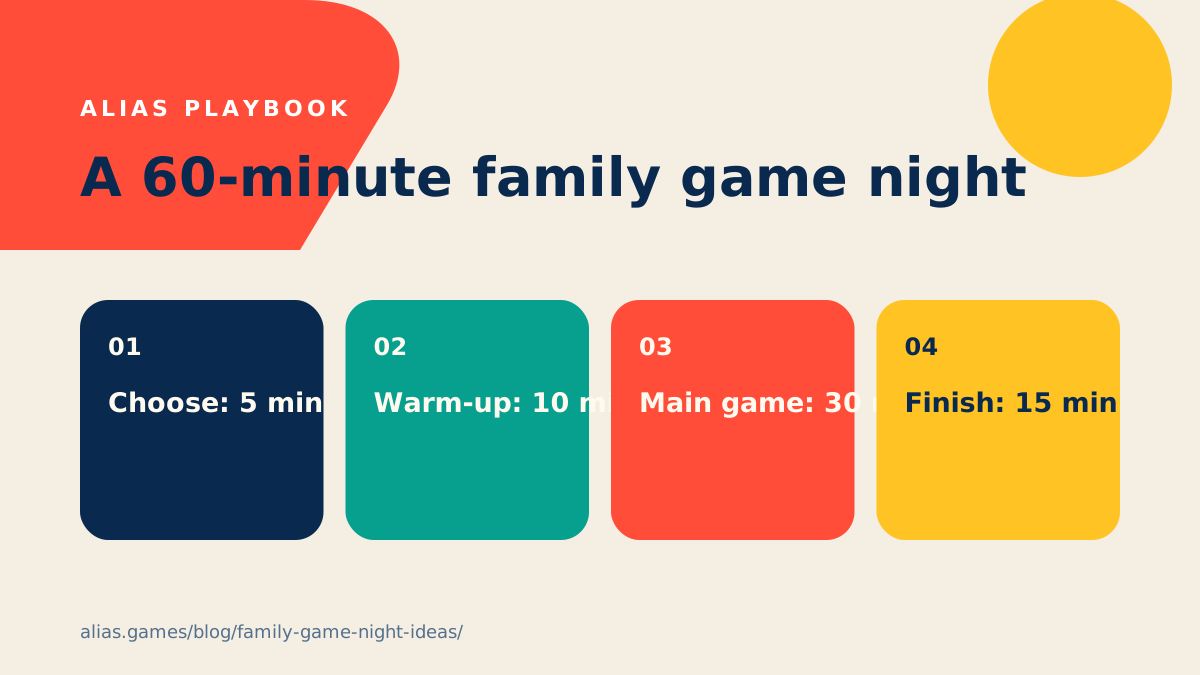
Schedule a snack or movement break and place devices away except for the one used by the game. Keep the whole event to a realistic duration—often 45 to 75 minutes for mixed ages. If a favourite game causes repeated conflict, change teams, shorten the target or retire it for the night. Family game night is a recurring invitation, so protecting the next invitation matters more than finishing the current score.
- Visible finish.
- Same rules for adults and children.
- One quick dispute process.
- Breaks and voluntary exits.
- Protect the next game night.
COMMON QUESTIONS
Clear answers before the next round.
What are good family game night ideas?add
Combine a quick category or rhythm warm-up, a main game such as Family Alias or picture charades, and a cooperative or drawing finish.
How long should family game night last?add
For mixed ages, 45–75 minutes is often easier than an open-ended session. Use a visible finish and stop before tiredness replaces play.
How can younger children join games for older family members?add
Use pictures, partners, easier prompt choices, longer timers, dictation and active roles that do not depend on reading speed.
What family games need no equipment?add
Try category circle, one-word story, twenty questions, sound effects, fortunately/unfortunately or silent line-up.
How do you reduce arguments during family games?add
Agree on turn order and endings, let one host rule quickly, review disputes between rounds and change the format when the same conflict repeats.
KEEP EXPLORING
Rules and specialist guides.
READY FOR A ROUND?
Turn the advice into sixty seconds of play.
Download Alias, choose the setup that fits your room and start with one clear clue.

