COMPARISONS
Games like Alias—and how to choose the right one.
The closest alternatives all ask people to connect ideas, but they create very different rooms. Compare what players are allowed to say, whether acting matters, how much setup is required and which format fits your group tonight.

IN THIS ARTICLE
QUICK ANSWER
Start with the useful version.
Choose Alias when you want fast team explanations with broad freedom to use definitions, examples, opposites and associations. Choose Taboo when forbidden-word restrictions are the main challenge, Charades when silent acting should drive the fun, Heads Up-style play when one guesser holds the device, Catch Phrase or Articulate for rapid verbal prompts, and Codenames when the group prefers slower strategic clues. The best alternative depends on clue freedom, performance pressure, group size and whether you want a phone, cards or a board.
COMPARE THE EXPERIENCE
Shared mechanics do not create identical games.
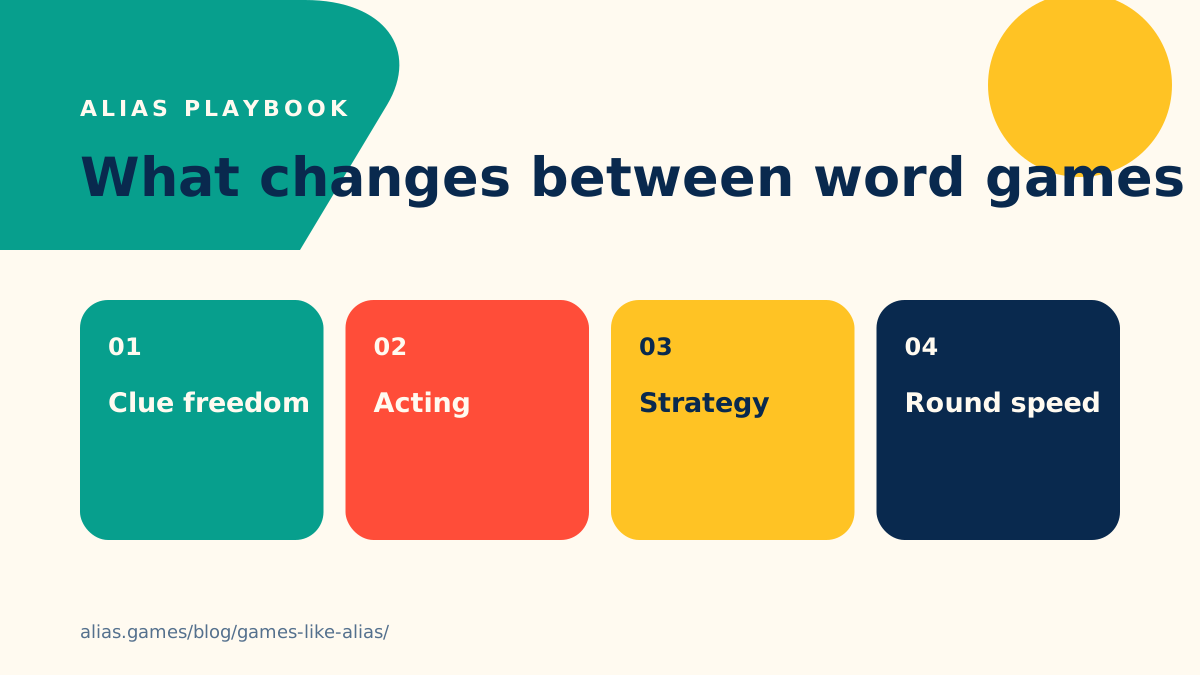
Alias, Taboo, Charades, Heads Up-style games, Catch Phrase, Articulate and Codenames all involve clues and guesses, yet the emotional experience changes with one rule. Alias gives the explainer broad verbal freedom but forbids the answer and usually its root. Taboo narrows the available vocabulary with several additional forbidden words. Charades removes speech. Codenames asks one clue to connect multiple visible words and rewards caution over speed.
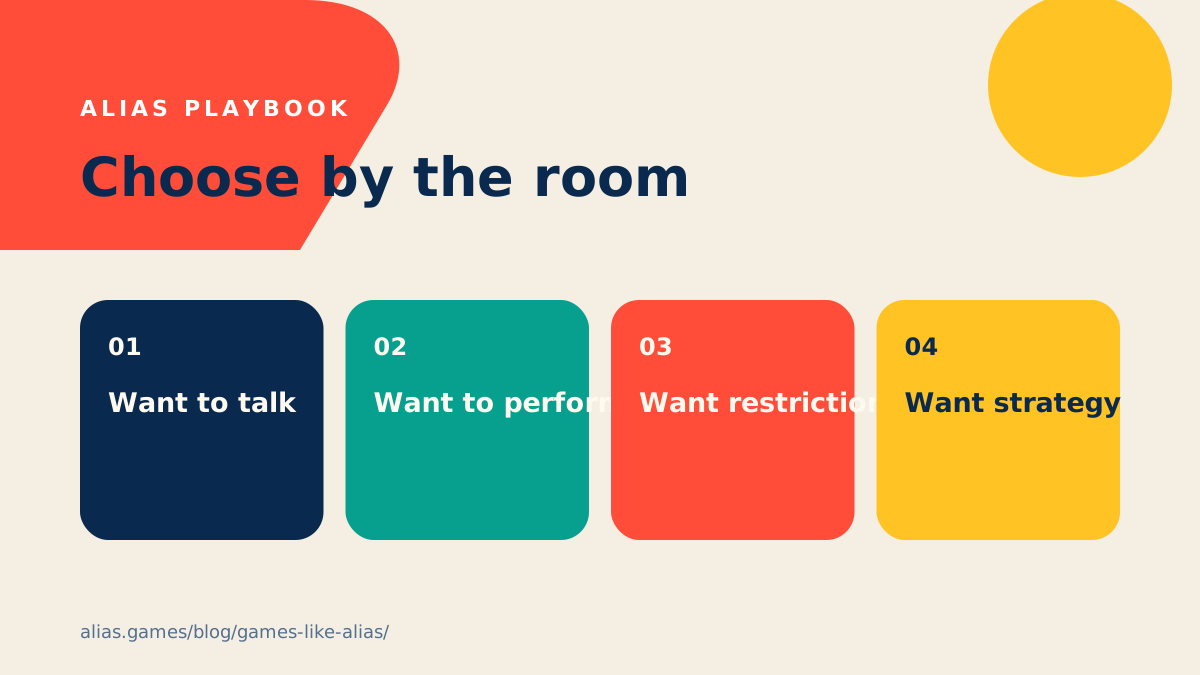
A useful comparison begins with the room you want to create. Do players enjoy talking quickly, performing physically, solving a shared puzzle or surviving restrictions? How comfortable are they being watched? Does everyone recognise the same cultural references? A game can be excellent and still be the wrong choice for a particular group. Match the mechanic to the people rather than relying on a generic ranking.
- Clue freedom.
- Speech versus acting.
- Speed versus deliberation.
- One guesser versus team guessing.
- Phone, cards or board.
ALIAS VS TABOO
Freedom to reframe versus pressure from forbidden words.
In Alias, the central restriction is normally the answer and its root. The explainer can approach from category, function, situation, opposite or association. Taboo-style cards add a list of obvious clue words that cannot be used. That increases verbal difficulty and creates tense moments when the most natural description is blocked. A monitor may also need to catch violations.
Choose Alias for mixed experience levels, language practice or a room that values conversational flow. Choose Taboo when experienced players want sharper restrictions and enjoy policing the clue boundary. Both work in teams and under time. If a group finds Alias too easy, adding one or two custom forbidden concepts can create a Taboo-like advanced round without changing the entire format.
- Alias: broader legal vocabulary.
- Taboo: multiple forbidden clue words.
- Alias: easier to teach quickly.
- Taboo: stronger verbal constraint.
ALIAS VS CHARADES
Description uses language; charades uses the body.
Charades removes speech and asks the performer to communicate through movement, gesture and facial expression. It produces visible comedy and can involve the whole room, but it also places one person under direct attention. Alias keeps the performance verbal and often feels safer for guests who dislike acting. The humour comes from unexpected descriptions and rapid wrong guesses rather than mime alone.
Choose charades when the group enjoys physical performance and the space allows movement. Choose Alias in a smaller room, a classroom focused on speaking or a workplace where full-body acting may feel forced. A silent Alias encore can bridge the two: use the same categories but allow only gestures for one short round after everyone is comfortable.
- Alias: speaking and paraphrasing.
- Charades: silent physical clues.
- Alias: lower performance pressure.
- Charades: stronger visual spectacle.
ALIAS VS HEADS UP-STYLE PLAY
Team ownership changes when one person guesses.
In many forehead-style phone games, one player holds the device facing outward and guesses while everyone else gives clues. Alias usually reverses that information pattern: one explainer sees the word and the team guesses. The difference affects energy. Forehead play puts one guesser in the spotlight; Alias makes the explainer responsible for adapting to several voices.
Choose the forehead format when the group enjoys watching one central guesser react and when several people can give simultaneous clues without chaos. Choose Alias when rotating explanation skill, team identity and score strategy matter. Both benefit from short rounds and clear policies on gestures, sounds, spelling and passing. Do not assume the clue rules are identical simply because both use a phone.
- Alias: one explainer, several guessers.
- Forehead style: several clue-givers, one guesser.
- Alias: communication adaptation.
- Forehead style: spotlight reactions.
CATCH PHRASE & ARTICULATE
The nearest relatives differ in scoring and physical format.
Catch Phrase and Articulate-style games share the rapid verbal explanation at the heart of Alias. Differences often appear in how the device or cards move, how categories are selected, when a team earns a point and whether a board tracks progress. These details matter to experienced players, but a new guest will recognise the same basic pleasure: find another route to the hidden word before time runs out.
Choose based on availability and desired setup. A physical board creates a longer event and visible progress. An app starts quickly and manages content. A handheld electronic format can become a fast relay. Read the rules of the specific edition rather than transferring Alias assumptions about roots, skips or final words. Similar mechanics do not guarantee identical rulings.
- Shared core: describe and guess quickly.
- Different editions change passing and scoring.
- Board versions create visible progress.
- Apps reduce setup and bookkeeping.
ALIAS VS CODENAMES
Fast explanation and strategic association reward different thinking.
Codenames presents a grid of visible words and asks a clue-giver to connect several friendly targets with one carefully chosen clue while avoiding dangerous alternatives. Turns are slower, information is shared on the table and one mistake can have a large consequence. Alias hides one word at a time and rewards rapid reframing across many prompts.
Choose Codenames for a group that enjoys deliberation, deduction and discussion between guesses. Choose Alias for physical momentum, shorter teaching time and a party where people want to speak continuously. Many game nights use both well: Alias raises energy early, while Codenames gives the room a quieter strategic finish.
- Alias: many hidden words, fast sequence.
- Codenames: visible grid, one linking clue.
- Alias: adaptation under a timer.
- Codenames: risk management and inference.
MATCH THE GROUP
Comfort and shared knowledge matter more than player count alone.
For mixed ages and new players, Alias offers a gentle entry because clue-givers can use many routes and teammates can help through guesses. For confident performers, charades creates stronger spectacle. For word enthusiasts, Taboo adds constraint. For analytical groups, Codenames creates strategic depth. For one central player who enjoys attention, a forehead-style game may be ideal.
Consider accessibility. Silent acting may exclude a player with limited mobility unless rules adapt. Rapid overlapping guesses can be difficult for some hearing or processing needs. Dense cultural decks may exclude newcomers. Every format can be adjusted, but the host should choose the one requiring the fewest accommodations to create equal participation. A good fit feels natural before house rules are added.
- Mixed group: Alias.
- Performers: Charades.
- Constraint lovers: Taboo.
- Strategic group: Codenames.
- Spotlight guesser: forehead-style play.
A PRACTICAL CHOICE
Ask four questions and begin.
Do we want to talk, act or deliberate? Does the room prefer individual spotlight or team identity? How much setup will people tolerate? Are the references shared across ages and backgrounds? Those four answers normally narrow the choice. If uncertainty remains, start with Alias because one practice clue demonstrates the entire loop and the app can begin without a physical deck.
Do not spend game night comparing games indefinitely. Choose one accessible opening match, set a clear finish and keep a second format ready if the energy changes. The best collection is not a shelf of similar boxes; it is a small set of distinct experiences that let the same group be loud, clever, physical or reflective on different nights.
- Talk, act or deliberate?
- Team or spotlight?
- Instant start or tabletop setup?
- Broad knowledge or a focused theme?
BUILD A GAME-NIGHT PAIR
Two contrasting games are often better than one perfect choice.
Pair a fast expressive game with a slower strategic one. Alias followed by a Codenames-style puzzle lets the room peak and then settle. Charades followed by Alias reduces performance pressure while keeping the shared vocabulary energy. The contrast matters more than choosing two titles with nearly identical rules.
Set a clean finish for the first match before beginning the second. Guests should feel that they completed something, not abandoned it. A short pair also reveals the group’s preference for future nights: talking, acting, restrictions or strategy. Use that evidence instead of assuming the loudest reaction represents everyone.
- One energetic format.
- One contrasting finish.
- Complete the first match.
- Notice which experience the whole group chooses again.
COMMON QUESTIONS
Clear answers before the next round.
What game is most similar to Alias?add
Catch Phrase and Articulate-style games are close because players rapidly describe words for teammates. Taboo adds more forbidden words, while charades replaces speech with acting.
Is Alias the same as Taboo?add
No. Both are timed team word games, but Taboo normally forbids several printed clue words, while Alias primarily forbids the answer and its root.
Is Alias like Charades?add
Both involve clues and guessing, but Alias normally uses spoken explanations and charades uses silent performance.
Which game is best for a mixed-age family?add
Alias is a strong starting point when the category is familiar and teams mix ages. Use charades if the family enjoys acting or a slower strategy game if rapid speech is difficult.
KEEP EXPLORING
Rules and specialist guides.
READY FOR A ROUND?
Turn the advice into sixty seconds of play.
Download Alias, choose the setup that fits your room and start with one clear clue.

